
At Google I/O 2026, a structural shift occurred that confirms a dark reality: Google Declared War on the Web. The latest developer conference introduced groundbreaking products. Yet, they represent more than simple updates. They outline a unified strategy to centralize internet control.
For decades, Google had a symbiotic relationship with publishers. Websites created content, and Google provided traffic. Advertisers funded the entire cycle. Today, that old deal is being renegotiated silently. Let’s look closely at the moves Google made this week.
Move One: AI That Writes Your App For You
Google AI Studio received a massive upgrade. It can now generate complete, native Android apps from simple prompts. The generated apps use native Kotlin and Jetpack Compose. Developers get a full, deployable project in minutes.
This bypasses traditional local software configurations entirely. Google AI Studio even includes a web-based Android emulator. Users can preview and test their creations in real-time. This marks a new era of prompt-based software creation.
Furthermore, Google introduced a “super apps” feature. This allows Pro and Ultra subscribers to run AI-generated applications. These live inside the Google ecosystem. Users no longer need to download them from the Play Store.
This accelerates the “SaaSpocalypse.” That term emerged in early 2026 when automation tools triggered software stock selloffs. If anyone can build a native app in minutes, distribution moats collapse. Developers must learn How To Build Ai Automation Agency 2025 to adapt. It is no longer about hosting software, but directing workflows.
To succeed here, founders need a clear roadmap. Understanding a Complete Beginners Guide To Ai As A Service is vital. It helps you design scalable agent-driven solutions. Understanding Generative Ai Vs Predictive Ai is also critical. These concepts guide how agents reason through complex user data.
How Google Declared War on the Web with Gemini 3.5 Flash and Zero-Click Search
Google Search upgraded to Gemini 3.5 Flash. This high-efficiency multimodal model brings incredible speed. It processes large datasets with a million-token context window. This model handles complex agentic workflows flawlessly. You can view its performance on the official Gemini announcement page.
The upgraded search interface is revolutionary. It features natural language query boxes and inline AI Overviews. Users can upload media and documents directly. Most importantly, search now allows service bookings and phone calls.
Think about this reality. You can discover, evaluate, and transact without leaving Google. Traditional SEO relied on outbound clicks. Now, Google intends to keep users entirely on its results page.
When transactions occur inside search, commerce changes. This shift demonstrates How Ai Is Transforming E Commerce Retail. The traditional website storefront is becoming optional. These automated interactions highlight the value of Ai In Customer Service Trends Benefits.
To navigate this zero-click economy, businesses must modernize. Integrating smart automation is the only way to Run Your Business Successfully. Otherwise, you risk losing visibility entirely.
However, this transition is not smooth. Prompt injection attempts still manipulate Google’s AI. This forces Google to build advanced, real-time countermeasures. Thus, Google is now an algorithmic publisher and content moderator.
Move Three: The Slow Erasure of the Open Web
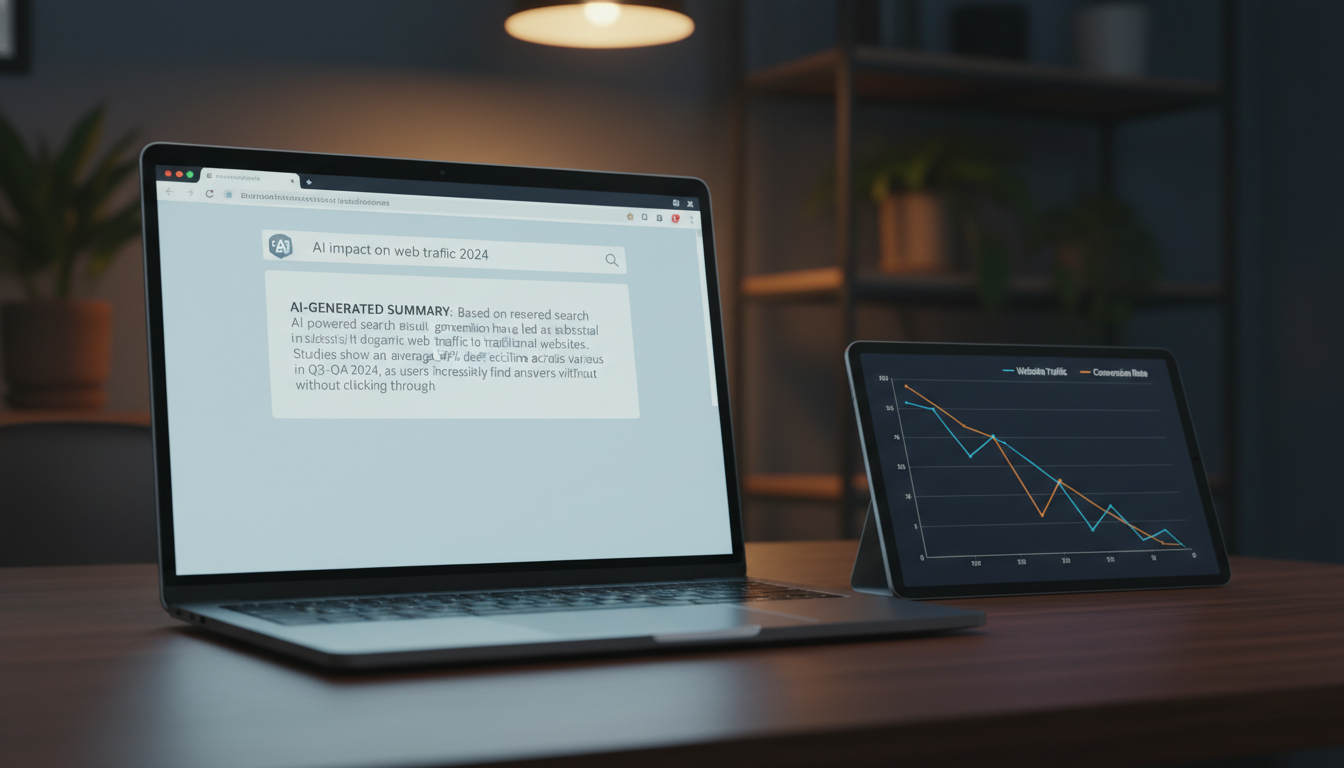
Google built its empire by indexing websites. Now, its incentive structures have flipped. Before, Google needed a healthy web for better search. Now, it benefits by summarizing your content on-screen.
When AI Overviews answer questions directly, clicks vanish. The publisher gets no traffic. The advertiser loses impressions. This environment makes it hard to sustain digital businesses. We can confidently say Google Declared War on the Web by starving creators of traffic.
Google Declared War on the Web is not an understatement. It is the natural consequence of zero-click optimization. Smaller publishers are already shutting down. Larger publishers are fighting back. They are securing licensing deals and pursuing legal challenges.
Meanwhile, Google is removing third-party software friction. It aims for search without websites, and apps without developers. This shift requires new business models. For example, some companies look to 20 Ai Business Ideas 2025 for inspiration. Many of these ideas focus on owning proprietary data and relationships. This approach creates a moat that AI cannot copy easily.
Others look to decentralized architectures. They explore The Future Of Smart Contract Development for trust. This path allows peer-to-peer verification without massive intermediaries. Such systems can protect user data and digital ownership.
Furthermore, we are seeing the rise of Ai Powered Smart Contracts Realty Tokenization. These protocols automate trust without relying on centralized search platforms.
Move Four: Google Wants a Screen on Your Face
Google and Samsung unveiled Gemini-powered smart glasses. They run on Android XR and Qualcomm chips. Crucially, these audio smart glasses feature no physical display screen. Instead, they deliver help through a wearable audio interface.
Google partnered with brands like Warby Parker and Gentle Monster. This ensures the glasses look like fashionable, regular eyewear. The device handles voice navigation, live translation, and messaging hands-free.
This hardware strategy is incredibly important. If Google succeeds, search stops being a destination. It becomes an ambient layer surrounding your daily life. You will not open a browser or switch apps anymore.
Instead, Gemini will sit directly between you and reality. The company controlling this layer controls discovery. It decides what you see, hear, and buy. It centralizes attention far more than smartphones ever did.
With massive efficiency gains, these integrated systems Ai Help Businesses Cut Costs significantly. They remove the friction of maintaining complex multi-device software.
So What is the Actual Opportunity?
This paradigm shift feels incredibly dark. However, every major transition creates new value. When software becomes cheap, human relationships become precious.
When workflows automate, judgment becomes the real moat. Google cannot synthesize authentic trust. It cannot replace deep domain expertise. People will book through your platform because they trust you specifically.
Ask yourself one critical question. Is your business value in the software itself? Or is it in the relationship layer above it? The software layer is becoming a commodity. The relationship layer is yours to own.
Furthermore, creators are focusing on rich media assets. They use tools like the Best Free Ai Image Upscaler Photo Enhancing to stand out. Strong, unique visual branding builds long-term loyalty.
On the developer side, roles are changing rapidly. Engineers are moving toward higher-level coordination. This trend is visible when exploring Top 10 High Paying Remote Jobs 2026 2024. The demand is shifting from manual coding to agent orchestration.
Many developers are learning to Build Crypto Ai Agents 2025 Guide. These agents operate autonomously across decentralized web layers. They bypass centralized ecosystem gatekeepers altogether.
Ultimately, Google’s latest changes redefine search. The open web is undergoing its most painful transformation yet. But by focusing on trust, reputation, and unique assets, you can survive. You can build a brand that no AI algorithm can replace.