


Customer Data Platform (CDP) Software in 2025 represents the heart of modern digital marketing, enabling businesses to unify, analyze, and activate customer data across all channels. As data privacy, personalization, and omnichannel strategies converge, CDPs have evolved into indispensable tools for marketers and IT professionals. This complete guide explores what CDPs are, how they work, their architecture, use cases, real-world applications, and the trends leading the industry in 2025.
What is Customer Data Platform Software in 2025?
A Customer Data Platform (CDP) software in 2025 is a centralized system that collects, integrates, and structures data from multiple sources — online and offline — to create a unified, persistent customer profile. It stores behavioral, transactional, and demographic data to help organizations understand and engage customers better. Unlike older systems like CRMs or DMPs, CDPs focus on first-party data aggregation and are designed for real-time activation across campaigns.
They are built to comply with modern data privacy laws like GDPR, CCPA, and upcoming global standards. With the deprecation of third-party cookies, businesses rely heavily on CDPs to maintain accurate, compliant user visibility across digital ecosystems.
How Customer Data Platform Software Works
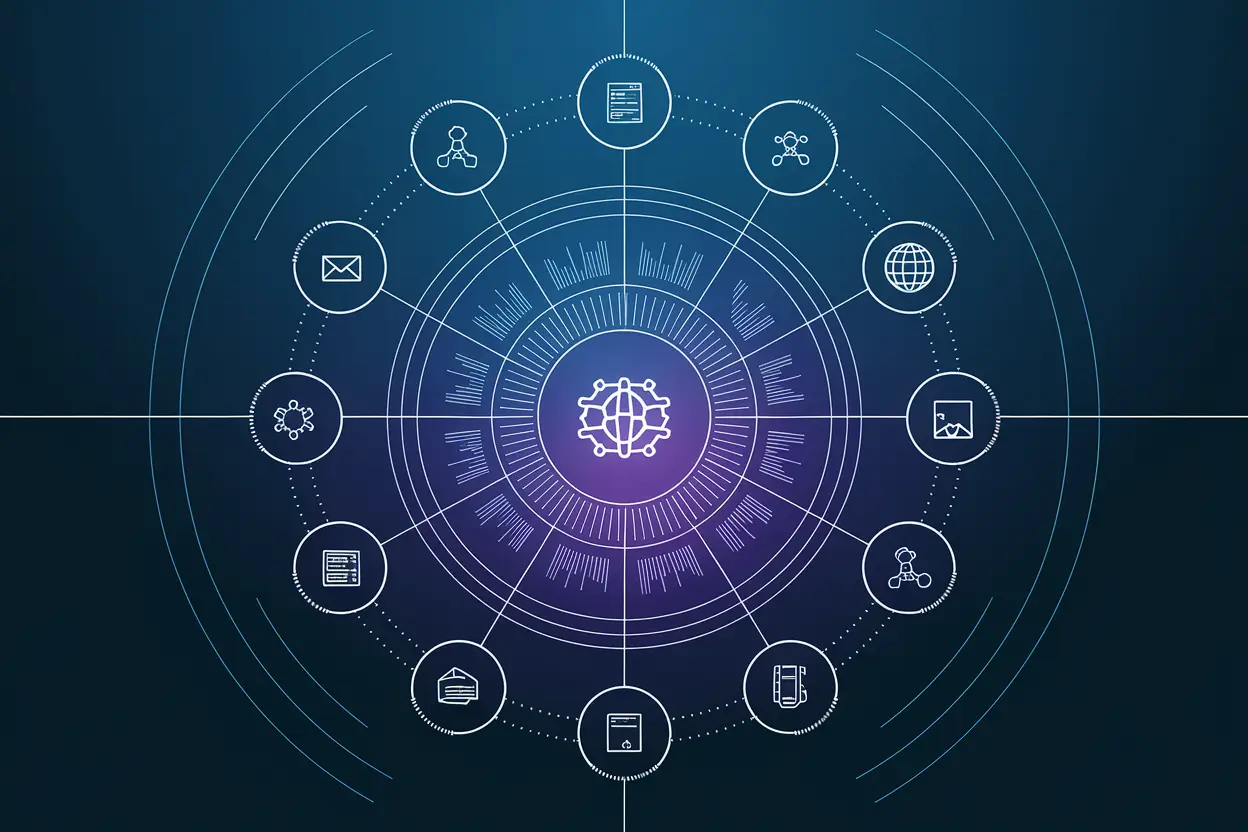
The architecture of a CDP follows a systematic data flow. It begins with data ingestion, moves into data unification, creates customer profiles, and ends with activation and analytics. Each of these layers is critical to ensure performance and real-time responsiveness. Here’s a step-by-step overview:
- Data Collection: CDPs gather raw data from multiple touchpoints — websites, mobile apps, CRMs, PoS systems, and ad platforms.
- Data Cleansing: They remove duplicates, fix inconsistencies, and standardize entries.
- Identity Resolution: Advanced matching algorithms merge fragmented customer identities into a single profile.
- Data Storage: Structured data is stored in scalable databases compatible with cloud infrastructure.
- Segmentation: Customer attributes, behaviors, and predictive scores help form segments for targeting.
- Activation: Data is deployed to channels like email, web personalization engines, or ad networks.
Core Concepts in Customer Data Platform Software
The fundamental pillars behind CDPs in 2025 include:
- Unified Customer Profiles: Integrating data from all touchpoints to offer a 360-degree view of each individual.
- Real-Time Personalization: Allowing immediate reaction to customer activity through automated triggers.
- Data Governance: Managing data usage rules, consent, and retention policies to ensure compliance.
- Predictive Analytics: Leveraging machine learning to forecast customer behaviors such as churn or lifetime value.
- APIs and Integrations: Offering flexible connectors that enable interoperability across the martech stack.
Benefits of Customer Data Platform Software
The rise of CDPs brings immense advantages for marketing and data science teams:
- Higher Data Accuracy: By centralizing all customer data, businesses avoid fragmented or conflicting insights.
- Personalization Efficiency: Businesses deliver individualized experiences based on behavioral intent.
- Compliance Simplification: Tracking and managing consent efficiently within a single platform.
- Better Collaboration: Cross-functional teams like marketing, sales, and support can use single data sets.
- Improved ROI: Targeting campaigns precisely minimizes wastage of ad spend.
Drawbacks of Customer Data Platform Software
Despite its advantages, adopting a CDP comes with certain challenges:
- High Implementation Costs: Enterprise setups can demand significant investment in infrastructure and customization.
- Data Integration Complexity: Integrating with legacy systems might require additional middleware or APIs.
- Resource-Heavy Setup: Constant data cleaning, identity mapping, and monitoring need skilled technical staff.
- Overlapping Tools: Some existing CRMs or marketing automation systems may duplicate certain CDP functions.
Major Use Cases for Customer Data Platform Software
CDPs are implemented across industries and departments to drive business outcomes:
- Personalized Campaign Management: Marketing teams create customer segments based on purchase intent and automate campaign delivery.
- Customer Journey Mapping: Identify bottlenecks in user paths to improve engagement and retention.
- Predictive Customer Scoring: Predict which users are likely to convert or churn.
- Cross-Channel Marketing Automation: Synchronize experiences across ads, email, and social media.
- Loyalty Program Optimization: Tailor rewards based on data-driven insights.
Real-World Examples of Customer Data Platform Software
Several organizations have leveraged CDP capabilities to transform their operations:
- Retail: A global fashion brand unified offline store and online purchase data using a CDP to enhance its loyalty program and saw a 30% rise in repeat customers.
- Healthcare: Hospitals use CDPs for patient data management across multiple systems to enhance operational efficiency and ensure privacy compliance.
- Finance: Banks utilize customer insights for fraud prevention and customer cross-selling based on transaction patterns.
- Media & Entertainment: Streaming platforms use CDPs to offer dynamic recommendations based on watch history.
Latest Trends in Customer Data Platform Software in 2025
The CDP landscape continues to evolve dramatically as companies adopt AI-first strategies:
- AI-Driven Segmentation: Platforms now deploy AI models for predictive audience segmentation.
- Privacy-First Architecture: Built-in consent management and privacy analytics ensure transparent customer data usage.
- Server-Side Tracking: With browser limitations, CDPs rely increasingly on server-side event processing for accuracy.
- Edge Computing Integration: Enables real-time execution of personalization near data sources for faster response.
- No-Code Configuration: User-friendly interfaces allow marketers to create data workflows without developer dependence.
- Open CDP Movement: Encouraging data portability and standardization across martech stacks.
Technical Aspects and Architecture of Customer Data Platform Software
From a technical standpoint, CDPs in 2025 are built on microservices, cloud-native technologies, and distributed storage systems to ensure flexibility and scalability. Key layers include:
- Ingestion Layer: Uses APIs, SDKs, or ETL connectors for real-time and batch data import.
- Storage Layer: Employs data lakes or warehouses like Amazon S3, BigQuery, or Snowflake.
- Processing Layer: Includes data modeling pipelines developed using frameworks like Apache Spark or Flink.
- Activation Layer: Connects to downstream systems, ad platforms, and communication tools via RESTful APIs.
- Security Layer: Implements encryption, RBAC (Role-Based Access Control), and tokenization for compliance.
Sample Setup Example of Customer Data Platform Software
To demonstrate how developers might integrate a CDP with an analytics platform, a typical setup involves API-based data ingestion. For example, developers can use a Python client library to send user event data to the CDP API endpoint, where the backend automatically standardizes and segments records based on predefined schemas. Data pipelines also connect to visualization tools for marketing dashboards.
Comparing Customer Data Platform Software with Alternatives
| Feature | CDP | CRM | DMP |
|---|---|---|---|
| Data Type | First-party | Customer-specific | Third-party |
| Use Case | Personalization & Activation | Sales Management | Advertising Targeting |
| Data Persistence | Permanent | Permanent | Temporary |
| Integration | Multi-channel | Sales-oriented | Ad Networks |
| Real-Time Function | Yes | Limited | Limited |
This comparison reveals why CDPs are becoming essential in a cookie-less marketing era, bridging gaps between transactional, behavioral, and campaign data.
Steps to Implement Customer Data Platform Software
- Identify Goals: Start by defining specific marketing and data analysis objectives.
- Audit Data Sources: Determine what systems will provide input, such as CRMs or ad networks.
- Select a CDP Vendor: Choose based on scalability, integrations, and privacy support.
- Data Mapping and Onboarding: Connect APIs and build ingestion pipelines.
- Setup Identity Resolution Rules: Configure logic for merging user records.
- Go Live and Optimize: Validate output segments and monitor performance metrics.
Best Practices for Customer Data Platform Software Deployment
To maximize CDP performance:
- Maintain strong data governance policies with transparent consent collection.
- Start small by integrating with a few core systems before scaling.
- Continuously retrain predictive models to ensure accuracy.
- Work closely with security and compliance teams to align on regulations.
- Automate workflows for efficiency but preserve human oversight.
Future Outlook of Customer Data Platform Software
By 2025 and beyond, CDPs will further integrate AI and data democratization features. Vendors are expected to evolve toward intelligent customer data clouds where all systems, from analytics to personalization, operate in real-time harmony. Technologies like natural language querying and auto-segmentation will make CDPs more accessible for non-technical users. Also, data ethics and transparency will become core differentiators, pushing next-generation CDPs to provide clear audit trails for every customer interaction.
Common Mistakes to Avoid When Using Customer Data Platform Software
- Failing to define clear success metrics before deployment.
- Over-collecting unnecessary data without purpose, increasing compliance risk.
- Integrating only marketing channels and ignoring offline or support channels.
- Neglecting user permissions and preferences during campaign execution.
- Not involving IT teams early enough in CDP setup for architecture alignment.
FAQs about Customer Data Platform Software in 2025
What distinguishes a Customer Data Platform from a CRM?
While a CRM focuses on managing customer relationships and sales pipeline, a CDP aggregates data across all customer interactions to create a unified profile for marketing and analytics.
Can small businesses benefit from Customer Data Platform Software?
Yes, modern cloud-based CDPs offer affordable subscription models that help small businesses personalize campaigns without complex IT infrastructures.
Is a Customer Data Platform secure?
CDPs in 2025 include advanced encryption, role-based access, and compliance tracking, making them one of the most secure data systems available.
How does AI improve Customer Data Platform Software?
AI enhances segmentation, identifies lookalike audiences, automates predictive analytics, and improves personalization relevance.
What is the best Customer Data Platform in 2025?
The best CDP depends on business goals — enterprise companies often use Segment, Tealium, or BlueConic, while startups may prefer Mixpanel or RudderStack.
Conclusion: The Growing Importance of Customer Data Platform Software
As businesses progress through 2025, Customer Data Platform Software continues to evolve as the foundation of effective digital marketing and data strategy. It unifies disconnected data sources, enhances personalization, maintains compliance, and empowers teams with actionable insights. By embracing CDP technology, companies can not only meet customer expectations but also exceed them through meaningful data-driven engagement. The CDP is no longer optional—it is a competitive necessity for the privacy-first, customer-centric world ahead.