
How Startups Are Using AI and Smart Contracts to Scale Faster is an increasingly vital topic in today’s startup ecosystem. As technology continues to evolve, startups are leveraging Artificial Intelligence (AI) and blockchain-based smart contracts to drive automation, enhance efficiency, and reduce costs. This intersection of AI and smart contracts is redefining how emerging businesses optimize operations, attract investors, and scale rapidly in competitive markets.
Understanding How Startups Are Using AI and Smart Contracts to Scale Faster
Startups traditionally face challenges like limited funding, lack of trust among partners, manual administrative burdens, and market entry risks. AI and smart contracts address these pain points by combining intelligent automation with decentralized agreements. AI enables data-driven decisions, predictive analytics, and automation, while smart contracts ensure security, transparency, and trust through blockchain networks.
Core Concepts Behind How Startups Are Using AI and Smart Contracts to Scale Faster
AI is the simulation of human intelligence through machines capable of learning, reasoning, and self-correction. Smart contracts are self-executing digital agreements stored on a blockchain that execute predefined actions when conditions are met. When these two technologies converge, startups can create systems that process data, make autonomous decisions, and carry out contractual operations without human intervention.
How Startups Are Using AI and Smart Contracts to Scale Faster in Daily Operations
Startups are using AI and smart contracts for process automation, fraud detection, supply chain tracking, and secure data sharing. For instance, a startup can use an AI-powered pricing model to recommend optimal prices while smart contracts automatically release funds when agreed conditions are satisfied. This eliminates middlemen, accelerates workflows, and reduces operational overhead.
The Technical Architecture of How Startups Are Using AI and Smart Contracts to Scale Faster
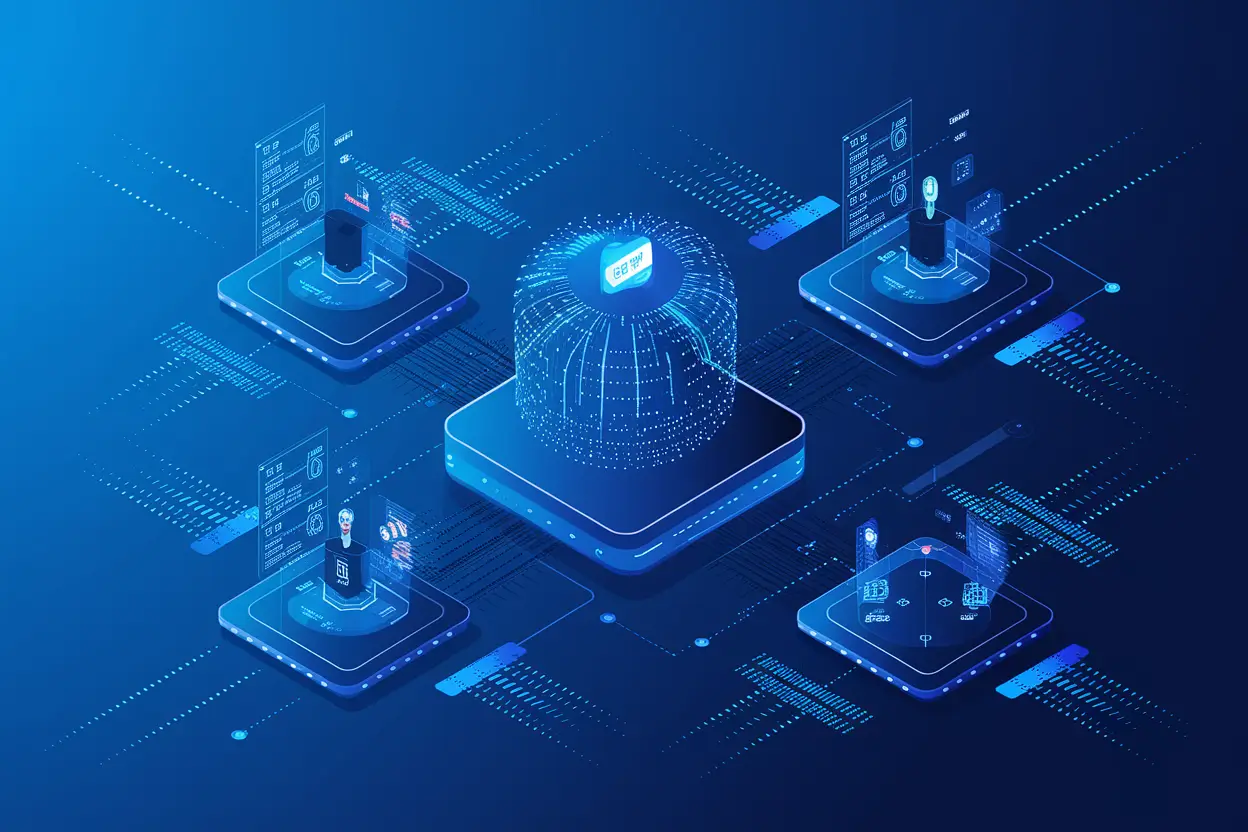
The technical ecosystem involves AI algorithms integrated into blockchain-based decentralized applications (dApps). AI systems analyze complex data sets, feed predetermined conditions into smart contracts, and trigger autonomous actions. An example is an AI deciding if a marketing goal was achieved, which then triggers a payment distribution via a smart contract on Ethereum or similar blockchain.

Smart contract languages such as Solidity and Rust, combined with machine learning frameworks like TensorFlow and PyTorch, form the backbone of this architecture. Oracles act as bridges between AI systems and blockchain smart contracts, ensuring real-world data can trigger contract execution securely.
Advantages of How Startups Are Using AI and Smart Contracts to Scale Faster
- Transparency: Smart contracts maintain immutable records of transactions, increasing trust among investors and users.
- Automation: AI-powered contracts can operate without manual supervision, improving speed and accuracy.
- Scalability: Startups can expand operations faster by automating repetitive tasks such as payroll, invoicing, and compliance tracking.
- Cost Reduction: Eliminating intermediaries saves financial resources.
- Enhanced Data Utilization: AI models provide data-driven insights for strategic decision-making.
Challenges in How Startups Are Using AI and Smart Contracts to Scale Faster
- Technical Complexity: Integrating AI with blockchain requires multidisciplinary expertise.
- Data Bias: AI models may inadvertently inherit biases from training data.
- Scalability Issues: Blockchain transactions can be slower and costlier depending on network congestion.
- Regulatory Uncertainty: Legal frameworks governing smart contracts vary by jurisdiction.
- Security Vulnerabilities: Poorly written smart contracts may expose startups to hacking or loopholes.
Real-World Examples of How Startups Are Using AI and Smart Contracts to Scale Faster
Several pioneering startups have successfully adopted this synergy:
- SingularityNET: A decentralized AI marketplace allowing smart contract-based AI service exchange.
- Fetch.ai: Automates decentralized economic transactions using AI and smart contracts.
- Ocean Protocol: Uses smart contracts and AI for data sharing and monetization securely.
- AIOZ Network: Combines decentralized AI and smart contract tools for content delivery networks.
These companies demonstrate that integrating AI and blockchain ecosystems can accelerate innovation while maintaining transparency.
Use Cases of How Startups Are Using AI and Smart Contracts to Scale Faster
Numerous use cases showcase this combination’s versatility:
- DeFi (Decentralized Finance): AI predicts market trends and executes smart contract-based trades.
- Healthcare: AI analyzes patient data; smart contracts automate insurance payments upon verified diagnoses.
- Supply Chain: AI monitors logistics and smart contracts handle automated supplier settlements.
- Marketing Campaigns: Smart contracts distribute funds to freelancers automatically once AI confirms performance metrics.
- Intellectual Property: Smart contracts govern licensing, and AI detects content piracy.
How Startups Are Using AI and Smart Contracts to Scale Faster Compared to Traditional Models
Unlike traditional centralized systems, AI and smart contracts reduce dependence on middlemen. Traditional scaling often relies heavily on manual contract management, legal teams, and centralized payment processors. In contrast, AI and blockchain integration embeds trust and automation directly into code, accelerating operations while minimizing human error.
| Aspect | Traditional Approach | AI & Smart Contracts |
|---|---|---|
| Contract Management | Manual | Automated via blockchain |
| Data Analysis | Human-driven | AI-driven |
| Security | Moderate | High with encryption |
| Speed | Slow | Fast, autonomous |
Code Example in How Startups Are Using AI and Smart Contracts to Scale Faster
Here’s a simplified pseudocode snippet to illustrate workflow integration between AI output and smart contracts:
Python AI Module:
price_prediction = AIModel.predict(market_data)
if price_prediction > threshold: trigger_contract()
Solidity Smart Contract:
function trigger_contract() public {
payable(recipient).transfer(amount);
emit PaymentReleased(recipient, amount);
}
This example demonstrates how automated AI logic interacts with blockchain applications securely and transparently.
Latest Trends in How Startups Are Using AI and Smart Contracts to Scale Faster
Major trends include decentralized autonomous organizations (DAOs) governed by AI analytics, tokenized AI service marketplaces, low-code blockchain application platforms, and edge AI integrated with smart contracts for real-time IoT processing. Additionally, startups are exploring Layer 2 solutions to enhance blockchain transaction speeds.
Technical Suggestions for How Startups Are Using AI and Smart Contracts to Scale Faster
- Utilize blockchain networks with high scalability such as Polygon or Solana.
- Use secure oracles like Chainlink for data transfer between AI systems and smart contracts.
- Incorporate rigorous smart contract audits before deployment.
- Implement federated learning to maintain data privacy while training AI models.
- Adopt containerized AI microservices for better integration with decentralized systems.
Future Outlook on How Startups Are Using AI and Smart Contracts to Scale Faster
The future outlook shows immense growth potential. Experts anticipate that AI-driven smart contracts will become standard for handling B2B and B2C automation, from payroll to international supply chains. Startups embracing these transformations early are likely to gain competitive advantages, secure investor trust, and operate with minimal overhead costs.
Ethical Considerations in How Startups Are Using AI and Smart Contracts to Scale Faster
While automation and decentralization bring efficiency, ethical questions regarding job displacement, algorithmic bias, and privacy must be addressed. Startups are increasingly adopting explainable AI and transparent contract coding to ensure fairness and compliance with future data protection frameworks.
Best Practices in How Startups Are Using AI and Smart Contracts to Scale Faster
- Conduct periodic audits for both AI and smart contracts.
- Promote interdisciplinary collaboration between AI engineers and blockchain developers.
- Prioritize ethical AI by reducing bias in datasets.
- Maintain full documentation for regulatory visibility.
- Start with small-scale pilots before large-scale deployments.
Case Study: Fintech Startup Using AI and Smart Contracts to Scale Faster
A fintech startup seeking to automate loan approvals integrated AI for credit scoring and smart contracts for loan disbursement. AI analyzed borrower behavior to approve loans instantly, while smart contracts executed fund transfer securely once conditions met. This reduced processing time by 85% and eliminated third-party verification costs.
FAQs on How Startups Are Using AI and Smart Contracts to Scale Faster
What industries benefit most from AI and smart contracts?
Industries such as fintech, supply chain, healthcare, and marketing benefit the most as they rely on transparent, rule-based automation.
Can small startups afford to adopt these technologies?
Yes, thanks to open-source frameworks and blockchain-as-a-service models, adoption has become accessible and cost-effective.
Are smart contracts legally binding?
Smart contracts can be legally recognized in many jurisdictions, but legal compliance frameworks must still be integrated.
How do AI and smart contracts improve investor confidence?
They ensure transparency, efficiency, and real-time accountability, increasing trust and investment appeal.
What’s the biggest barrier to implementation?
Technical integration complexity and lack of skilled talent remain primary challenges, but education and tooling improvements are mitigating these hurdles.
Conclusion: The Long-Term Vision of How Startups Are Using AI and Smart Contracts to Scale Faster
AI and smart contracts are reshaping the startup growth narrative. Their convergence represents a paradigm shift in automation, efficiency, and business trust. As decentralized AI evolves, startups adopting these innovative mechanisms will dominate future markets. The long-term promise lies in sustainable, transparent, and data-driven ecosystems where contracts and intelligence coexist seamlessly to accelerate business success.