

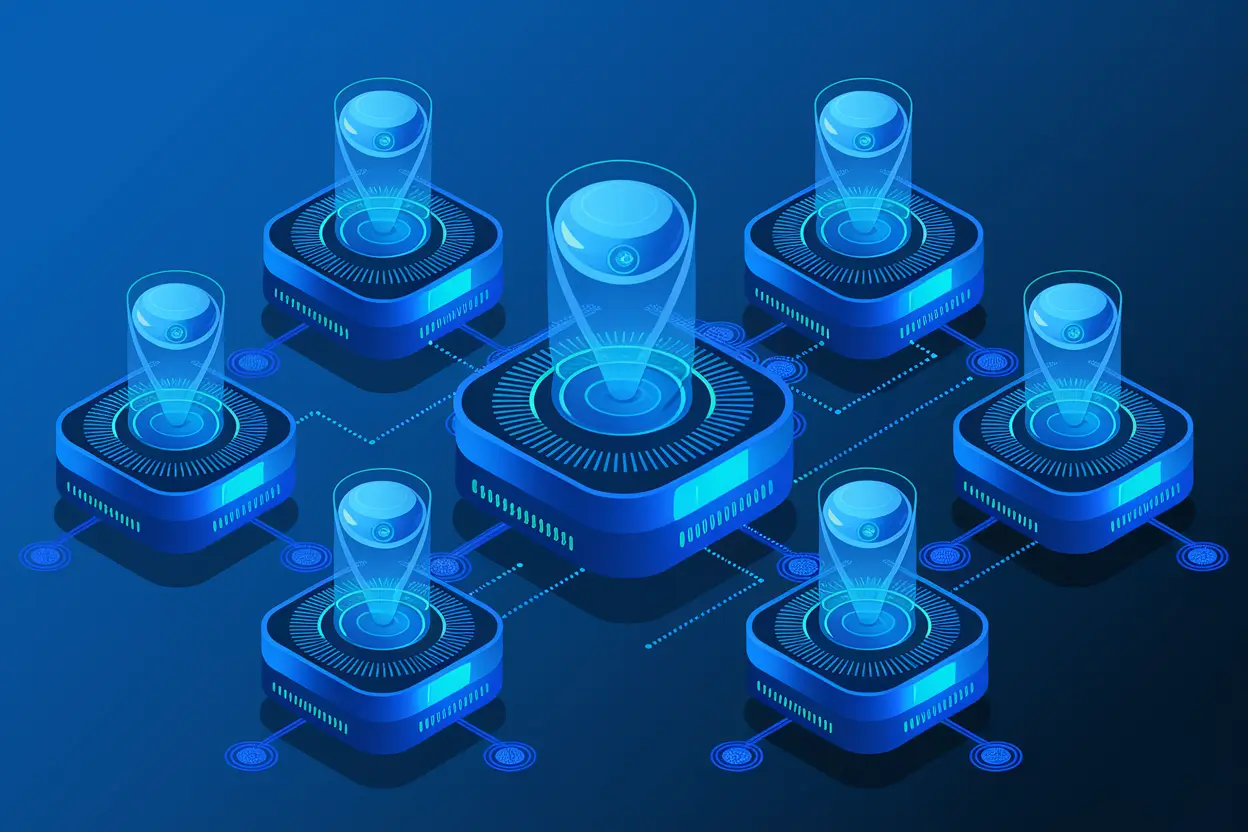
AI Agents + Smart Contracts represent the cutting-edge convergence of artificial intelligence and blockchain technology, creating a new paradigm for automation, transparency, and decentralized decision-making. As industries seek smarter, self-governing systems, the combination of AI capabilities with smart contracts offers a way to automate complex processes with trust and autonomy. This evolution brings significant opportunities across finance, supply chain, healthcare, and other sectors, paving the way for fully decentralized intelligent ecosystems.
Understanding AI Agents + Smart Contracts
AI Agents + Smart Contracts refer to integrating autonomous artificial intelligence programs (AI agents) with blockchain-based contracts that execute predefined rules automatically. AI agents are systems capable of perception, reasoning, and action, while smart contracts are self-executing agreements with the terms directly written into code. Combining these enables AI agents to interact with decentralized networks securely and perform actions like trading, optimizing supply chains, or managing data based on objective logic rather than human intervention.
Core Concepts of AI Agents + Smart Contracts
At the heart of this fusion lies several foundational elements:
- Autonomy: AI agents make independent decisions based on algorithmic reasoning.
- Decentralization: Smart contracts run on blockchain networks, eliminating centralized control.
- Trustless Environments: Execution doesn’t require intermediaries, enhancing transparency.
- Data Integrity: Blockchain ensures tamper-proof records, while AI interprets these data for action.
- Tokenization: AI agents can transact using digital assets without human mediation.
The synergy of these components creates intelligent, programmable systems capable of continuous learning and acting within decentralized governance structures.
How AI Agents + Smart Contracts Work
AI Agents + Smart Contracts operate through dynamic interactions between off-chain intelligence and on-chain logic. The AI agent collects and processes data using machine learning or neural network algorithms, then triggers predefined smart contract functions when certain conditions are met. These smart contracts, deployed on the blockchain, enforce execution without requiring trust between parties. Oracle systems often act as bridges, feeding real-world data into the smart contract securely.
For example, in a decentralized insurance model, an AI agent could monitor weather data and automatically trigger smart contract payouts for affected farmers when certain thresholds are reached.
Technical Architecture Behind AI Agents + Smart Contracts
The architecture generally involves:
- AI Layer: Responsible for data processing, learning, reasoning, and decision-making.
- Smart Contract Layer: Handles immutable business logic and automated task execution.
- Oracles: Provide external data inputs such as market conditions, IoT sensor readings, or user behaviors.
- Blockchain Layer: Ensures distributed consensus, ledger verification, and trustless environment.
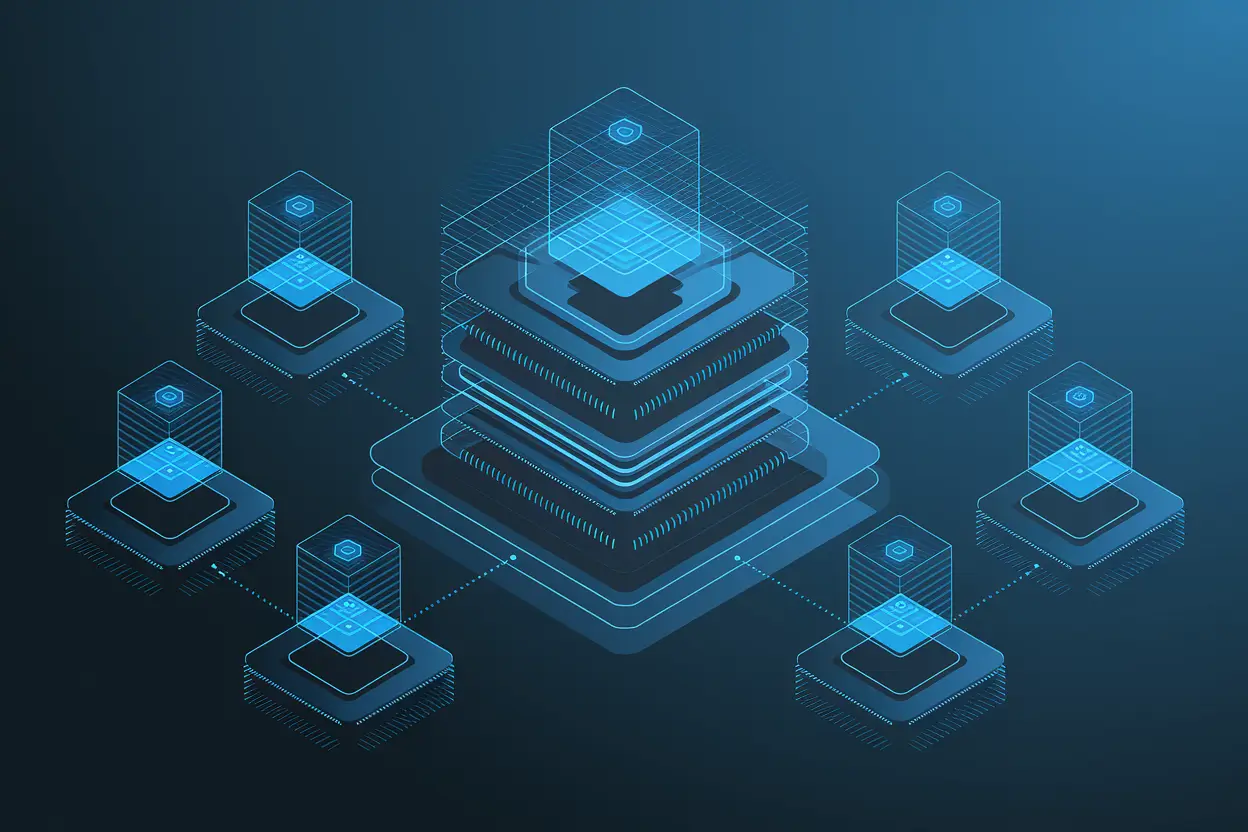
Interaction between these layers enables real-time automation of high-complexity tasks with transparency, accountability, and traceability.
Example Code Snippet for AI Integration with Smart Contracts
Below is a simplified conceptual pseudo-code representation to understand their interplay:
Python (AI Agent):
if weather_data[‘rain’] > 100mm: trigger_smart_contract(‘payout’, farmer_wallet)
Solidity (Smart Contract):
function payout(address payable _to) public { require(msg.sender == oracle); _to.transfer(insuranceAmount); }
This sample demonstrates how an AI agent uses off-chain computation to determine outcomes, which are then executed through a secure smart contract function on-chain.
Advantages of AI Agents + Smart Contracts
The benefits are substantial:
- Efficiency: Automated execution reduces manual intervention and human error.
- Cost Reduction: Elimination of intermediaries saves costs associated with legal enforcement or management layers.
- Transparency and Security: Blockchain’s immutability guarantees traceability.
- Scalability: Smart contracts can process thousands of interactions automatically.
- Self-Optimization: AI constantly learns and adapts, improving decision accuracy over time.
Disadvantages and Risks of AI Agents + Smart Contracts
However, these systems also pose challenges such as:
- Complexity: Combining AI and blockchain demands high technical expertise.
- Scalability Limitations: Current blockchain networks often struggle with high transaction volumes.
- Data Privacy: On-chain transparency can conflict with confidentiality needs.
- Ethical and Control Risks: Unsupervised AI systems could make unintended decisions.
- Security Threats: Smart contract vulnerabilities or oracle manipulation can lead to loss.
Use Cases of AI Agents + Smart Contracts
- Finance: Automated trading bots managing decentralized portfolio adjustments in DeFi platforms.
- Supply Chain: AI monitors shipment data and triggers payments once conditions are verified.
- Healthcare: AI enforces patient data sharing agreements via smart contracts.
- Energy Management: Optimizing power distribution using self-regulated smart grid contracts.
- Insurance: Automatically compensating claimants based on AI-verified parameters.
Real-World Examples of AI Agents + Smart Contracts
Various projects are pioneering this space:
- SingularityNET: A marketplace for AI services operating on blockchain.
- Fetch.ai: Deploys autonomous AI economic agents on decentralized networks for tasks like mobility or energy management.
- Ocean Protocol: Utilizes AI to manage data exchange with blockchain-based contracts ensuring ownership and monetization.
These examples showcase the diverse capabilities and the growing confidence in building decentralized intelligence ecosystems.
Latest Trends in AI Agents + Smart Contracts
Emerging trends strengthen their potential every year:
- Autonomous Decentralized Organizations (ADOs): Evolution of DAOs using AI-driven governance.
- AI Collaboration Protocols: Cross-agent communication automation.
- Multi-chain Deployment: Porting smart contracts and AI agents across multiple networks for redundancy and performance.
- Integration with IoT: AI-linked devices interacting via blockchain contracts securely.
Technical Suggestions for Implementing AI Agents + Smart Contracts
To successfully deploy AI Agents + Smart Contracts, developers should consider the following:
- Choose the Right Blockchain: Ethereum for flexibility, Solana or Polygon for scalability.
- Integrate Oracles: Use secure frameworks like Chainlink to connect real-world data with smart contracts.
- Optimize AI Models: Focus on lightweight models for real-time inference.
- Adopt Hybrid Architecture: Keep heavy AI computation off-chain with event-based triggers.
- Safeguard Data: Apply encryption and differential privacy before passing inputs to blockchain.
Comparison with Traditional Automation Alternatives
| Aspect | Traditional Automation | AI Agents + Smart Contracts |
|---|---|---|
| Control | Centralized | Decentralized |
| Transparency | Limited | Full Blockchain Traceability |
| Scalability | Moderate | Variable (depends on network) |
| Decision Intelligence | Rule-based | AI-driven adaptive learning |
| Security | Dependent on single servers | Distributed Ledger Resilience |
Step-by-Step Implementation of AI Agents + Smart Contracts
- Define Objective: Choose the process to automate.
- Develop AI Model: Train an algorithm with relevant data sets.
- Design Smart Contract: Write and test code defining terms and conditions.
- Connect via Oracles: Use secure data feeds for AI outputs.
- Deploy on Blockchain: Publish contract and integrate AI service for interaction.
- Monitor & Optimize: Continuously review performance metrics and upgrade models.
Common Mistakes When Building AI Agents + Smart Contracts
- Overloading blockchain with large AI computations instead of using off-chain processing.
- Deploying without proper auditing, leading to vulnerability exploits.
- Failing to validate oracle data integrity.
- Ignoring future upgradability in smart contracts.
- Overlooking ethical considerations of autonomous decision-making.
Security and Auditing in AI Agents + Smart Contracts
Security is vital when implementing AI Agents + Smart Contracts. Developers must conduct both smart contract audits and AI model performance tests. Using testnets before mainnet launch ensures risk mitigation. Continuous monitoring using anomaly-detection AI agents can instantly flag vulnerabilities or irregular transaction patterns on-chain, maintaining ecosystem stability.
Business Impact and Opportunities from AI Agents + Smart Contracts
Businesses can leverage this integration to eliminate inefficiencies, foster trustless collaborations, and create new revenue avenues. Decentralized AI marketplaces, automated cross-border payments, and predictive logistics are among potential transformative opportunities.
Future Outlook of AI Agents + Smart Contracts
The future of AI Agents + Smart Contracts is promising. As machine learning models become more efficient and blockchains more scalable, we can expect ecosystems of autonomous digital entities capable of managing real-world assets, contracts, and governance frameworks. Hybrid chains will likely facilitate seamless on-chain and off-chain interactions. The rise of Quantum-resistant cryptography will further secure AI-led transactions. Global adoption across sectors will drive transparent automation without compromising control or compliance.
FAQs on AI Agents + Smart Contracts
What are AI Agents in the context of blockchain?
They are autonomous artificial intelligence systems capable of decision-making and interaction with decentralized networks.
How do Smart Contracts enhance AI operations?
Smart contracts automate execution of AI-driven decisions securely on blockchain, ensuring transparency and trustworthiness.
Can AI Agents modify Smart Contracts dynamically?
Direct modification is limited due to blockchain immutability, but upgradable contract patterns and proxy architectures can enable adaptability.
What programming languages are used for AI Agents + Smart Contracts?
Python, Solidity, and JavaScript are commonly used due to robust libraries and blockchain integration support.
Are AI Agents + Smart Contracts suitable for enterprise systems?
Yes, particularly for automation of supply chain management, auditing, and finance operations where autonomous verification is key.
What future developments can we expect?
Growing integration with decentralized autonomous organizations, better cross-chain operability, and governance AI agents capable of ethical decision-making.
Conclusion: The Evolutionary Future of AI Agents + Smart Contracts
AI Agents + Smart Contracts signify an evolution beyond traditional automation, establishing intelligent trust networks that remove dependency on intermediaries. As technologies mature, the synergy of AI reasoning power and blockchain’s trust mechanisms will drive innovation across sectors, allowing machines to negotiate, transact, and govern autonomously. This future vision is not just programmable but self-evolving — the next logical step in global automation.