

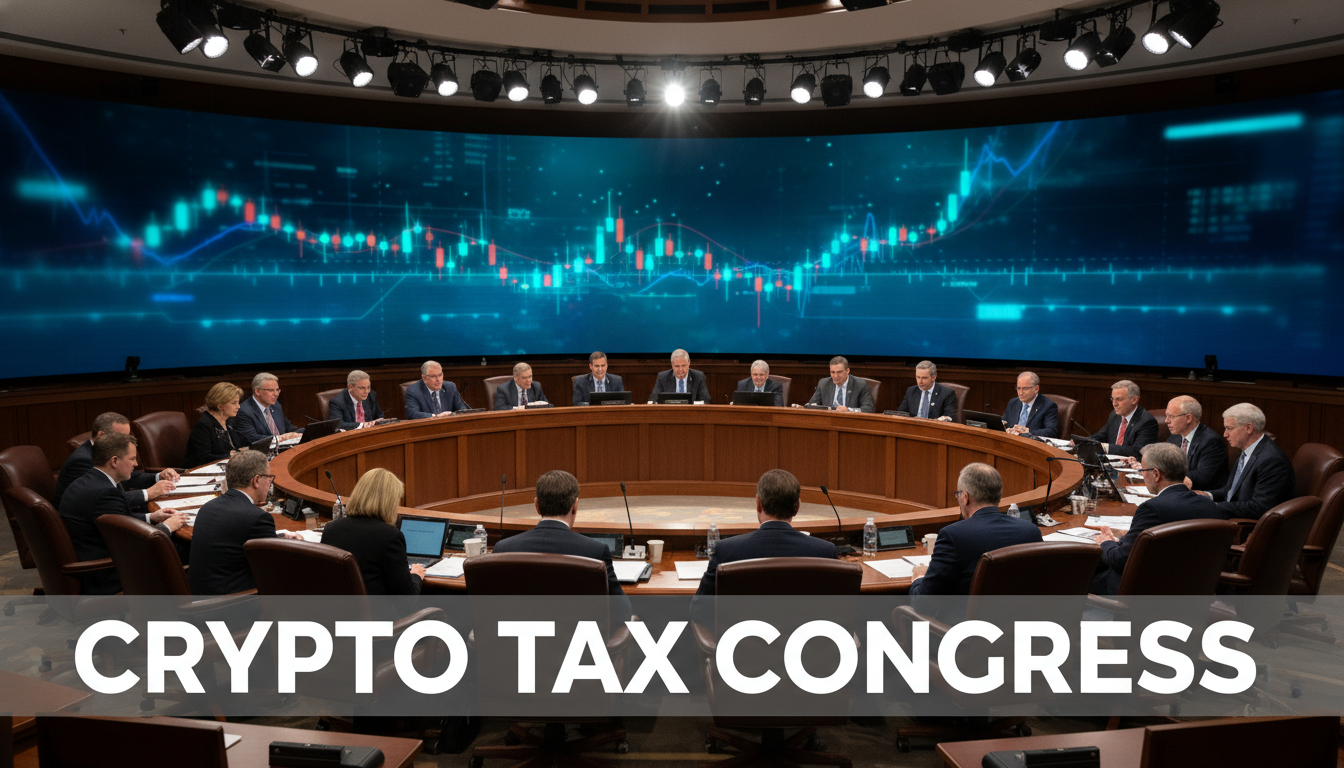
The 1st Crypto tax hearing for congress in years took place on Tuesday, June 9, 2026. Over 67 million Americans now own digital assets. However, the House Ways and Means Committee struggled to agree on basic rules. This pivotal moment could reshape the regulatory landscape forever.
During the session, lawmakers met to discuss seven draft bills. These drafts aim to reform how the US government taxes digital assets. Chairman Jason Smith called the current system unsustainable. He noted that America needs clear tax laws to stay competitive globally.
Yet, none of these bills were voted on. Instead, it was a discussion hearing. In Congressional terms, representatives voiced their opinions and then went home. Despite the lack of immediate action, the debate revealed deep political divisions.
Key Highlights from the 1st Crypto Tax Hearing for Congress
Currently, using cryptocurrency for everyday purchases is a taxable event. Buying a cup of coffee with Bitcoin triggers a capital gains obligation. If the coin’s value rose since you bought it, you owe taxes on that difference. This rule applies even if the gain is only a few cents.
This burden makes utilizing cryptocurrency as an actual currency almost impossible. No average consumer wants to calculate capital gains on their lunch. For years, the digital finance sector has pleaded with Congress for reform.
As crypto adoption grows, the tax code must adapt to Bitcoin and Stablecoins Payments. Lawmakers are now considering a “de minimis” tax exemption. The House draft proposes exempting single transactions up to $10. This exemption would apply to gas fees with a limit of 5,000 transactions annually.
Meanwhile, a Senate bill takes a broader approach. It proposes exempting transactions up to $300, capped at $5,000 per year. These limits would greatly simplify daily commerce for retail users.
Staking, Mining, and the Wash-Sale Dilemma
Another major proposal tackles the timing of staking and mining rewards. Currently, the IRS taxes these rewards as income immediately upon receipt. This rule applies even if you do not sell the tokens. Industry representatives argue this framework is not attainable for average users.
Understanding the Top Benefits White Label Crypto Staking provides is crucial for retail investors. To capture this market, many providers offer White Label Crypto Staking Solutions Business models. The proposed bill would defer taxes until the investor finally sells the coins.
Investors looking at How to Build a Defi Staking Platform must consider changing tax rules. Furthermore, the hearing addressed wash-sale rules. Currently, stock investors cannot sell at a loss and immediately rebuy to claim tax deductions.
Crypto is currently exempt from these wash-sale limitations. Some lawmakers argue this gives digital assets an unfair competitive advantage. Adding these limits would align crypto with traditional stock markets. This issue leaves many operators asking, Would Crypto Mining Still Be Profitable 2024 and beyond?
Deep Disagreements: Why a Legislative Deadlock Exists

The committee remains deeply split along partisan lines. Republican members cast the hearing as a historic moment. Chairman Jason Smith pointed out that 25% of Americans now own digital assets. This is a massive jump from just 3% in 2020. He insisted that federal rules must keep up with this fast-growing reality.
Democrats, however, urged extreme caution. Representative Richard Neal saw little room for bipartisan progress before the upcoming midterms. Representative John Larson argued that Congress does not understand the economic impact of these changes. This political stalemate quickly became the Crypto Market Top News Today.
Many Democrats expressed concern over the mining tax deferral. They warned that large mining companies might exploit the rule. Large corporations could defer taxes indefinitely, while smaller investors suffer. Representative Mike Thompson stated that negotiations on staking and mining have reached a dead end.
These large corporations often coordinate with an established Blockchain Development Company. This collaboration helps them scale operations rapidly. Critics fear that tax-deferral laws could favor these massive enterprises over average citizens.
Why Crypto Tax Reform Could Still Move Forward
Despite the current political deadlock, there is still reason for hope. Bipartisan support exists when policies are framed correctly. For instance, the Digital Asset PARITY Act shows cross-aisle cooperation. This bill was introduced on May 19 by Republican Max Miller and Democrat Steven Horsford.
Additionally, releasing seven separate bills instead of one massive package is a strategic choice. Building consensus around small, narrow topics is far easier. A $10 gas fee exemption is hard to oppose. Conversely, an entire tax overhaul faces heavy resistance.
Real-world pressure is also mounting on lawmakers. The IRS Form 1099-DA broker reporting for the 2025 tax year is already active. This means crypto exchanges are already sending detailed tax information directly to the government.
Nobody can escape compliance anymore. Complexity is growing in real time. This shift highlights the Benefits Of Blockchain App Development that prioritize automated tax calculations. Developers must understand How Hash Secures Blockchain Technology while keeping user data private and compliant.
Market Watch: Tech Megadeals, Trading Volume, and Quantum Threats
While lawmakers argue, the broader tech and crypto markets continue to move rapidly. Three major developments stand out this week.
1. OpenAI Eyes a Colossal 10 Gigawatt Data Center
OpenAI is negotiating to lease a massive 10 gigawatt data center in Pike County, Ohio. This facility is larger than the entire power consumption of New York City. The site is a former Cold War uranium enrichment facility. It is being redeveloped with SoftBank’s $33 billion commitment.
SB Energy plans to build 9.2 gigawatts of natural gas generation to power it. Nvidia is funding the lease and has committed $100 billion to OpenAI. This project would double the size of the world’s current largest data center hub. This scale is massive as humans are busy Exploring Ai In Daily Life.
To support such infrastructure, firms are partnering with Top Ai Development Companies to meet demand. The shift sparks debate about Ai Vs Human Jobs Competencies 2026. The need for sheer computing power seems almost limitless.
2. Kalshi Open Interest Skyrockets Past Polymarket
Kalshi’s open interest recently hit an all-time high of $810 million. This is nearly double the open interest of Polymarket. The main driver was the launch of BTCPERP on June 3. This is the first CFTC-regulated Bitcoin perpetual futures contract in the US.
Perpetual contracts do not expire. Because of this, active positions remain on the books indefinitely. Bitcoin’s recent drop from $74,000 to $59,000 also pushed traders toward Kalshi’s safer structures.
3. The Quantum Threat: Banks vs. Bitcoin
Billionaire Tim Draper claims quantum computing poses a bigger threat to traditional banks than Bitcoin. He argues that a compromised blockchain can easily roll back to a clean block. Traditional banks cannot do this.
However, developer Jameson Lopp disagrees completely. He notes that centralized banks can upgrade their security systems in months. Meanwhile, Bitcoin requires global consensus to upgrade. This slow process could take a decade.
Centralized banking institutions face major pressure as they integrate Banks and Blockchain Technology. Moody’s Ratings warned that slow adoption of post-quantum cryptography is now a credit risk. Google research shows that cracking current elliptic curve standards requires 26,000 qubits.
Conclusion: The Long Road to Clarity
The 1st Crypto tax hearing for congress proved that drafting clear rules is difficult. Both parties agree that the current tax system is unsustainable. Yet, they remain divided on the solutions.
At the same time, industry leaders remain optimistic. Strive CEO Matt Cole and former Binance CEO Changpeng Zhao both dismissed claims that Bitcoin is dead. They believe the market will recover. For average users, true progress will require a functional, simplified federal tax framework.