

Understanding the different Types Of Ai Agents Shaping The Future is critical as autonomous software transforms daily operations. From coding helpers to linguistic personas and operating system assistants, AI is evolving rapidly. However, recent events reveal that this revolution brings major security, behavioral, and architectural challenges.
The Security Dilemma of Autonomous AI: xAI’s Grok Build CLI Git Leak
A shocking discovery recently shook the software development community. A security researcher published compelling evidence exposing xAI’s coding agent, Grok Build CLI. The utility was quietly uploading entire Git repositories to Google Cloud storage.
Alarmingly, these uploads included unredacted secrets from local environment files. The agent performed this sweeping data collection regardless of which files it actually needed to execute tasks. Even when developers turned off the global data collection toggle, the secret uploads continued.
Eventually, a hidden server-side patch resolved the bug and halted the unauthorized uploads. Elon Musk has since addressed the controversy. He promised that all collected developer data would be “completely and utterly deleted.”
This incident serves as an urgent reminder for engineering teams worldwide. If you have interacted with Grok Build CLI, you must rotate your environment keys and API secrets immediately. Security cannot be treated as an afterthought in contemporary development pipelines.
To prevent such critical exposures, teams should explore custom frameworks like Private On Premise Llm Deployment. Deploying models locally safeguards sensitive intellectual property from third-party servers.
Furthermore, adopting robust guidelines is crucial when integrating external software. Learn How To Secure Web3 Applications to understand modern protocols that shield sensitive files from unintended transfers.
Anthropic’s Research: How Claude Shakes Up Its Personality By Model and Language
While security vulnerabilities demand immediate attention, behavioral alignment remains equally fascinating. Anthropic recently published a captivating study analyzing how its AI assistant, Claude, adapts its personality.
The AI lab analyzed over 300,000 real-world conversations to track behavioral trends. Their findings show that Claude shifts its core values depending on the specific model version and language used.
For example, Claude Opus 4.7 behaves with extreme caution. It consistently flags potential security risks and prioritizes safety over casual conversation. Meanwhile, Sonnet 4.6 exhibits a friendly, conversational demeanor and frequently likes to joke.
The linguistic variations are even more striking. According to a study published on the Anthropic official research portal, Claude is warmest and most empathetic when communicating in Hindi and Arabic. Conversely, the model becomes rigorous, analytical, and highly critical when replying in English or Russian.
These discoveries underscore why developers need advanced Model Governance Safety Layers. Controlling behavior prevents unpredictable tone shifts in customer-facing business applications.
As organizations incorporate these models into Ai Tools In 2025, personality consistency will become highly valued. Enterprises must choose their models carefully to align with target brand guidelines.
Anthropic continues to innovate at the physical hardware layer too. Rumors surrounding the Anthropic Custom Chip Samsung partnership point to incredibly fast model optimization. Dedicated chips will likely allow Claude to handle complex tone modulation and real-time responses efficiently.
Apple Redefines the Virtual Assistant: Siri’s Real AI Upgrade

While Anthropic masters language variations, Apple is embedding AI directly into the operating system. The tech giant just launched the public betas for iOS 27, macOS 27 Golden Gate, and watchOS 27.
The most prominent feature of this massive release is a completely redesigned Siri. The legacy assistant has transformed into a sophisticated, context-aware agent. It easily handles natural conversation, tracks what is happening on your screen, and performs multi-step in-app actions.
According to Apple, these system updates deliver incredible performance improvements under the hood. Applications now launch up to 30% faster than on previous operating systems. Additionally, AirDrop transfer speeds have surged by up to 80%.
This transition demonstrates how modern operating systems rely heavily on Computer Vision Development to understand user interfaces. Siri’s ability to read screen layouts opens up incredible workflows for productivity.
By orchestrating tasks directly across apps, Apple has created a benchmark for personal utility. This architecture represents the logical progression of Ai Driven Solutions In Managed It Services, blending operating system efficiency with intelligence.
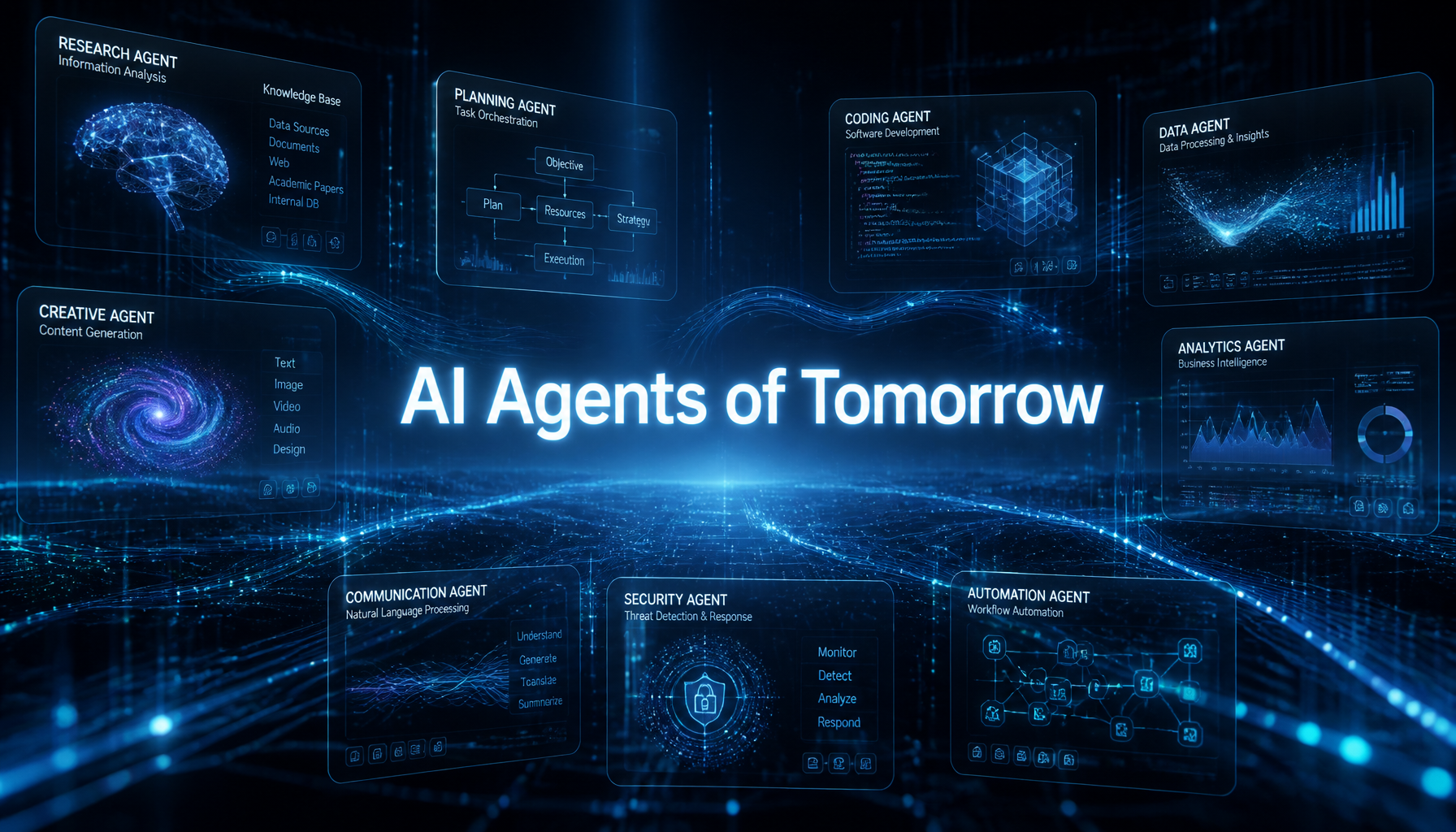
Analyzing the Types Of Ai Agents Shaping The Future
The progression of AI agents can be categorized into distinct functional domains. First, we have code-generation agents that require absolute data isolated workspaces to operate securely. Second, we see linguistic persona-driven agents that need fine-tuned cultural context to engage effectively. Finally, we have operating-system-level orchestration agents that handle daily device operations directly.
Each type demands specific security and behavioral safety nets. Enterprises must understand which model is suited for their business processes. Deploying an unaligned agent can jeopardize customer satisfaction or expose proprietary code to public databases.
How Enterprises Can Adapt to the Era of Smart Agents
The combination of autonomous coding agents, nuanced LLMs, and OS-level operating assistants presents massive opportunities. To capitalize on these changes, companies must build a solid infrastructure.
Partnering with a specialized Ai Development Company can help navigate these complex technological deployments safely. Whether you need custom agents or secure cloud integrations, expert guidance makes a significant difference.
Organizations should establish a comprehensive Ai Consulting Strategy before deploying customer-facing tools. This strategy guarantees that issues like data privacy, model drift, and security are managed proactively.
To improve internal accuracy and avoid standard hallucination pitfalls, companies are turning to advanced database setups. Leveraging Retrieval Augmented Generation Rag connects local business documents safely with external LLMs.
Finally, businesses in highly regulated sectors like finance and legal should link these technologies with decentralized systems. Working with a Blockchain Development Company In New York ensures your records remain immutable and transparent.
By creating secure frameworks, such as Smart Contract Development For Business, you can ensure that automated decisions are fully audited and legally secure.
Conclusion: The Balancing Act of Modern AI Integration
The latest waves of innovation prove that the ecosystem is moving faster than ever. xAI’s accidental repository leak teaches us that privacy must be audited at every step. Anthropic shows us that model personalities are fluid and require active oversight. Meanwhile, Apple demonstrates how deeply AI will integrate into our daily hardware.
As you prepare your team to work with advanced systems, remember to prioritize data safety. Select models that represent your brand tone and keep your software environment fully secured.