


Voice AI surge represents a technological revolution where voice-enabled systems are reshaping business operations, customer engagement, and digital experiences across industries. It refers to the rapid rise and adoption of artificial intelligence technologies that allow machines to understand, interpret, and respond to human speech. In a world dominated by digital transformation, businesses are integrating voice AI into customer service, e-commerce, healthcare, and productivity tools to enhance efficiency and accessibility. This surge has been fueled by the advancement of natural language processing (NLP), speech recognition, and conversational interfaces. Understanding how this technology works and where it’s heading is key to staying competitive in an increasingly voice-first economy.
Understanding the Voice AI surge
The Voice AI surge is driven by innovations in machine learning, cloud computing, and deep neural networks. These technologies enable computers to process vast amounts of audio data, identify speech patterns, and deliver accurate, context-aware responses. The global increase in smart devices like Amazon Echo, Google Assistant, and Apple Siri has accelerated consumer adoption, forcing enterprises to rethink how they engage customers. Businesses no longer rely solely on text-based chatbots or human call centers—voice assistants now handle thousands of daily interactions effortlessly. This shift indicates a significant moment in how AI and voice technologies intersect to create conversational ecosystems that mimic human communication.
How the Voice AI surge works
Voice AI systems rely on several interconnected processes: speech recognition, natural language understanding (NLU), and speech synthesis. The journey begins when a user speaks into a microphone, and the device converts the analog sound waves into digital data. Speech recognition algorithms then analyze this data to identify specific words and phrases. The NLU model interprets intent, emotion, and contextual meaning, while the output module, often powered by text-to-speech (TTS), responds audibly. Machine learning continuously improves each step, learning from user interactions to make future responses faster and more natural. This closed feedback loop enhances system accuracy over time.
Core concepts driving the Voice AI surge
The foundation of the Voice AI surge rests on several core AI components. First, Automatic Speech Recognition (ASR) translates spoken language into text. Then, Natural Language Processing (NLP) interprets linguistic structure and semantics. Machine Learning (ML) helps models adapt to unique speech accents, dialects, and tones. Finally, Speech Synthesis recreates human-like voices with realistic inflection and emotion. These technologies work together within a neural network framework to produce seamless human-computer dialogue. The inclusion of
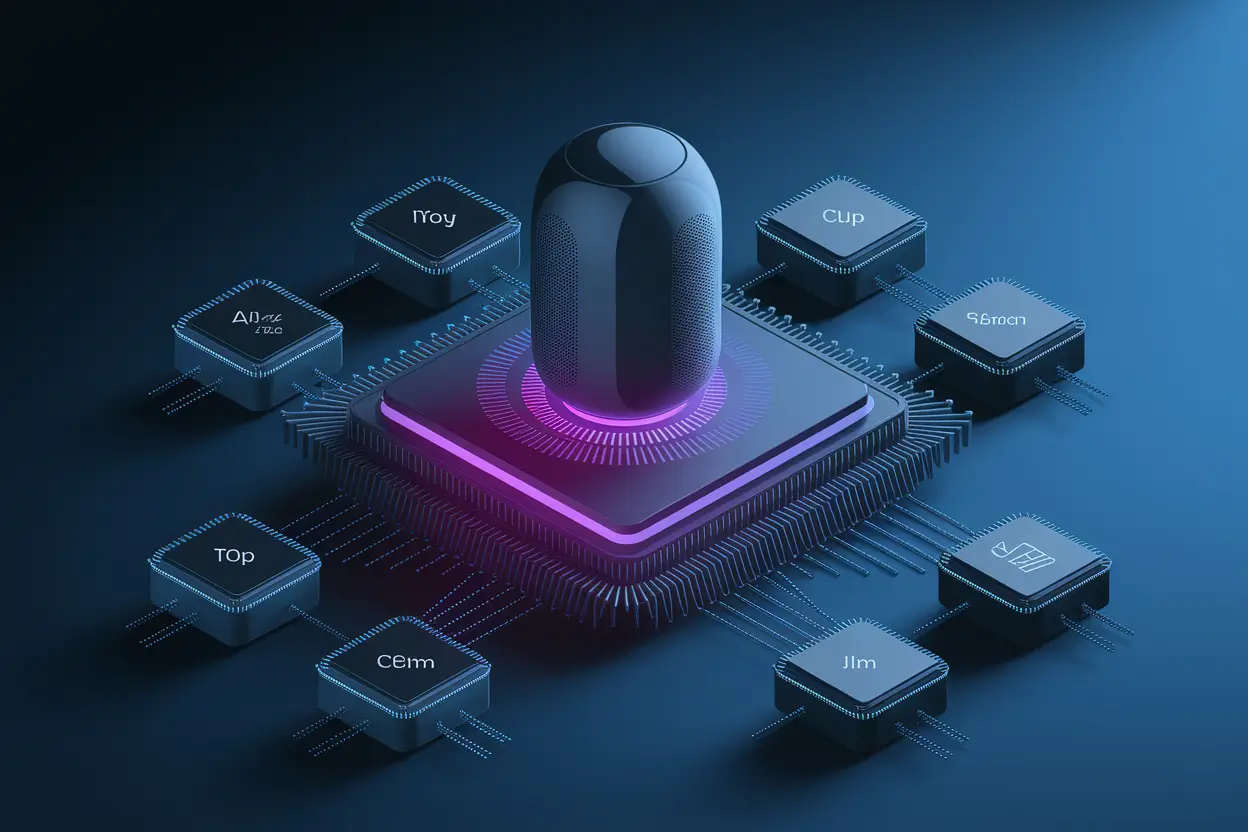
multimodal AI experiences—where voice interfaces link with visual and text components—marks the next phase of business automation, bridging customer interactions between multiple channels seamlessly.
Benefits of the Voice AI surge for businesses
Businesses leveraging Voice AI experience numerous benefits.
- Enhanced customer engagement through natural conversations and faster responses.
- Operational efficiency as AI assistants handle routine calls or support inquiries.
- Cost savings from reduced call center dependency and human intervention.
- Improved accessibility for users with visual or physical impairments.
- Data-driven insights gathered from voice interactions to refine marketing or product strategies.
These advantages collectively position companies to elevate user experience while optimizing process workflows. The Voice AI surge reduces friction between customers and services, creating smoother interactions that improve brand loyalty and satisfaction.
Challenges and drawbacks of the Voice AI surge
Despite its growth potential, the Voice AI surge brings certain limitations. Privacy concerns remain a key issue since voice commands are often recorded and processed in the cloud. Data breaches or unauthorized recordings could pose threats to user trust. Additionally, speech recognition accuracy can falter amid background noise, strong accents, or emotional tones. Some users feel discomfort interacting with non-human agents, potentially reducing engagement. From a technical perspective, implementing Voice AI requires robust backend infrastructure and continuous model training, both of which increase operational costs. Balancing AI efficiency with ethical responsibility is the challenge organizations must tackle moving forward.
Voice AI surge in different industries
Across multiple sectors, the Voice AI surge is transforming workflows and consumer experiences. In customer service, IVR (interactive voice response) systems powered by AI resolve most queries autonomously. Healthcare uses AI-driven transcription to document patient interactions accurately, reducing clinician workload. Retail leverages voice commerce where users purchase products through spoken commands. Banking sees an uptick in voice authentication solutions for secure account access. Education benefits from virtual tutors that adapt to students’ learning speed. These examples highlight how industries are shifting toward voice-centered engagements, redefining user experience and operational efficiency in the process.
Real-world examples of the Voice AI surge
Notable companies exemplify the Voice AI surge in action. Amazon’s Alexa ecosystem integrates with smart homes and vehicles to provide end-to-end assistance. Google Assistant revolutionized smartphone interactions through hands-free commands. Call centers now use AI platforms like NICE and Cognigy to enhance first-call resolution. Car manufacturers embed conversational systems for navigation and entertainment control. Small businesses even integrate AI-powered IVRs for 24/7 customer support. A retail store with AI voice kiosks can answer product questions instantly, cutting waiting times. Across sectors, Voice AI proves that conversational computing represents the future of digital interfaces.
Latest trends shaping the Voice AI surge
Current trends highlight personalization, emotion recognition, and integration with IoT devices. Emotion AI, which detects tone and sentiment in speech, enriches empathy in digital interactions. Another emerging trend is edge computing—processing voice commands locally to enhance privacy and reduce latency. Multilingual models enable global scalability as businesses target international customers. Voice cloning and synthetic voice solutions offer branded “audio identities” for companies. Furthermore, convergence with augmented reality (AR) and virtual reality (VR) enables immersive, voice-interactive experiences, particularly in gaming, virtual meetings, and training environments. The Voice AI surge is expanding well beyond audio comprehension into emotional and situational awareness.
Technical setup behind the Voice AI surge
Creating a functional Voice AI system requires several integrated layers. Developers use APIs from providers such as Google Cloud Speech-to-Text or AWS Lex to manage recognition and synthesis. A typical setup includes a frontend microphone input, acoustic model, language model, and NLU pipeline. Here’s a simplified example of Python pseudocode used to process audio input:
import speech_recognition as sr
recognizer = sr.Recognizer()
with sr.Microphone() as source:
audio_data = recognizer.listen(source)
text = recognizer.recognize_google(audio_data)
print(text)
This basic illustration demonstrates the process of capturing and converting speech to text using a public API. Enterprises often build on this structure, adding custom intent classifiers and TTS modules to deliver full conversational capabilities.
Comparing the Voice AI surge with chatbots and text-based AI
Although both voice and text AI function under similar linguistic frameworks, their interaction styles differ. Voice AI creates an intuitive, hands-free experience, especially useful in multitasking scenarios. Text-based chatbots, in contrast, provide clarity and recordable interactions beneficial for complex transactions. From a business-operational standpoint, voice interactions increase engagement duration, whereas text interfaces often boost conversion by allowing users to review written responses. Combining both offers the best of both worlds—a multimodal approach enhancing accessibility and personalization. This balance illustrates why many organizations pursue omnichannel automation rather than choosing one modality exclusively.
Security and privacy in the Voice AI surge
Safeguarding user data is crucial in the Voice AI surge. Every recorded voice file carries potentially identifiable information—such as tone, speech pattern, or accent. Modern AI systems employ encryption protocols, tokenization, and anonymization to secure data. Edge computing models further boost privacy by localizing processing, ensuring sensitive data never leaves the device. Businesses must comply with data protection laws like GDPR by implementing transparent consent systems. Security strategy also includes continuous monitoring and auditing of voice analytics systems to prevent unauthorized data access. As adoption increases, maintaining ethical standards and transparency will become a differentiating factor among providers.
Voice AI surge and the human workforce
While automation often raises concerns about job displacement, the Voice AI surge is more accurately a job redefinition engine. Repetitive tasks like call routing or appointment scheduling are automated, freeing human agents for empathy-driven, complex interactions. Instead of replacing workers, AI augments their capabilities, enabling them to manage multiple communication channels simultaneously. For enterprises, this creates hybrid service models where AI handles scale, while humans offer contextual intelligence. Organizations investing in AI training programs can maximize benefits, ensuring both machines and teams work cohesively toward enhancing productivity and customer satisfaction.
Strategies for integrating the Voice AI surge into business operations
Successful adoption requires a structured implementation strategy. Step one is identifying business processes suitable for automation—customer queries, appointment scheduling, or order tracking. Next, train the AI models on domain-specific data to increase intent recognition accuracy. Deploy pilot programs internally to test interaction flow and gather employee feedback. Measure performance metrics like user satisfaction, average handling time, and call deflection rates. Constant iteration and retraining based on feedback are essential. Finally, maintaining human oversight ensures AI interactions align with brand tone and compliance standards. Strategic integration helps balance innovation with quality assurance.
Common mistakes when adopting the Voice AI surge
Organizations sometimes rush implementation without understanding audience behavior or infrastructure requirements. Common pitfalls include insufficient data for training language models, lack of multilingual support, and failure to design fallback options for misunderstood inputs. Businesses should also avoid over-reliance on prebuilt AI tools without customization, as each industry requires specialized vocabularies. Poorly optimized voice systems frustrate users and degrade trust. Comprehensive user testing, adaptive response systems, and continuous learning cycles are non-negotiable steps for success. Evaluating technology partners thoroughly before deployment mitigates these risks substantially.
Future outlook for the Voice AI surge
The future of the Voice AI surge lies in deeper contextual awareness and emotional intelligence. Future systems will detect user sentiment, adapt tone dynamically, and even recognize intent without explicit commands. The proliferation of multimodal AI means devices will soon integrate gesture recognition, eye tracking, and environmental cues. Edge AI and federated learning will address privacy while reducing dependency on cloud infrastructure. Businesses will increasingly create branded voice personas to reflect unique identities. Voice AI will become embedded in daily life—from personal assistants and vehicles to industrial operations—cementing its role as a vital element in the next era of digital transformation.
FAQs about the Voice AI surge
What industries benefit most from the Voice AI surge?
Industries such as healthcare, retail, banking, and hospitality benefit the most. These sectors see improved customer service efficiency, personalized communication, and automation of repetitive tasks through voice systems.
How secure is data in the Voice AI surge?
Data security depends on model architecture. Adopting encryption, local processing, and transparent consent management enhances trust and compliance, keeping sensitive voice data safe from misuse.
Can small businesses leverage the Voice AI surge?
Yes, cloud-based platforms and low-code AI tools allow small companies to adopt affordable voice-enabled services without massive infrastructure investments.
Will the Voice AI surge replace human jobs?
Not entirely. It will redefine responsibilities, allowing employees to focus on strategic and creative functions while AI handles repetitive tasks efficiently.
How can companies prepare for the Voice AI surge?
Firms should begin by assessing operational areas that would gain from automation, train datasets specific to their industry, and prioritize secure, ethical deployment.
Conclusion: Embracing the Voice AI surge in your business
The Voice AI surge represents one of the most transformative forces reshaping business landscapes today. By intelligently merging human-like speech understanding with automation, enterprises are boosting efficiency, engagement, and accessibility. From customer service to data analytics, the adoption of voice-driven systems is now a marker of business innovation. Organizations that understand its mechanics, prepare strategically, and address ethical and privacy standards will thrive in this revolution. Voice AI is not merely a technological upgrade—it’s an evolution in how businesses and humans communicate, collaborate, and grow together in the digital age.