


Meta offers its AI model for the first time, with a price. This historic pivot marks a major shift in Meta’s artificial intelligence strategy. For years, Mark Zuckerberg’s company provided open-weight models for free. Now, they are launching a paid API to challenge OpenAI and Anthropic directly.
By charging for access to Muse Spark 1.1, Meta changes the competitive landscape. This move directly targets corporate and individual developers. The company wants to monetize its massive infrastructure investments. It also marks a departure from their previous strategy of relying strictly on free Llama weights.
Why Meta Offers Its AI Model for the First Time, With a Price
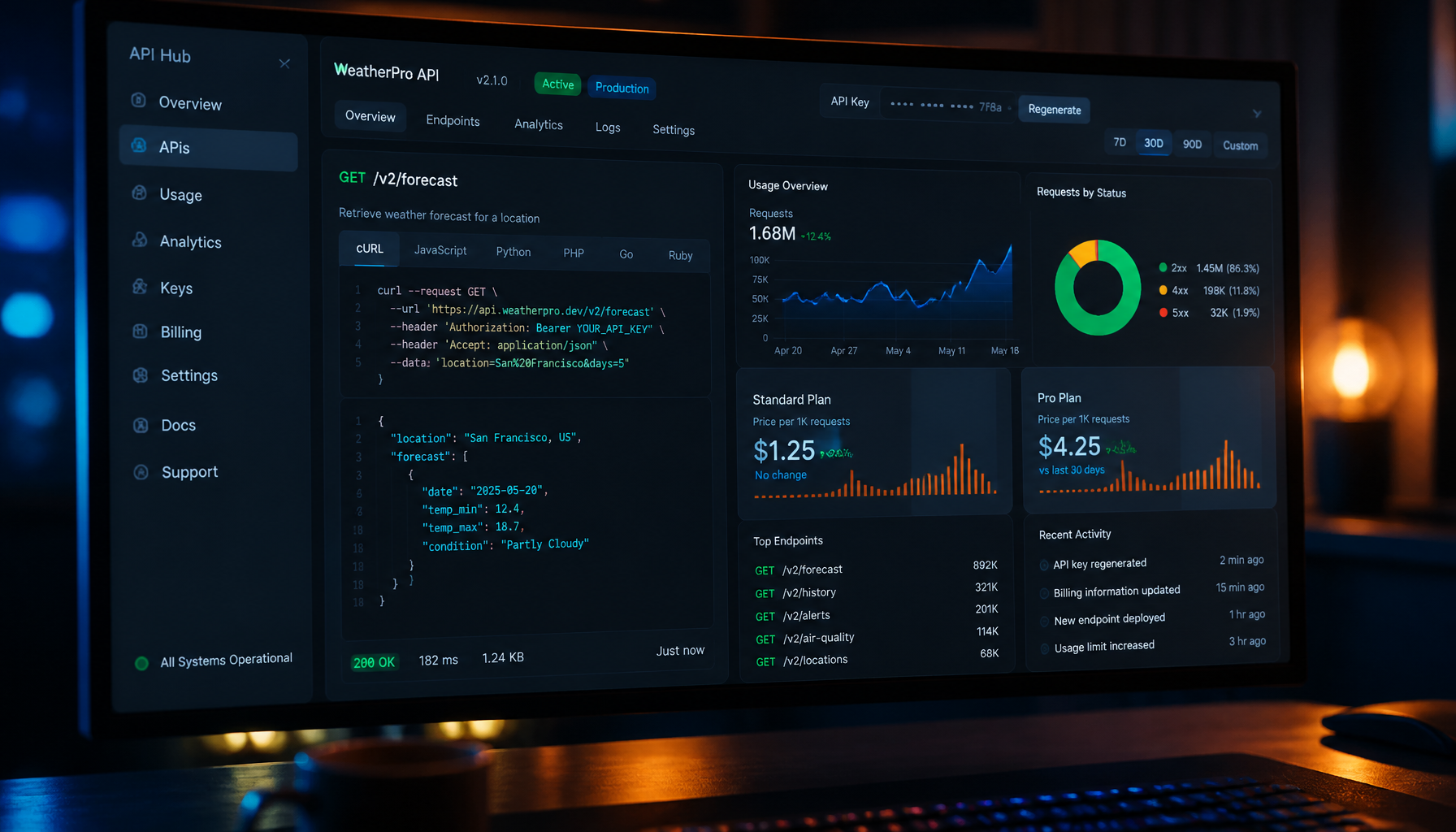
This strategic shift represents a new chapter for the social media giant. On Thursday, Meta announced the paid Meta Model API. It charges $1.25 per million input tokens. Output tokens cost $4.25 per million. New accounts receive $20 of free credits to explore the service.
Meta chief AI officer Alexandr Wang called these rates very aggressive. Indeed, they undercut several key industry players. This positioning is meant to lure developers who currently use Claude or GPT models. Meta wants to leverage its massive consumer reach to build a highly active developer ecosystem.
Enterprise teams currently utilizing Generative Ai Integration Services will find this competitive pricing attractive. Meta has realized that open-source models are great for developer goodwill, but they do not pay for massive data centers. Charging for hosted APIs allows Meta to capture recurring enterprise revenue.
Breaking Down Muse Spark 1.1 (Avocado)
Muse Spark 1.1 is the latest evolutionary step in Meta’s AI portfolio. It is far more than a minor iterative patch. Internally code-named Avocado, the model is built for intensive agentic tasks. It supports a massive 1-million-token context window natively.
This large context allows the model to process extensive codebases easily. It coordinates multiple parallel sub-agents to solve complex programmatic goals. In addition, it natively ingests images, video, and documents. These capabilities make it a strong option for modern Generative Ai Tools.
Developers aiming to boost Business Productivity will find the model’s tool-calling functions incredibly powerful. For example, Replit’s CEO recently praised its efficiency. It has been heavily trained on coding tasks, which Meta believes are the foundation of true digital agency.
If you want to Build Crypto Ai Agents 2025 Guide protocols, having native multi-agent coordination is a game-changer. Muse Spark 1.1 provides the architectural backbone for these autonomous systems without demanding complex engineering setups.
The AI Agent Landscape: Project Watermelon
While Muse Spark 1.1 is impressive, Meta is already preparing an even larger model. Code-named Watermelon, this model is still undergoing training. Alexandr Wang has reportedly told staff that Watermelon already matches OpenAI’s GPT-5.5 on internal benchmarks.
Meta is taking a highly confident stance against its peers. When asked about matching Anthropic’s flagship models on coding tasks, Wang promised a release pretty soon. This represents a fast turnaround for a company once thought to be trailing in the frontier model race.
This aggressive development pace is highlighted in the Latest Tech Global News Roundup May 25 2026 reports. OpenAI recently countered with its GPT-5.6 family, dropping Sol, Terra, and Luna. At the same time, SpaceXAI released Grok 4.5 to undercut competing models on cost and speed.
To navigate this crowded field, organizations often work with an Ai Development Company In Los Angeles or an Ai Development Company In Abu Dhabi. These specialists help integrate new APIs like Meta’s into custom business workflows safely.
The Financial Strategy and the Iris AI Chip
Frontier model training is incredibly expensive. On Tuesday, Meta signaled to investors that infrastructure spending could reach $125 billion to $145 billion this year. This budget covers servers, real estate, and power grids.
To lower long-term expenses, Meta is designing its own silicon. The company expects production of its first in-house AI chip, Iris, in September. This custom chip is being manufactured in partnership with Broadcom and TSMC.
According to reports on Bloomberg, investors welcomed these updates. Meta shares rallied 5% on Thursday following the announcement. This gain reversed months of market anxiety regarding Meta’s heavy capital spending.
Integrating AI Agents with the Real World
The rise of paid agentic models raises fundamental architectural questions. For example, many builders are asking How Do Blockchain And Ai Work Together to secure transaction pipelines. If AI agents run autonomously, they need programmatic payment rails to purchase cloud resources.
We are already seeing Top Ai Smart Contract Trends 2026 showing agents executing smart contracts directly. This capability will turn AI agents into economic entities that can manage corporate budgets.
Outside of blockchain, AI continues to redefine traditional business roles. We see this in sales teams using an Ai Email Assistant to handle client outreach. Entire industries are using Ai For Sales And Marketing to improve conversion rates.
In critical fields, specialized systems like the Ai Healthcare App Aq Ant Group 2025 show how deep reasoning saves lives. Even creative industries are evolving. We see How Ai Is Replacing Traditional Vfx Artists through advanced generative systems.
Conclusion: Will Developers Switch?
With Muse Spark 1.1, Meta offers its AI model for the first time, with a price. This is a bold move to challenge the established dominance of OpenAI and Anthropic. Meta has aggressive pricing, massive infrastructure, and an impending powerhouse model in Watermelon.
The real test is whether developers will move away from their existing setups. As the agentic era grows, Meta’s competitive pricing might be the perfect catalyst for a massive industry shift.