

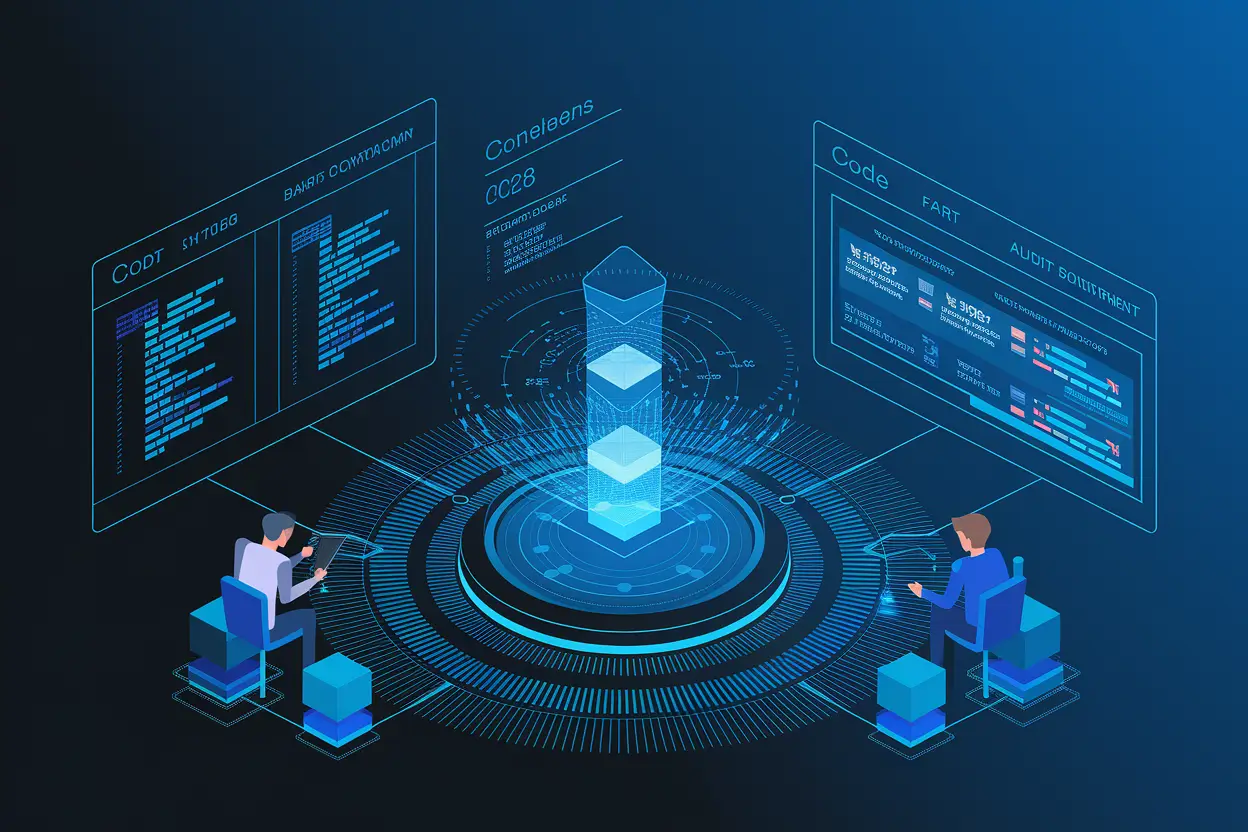
Cost of Smart Contract Development in 2026 is one of the hottest topics in blockchain and decentralized technology today. As businesses continue to adopt blockchain to automate trust, reduce intermediaries, and improve transparency, understanding the pricing structure of developing smart contracts becomes essential. The cost in 2026 reflects evolving technologies, security standards, and regulatory changes that are shaping the blockchain development landscape worldwide.
Smart contracts are self-executing programs stored on a blockchain that automatically enforce the terms of an agreement once predefined conditions are met. They eliminate the need for intermediaries, reducing human error and enhancing efficiency. In 2026, smart contract development encompasses both simple token contracts and multi-chain integrated systems for enterprise use cases. Let’s explore in detail what affects the Cost of Smart Contract Development in 2026 and how businesses can budget accordingly.
Understanding the Cost of Smart Contract Development in 2026
The cost is determined by factors like platform choice, contract complexity, developer expertise, testing and auditing needs, and the security layers involved. Blockchains such as Ethereum, Binance Smart Chain, Solana, and Polygon all have varying resource costs and programming languages. In 2026, Ethereum continues to be popular, but layer-2 solutions have reduced gas fees, significantly impacting total development costs.
Core Components of Smart Contract Development Cost in 2026
Several key elements form the total cost structure of smart contract projects. These include smart contract design, blockchain deployment, testing, and security audits. The average cost for a basic contract in 2026 may range from $5,000 to $30,000, while enterprise-level systems could exceed $100,000. Additional investment in compliance and advanced security layers contributes significantly to the cost.
How Smart Contract Development Works in 2026
Smart contract development follows a specific lifecycle that ensures security and reliability. It starts with defining logic, writing code using Solidity or Rust, and then testing extensively on testnets. Continuous integration pipelines and code reviews have become standard practices by 2026. Deployment occurs after audit approval. The rising recognition of smart contract security has made automated formal verification tools a major component of modern workflows.
Pros and Cons Related to the Cost of Smart Contract Development in 2026
Pros
- Automation saves time and cuts middlemen costs.
- Enhanced transparency and accuracy.
- Immutable recordkeeping and traceability increase trust.
- Reduced operational expenditure in the long term.
Cons
- Initial development and audit costs can be high.
- Errors are costly since contracts are irreversible once deployed.
- Skilled developers remain expensive due to high demand.
- Regulatory compliance adds complexity and expense.
Technical Breakdown of Smart Contract Development Cost in 2026
Cost benchmarks depend on coding effort and the level of technical integration. A simple ERC-20 token may take under 30 hours, whereas a complex financial dApp may take 500+ hours, including audits. Below is an example of Solidity code representing a simple token contract snippet:
Note: This is sample pseudocode for educational purposes only.
Example:
pragma solidity ^0.8.0;
contract SimpleToken {
mapping(address => uint) public balances;
function mint(uint amount) public { balances[msg.sender] += amount; }
}
This basic code demonstrates token minting functionality. In production, more advanced logic such as access control and transaction safety must be applied, increasing total development expense.
Key Factors Influencing the Cost of Smart Contract Development in 2026
- Blockchain network selection: Ethereum and Solana differ in gas and transaction costs.
- Contract complexity: Advanced logic or multi-chain interoperability demand more effort.
- Security audits: Third-party audits often cost thousands but ensure reliability.
- Team location: Offshore developers can cost less, yet quality and communication may vary.
- Regulatory readiness: Costs include ensuring compliance with legal frameworks.
Use Cases for Smart Contract Development in 2026
Smart contracts are now central to industries like finance, healthcare, logistics, and real estate. In decentralized finance (DeFi), they control lending protocols, token swaps, and stablecoin issuance. In healthcare, they automate patient record sharing securely. Real estate uses them for instant property transfers. Supply chains rely on them to create transparent tracking systems across borders.

The diversification of blockchain platforms and tooling in 2026 has led developers to specialize in domain-specific contracts rather than one-size-fits-all systems. This specificity influences the cost as developers command premiums for niche expertise.
Real-World Examples Showing Cost of Smart Contract Development in 2026
For example, in 2026, a mid-sized DeFi company might invest between $50,000 and $120,000 to build multiple audited smart contracts for token minting, farming rewards, and governance. Healthcare blockchain startups may spend $80,000 or more on privacy-preserving contracts aligned with HIPAA-like regulations. Corporate firms creating DAO governance structures often allocate budgets surpassing $150,000.
Smart Contract Development Trends in 2026
New trends lowering or changing the Cost of Smart Contract Development in 2026 include improved low-code development tools and AI-assisted contract generators. There’s also wider adoption of multi-chain collaboration, making development and deployment more cost-efficient. Token standards beyond ERC-20, such as ERC-4337 for account abstraction, simplify functionality while ensuring stronger security. Audit-as-a-service platforms with AI-driven scanning further trim costs by automating bug detection.
Comparing the Cost of Smart Contract Development in 2026 to Alternatives
Traditional software development lacks the immutable and decentralized nature of smart contracts. While it often involves ongoing maintenance fees and trusted middlemen, smart contracts require higher upfront expenditure but lower lifetime costs. Compared to centralized applications, smart contracts minimize transaction risk but demand greater initial auditing investments. A comparative chart below outlines differences:
| Aspect | Traditional Apps | Smart Contracts |
|---|---|---|
| Development Cost | Low upfront, ongoing updates | High upfront, minimal recurring |
| Security | Centralized vulnerabilities | Decentralized, cryptographic |
| Maintenance | Continuous | Minimal post-deployment |
| Transparency | Limited | Full on-chain visibility |
Technical Suggestions for Reducing the Cost of Smart Contract Development in 2026
- Use audited open-source frameworks to save time.
- Employ automated testing systems to detect logic errors early.
- Leverage layer-2 solutions to cut transaction deployment fees.
- Outsource partial tasks like UI integrations to reduce internal load.
- Adopt escrow-based hiring to optimize payment control.
Security and Auditing Costs in Smart Contract Development 2026
Security auditing is one of the biggest ticket items. Depending on project size, audits cost from $4,000 to $100,000 in 2026. Layered auditing using automated and human verification ensures zero major exploits post-launch. Developers integrate monitoring dashboards that trigger alerts for suspicious events, further minimizing risk. Although expensive, audits remain non-negotiable for credible deployments.
Estimating the Full Budget for Smart Contract Development in 2026
For most businesses, total cost allocation involves multiple components: ideation, prototyping, full coding, deployment, and audits. Average structured budgets in 2026 can be broken down as follows: 20% for concept and planning, 40% for development, 25% for testing, and 15% for compliance and release processes. Enterprise-grade distributed applications frequently exceed $200,000 due to regulatory and scale needs.
Future Outlook on the Cost of Smart Contract Development in 2026 and Beyond
The future outlook indicates continued cost variation based on scalability advances. As zero-knowledge rollups, sharding, and parallel execution models mature, deployment fees are likely to drop by up to 40% across major networks by 2027. Developer talent pools are increasing, leading to competitive hourly rates while maintaining high-quality output. Continued integration with AI and decentralized legal tech will reshape operational costs dramatically.
Common Mistakes When Budgeting for the Cost of Smart Contract Development in 2026
- Ignoring budget reserves for security audits.
- Underestimating gas fee volatility on major blockchains.
- Skipping testnets and rushing to mainnet deployment.
- Not accounting for third-party integration expenses.
- Hiring inexperienced developers leading to costly rewrites.
Actionable Takeaways Regarding the Cost of Smart Contract Development in 2026
- Plan early and allocate funds for post-deployment monitoring.
- Negotiate fixed-scope contracts to prevent cost overflow.
- Prefer reputable audit providers with traceable credibility.
- Adopt modular design for future scalability at reduced price.
- Factor governance and compliance within your initial roadmap.
FAQs About the Cost of Smart Contract Development in 2026
1. What is the minimum cost for developing a simple smart contract in 2026?
The minimum cost for a basic contract could start from around $3,000–$10,000, depending on blockchain type and complexity.
2. Why are audits so expensive in smart contract development?
Audits require deep code analysis to guarantee security. The costs include manual reviews, automated scanning, and verification methods that ensure no exploitable bugs remain.
3. Are AI tools impacting the cost of smart contract development?
Yes, AI-based analysis tools in 2026 reduce repetitive testing time and error rates, but highly customized contracts still require expert human supervision.
4. Which industries spend the most on smart contracts in 2026?
Financial institutions, healthcare, and supply chain corporations have the highest budgets due to security and scalability needs.
5. How do layer-2 solutions affect overall development cost?
Layer-2 networks reduce gas fees, making both development and deployment cheaper and more accessible for startups and SMEs.
Conclusion on the Cost of Smart Contract Development in 2026
In summary, the Cost of Smart Contract Development in 2026 varies widely based on complexity, network, and compliance factors. While basic contracts remain affordable, enterprise solutions involving audits, integrations, and high traffic environments demand significant investment. Proper planning, toolset optimization, and expert partnerships can ensure both cost efficiency and secure deployment. The industry’s rapid evolution guarantees that understanding cost dynamics remains essential for any organization embracing blockchain technology.