


Business plan development is the foundational step toward turning an idea into a sustainable enterprise. A business plan clearly details your company’s goals, strategies, target market, financial projections, and operational framework. Whether you’re launching a startup or expanding an existing business, an effective business plan acts as a blueprint, offering clarity and direction at every stage of your journey.
What Is a Business Plan and Why It Matters
A business plan serves as a roadmap that outlines your business goals, structure, operations, and strategies. Entrepreneurs use it to attract investors, guide decision-making, and manage growth. Lenders and stakeholders often require one for funding approvals. More than a static document, it’s a dynamic tool that evolves along with your business.
Key Elements in Every Business Plan
A strong business plan encompasses several essential sections that collectively present a comprehensive view of your enterprise. Here are the most important components:
- Executive Summary
- Company Description
- Market Analysis
- Products or Services
- Marketing and Sales Strategy
- Organizational Structure
- Financial Projections
- Funding Requirements
- Implementation Plan
Business Plan Executive Summary
The first and most-read section of a business plan is the executive summary. It condenses your entire plan into a few paragraphs and should hook the reader. It includes your company’s mission statement, objectives, product or service offerings, and a preview of your financial outlook.
Detailed Company Description in Your Business Plan
This section of the business plan delves deep into your business’s history, legal structure (LLC, Corporation, etc.), location, target market, and what sets your company apart (unique selling proposition). Investors want to understand the ‘why’ behind your business.
Conducting Market Analysis Within a Business Plan
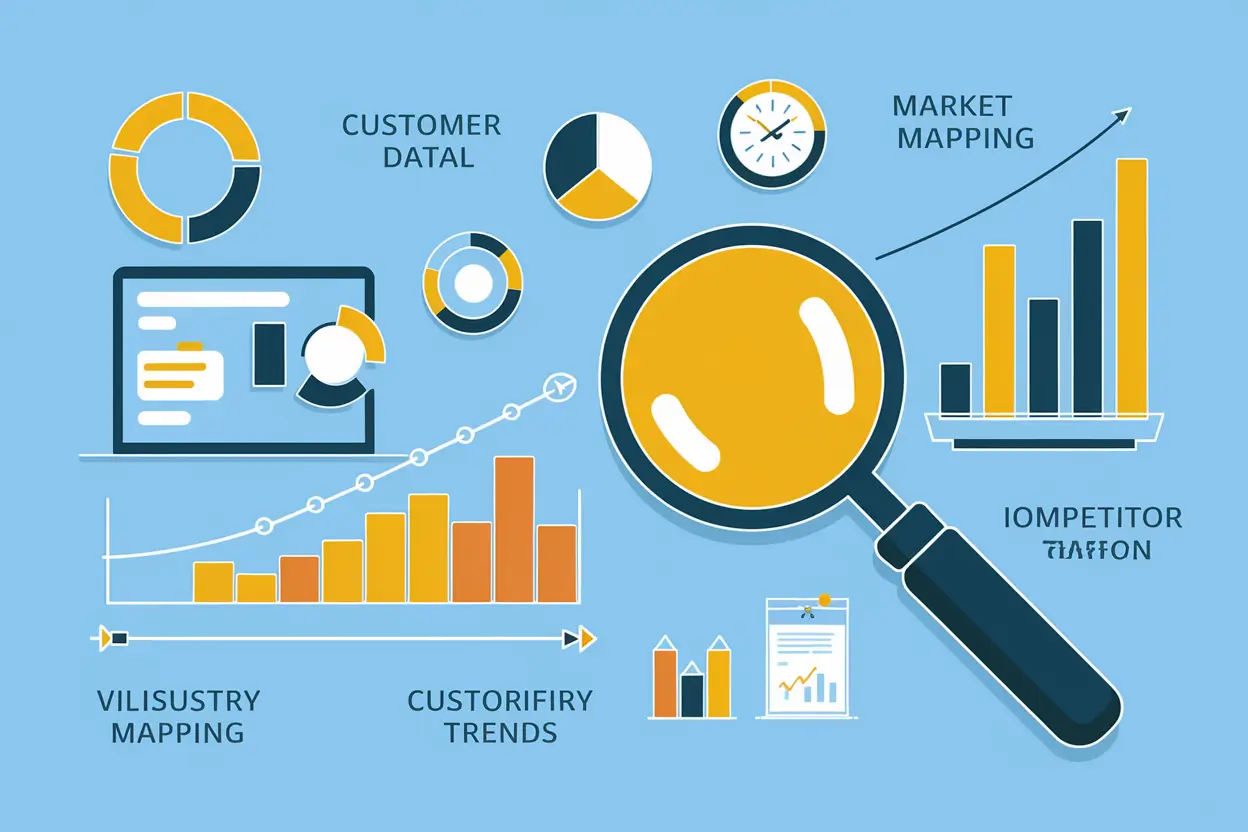
A thorough market analysis ensures your business plan is rooted in data. This section shows you’ve studied your target audience, industry trends, and competitors. It should include customer demographics, a SWOT analysis, and market size assessments.
Describing Products or Services in a Business Plan
This section of your business plan explains what you offer and why it’s valuable. Detail product features, lifecycle, patents if any, and what differentiates your offerings. Show how your products or services solve real problems for your consumers, improving their lives or businesses.
Marketing and Sales Strategy in Your Business Plan
Here, your business plan outlines how you intend to attract and retain customers. Discuss your pricing strategy, promotion plans, distribution channels, and sales processes. Clearly state your customer acquisition strategy, and include digital marketing methods if applicable.
Organizational Structure of a Business Plan
This part provides an overview of your company’s organizational setup. Your business plan should outline the roles and responsibilities of your team, management hierarchy, and bios of key personnel. Include a simple org chart to offer visual clarity if necessary.
Financial Projections in Business Plan
Numbers are critical to any business plan. This section delivers projected income statements, balance sheets, and cash flow statements for anywhere from 3 to 5 years. Include a break-even analysis and any past performance data if your business is already operational.
Highlighting Funding Requirements in the Business Plan
If you’re seeking funding, this is where your business plan defines how much capital you need and how it will be used. Be specific—investors want transparency. Mention whether funds will go toward equipment, marketing, hiring, or R&D.
Crafting the Implementation Plan in a Business Plan
Your business plan must clearly explain how you’ll execute your ideas. Detail timelines, key milestones, resource allocation, and performance metrics. This shows stakeholders that you’re ready to act and capable of delivering results.
Pros and Cons of Creating a Business Plan
While a business plan is critical for success, it’s important to recognize potential drawbacks as well as benefits.
Pros
- Guidance: Clarifies direction and operational goals.
- Funding: Essential tool for securing investor or bank financing.
- Risk Management: Helps identify challenges and plan for obstacles in advance.
Cons
- Time-Consuming: Requires detailed research and effort to assemble properly.
- Rigidity: May limit your responsiveness to market changes if overly detailed.
Use Cases of a Business Plan in Real Life
Business plan applications extend beyond startups. Established companies use them to plan expansions, enter new markets, or launch products. Nonprofits create them to secure grants and outline strategic objectives.
- Startups: Pitch decks and business plans are often used in tandem for funding rounds.
- Corporations: Product rollouts or entering foreign markets require detailed business plans.
- Nonprofits: Grant applications often require a rigorous business planning document.
Trends Revolutionizing Business Plan Development
The way business plans are developed is changing:
- Lean Startup Approach: Concise, one-page summaries that allow rapid iteration.
- Digital Planning Tools: Real-time collaboration options have improved accuracy and speed.
Technical Solutions that Simplify Business Plan Creation
Leveraging tools makes your business plan more efficient:
- Templates: Help ensure all key sections are covered without missing essentials.
- Planning Software: Offers automation for financial forecasts and scenario analysis.
Comparing Traditional vs. Lean Business Plans
| Aspect | Traditional Business Plan | Lean Business Plan |
|---|---|---|
| Length | 20–40 pages | 1–2 pages |
| Detail | Highly comprehensive | Concise summary |
| Ideal For | Investors and banks | Internal management |
| Update Frequency | Infrequent | Frequent/Iterative |
Future Outlook for Business Plans
Your business plan will evolve along with global trends:
- AI Integration: Predictive analytics and data-driven projections will be automated.
- Sustainability: ESG reporting and climate goals to become standard in business planning.
Common Mistakes in Crafting a Business Plan
Even the most experienced entrepreneurs make errors when drafting a business plan. These mistakes can hinder funding or operational execution:
- Overestimating revenue projections
- Underestimating startup costs
- Lack of specificity on target market
- Failure to identify key competitors
- Missing action steps or unclear implementation plans
Tips for Writing an Effective Business Plan
- Start with a strong executive summary
- Use visuals like graphs and charts to explain financials
- Be realistic and honest
- Write in clear, concise language without jargon
- Update the plan annually or semi-annually
FAQs About Business Plans
What is the primary purpose of a business plan?
The purpose is to guide your business operations and attract funding by outlining key strategic and financial elements.
How long should a business plan be?
Traditional plans can range from 20 to 40 pages. Lean plans are typically 1–2 pages.
Who needs a business plan?
Startups, established businesses looking to grow, and nonprofits can all benefit from a clear, structured business plan.
Can a business plan be changed?
Yes. A business plan is a living document that should be updated regularly to reflect market changes, growth, and performance.
How often should I revisit my business plan?
At least once a year, or whenever significant business changes occur.
Conclusion: Why a Business Plan Is Your Success Tool
A business plan is not just a box you check but a critical enabler of success. For entrepreneurs and established businesses alike, it provides strategic clarity, operational guidance, and increased funding potential. By understanding every element, leveraging tools, and keeping your plan dynamic, you position your business to not only launch—but thrive.