

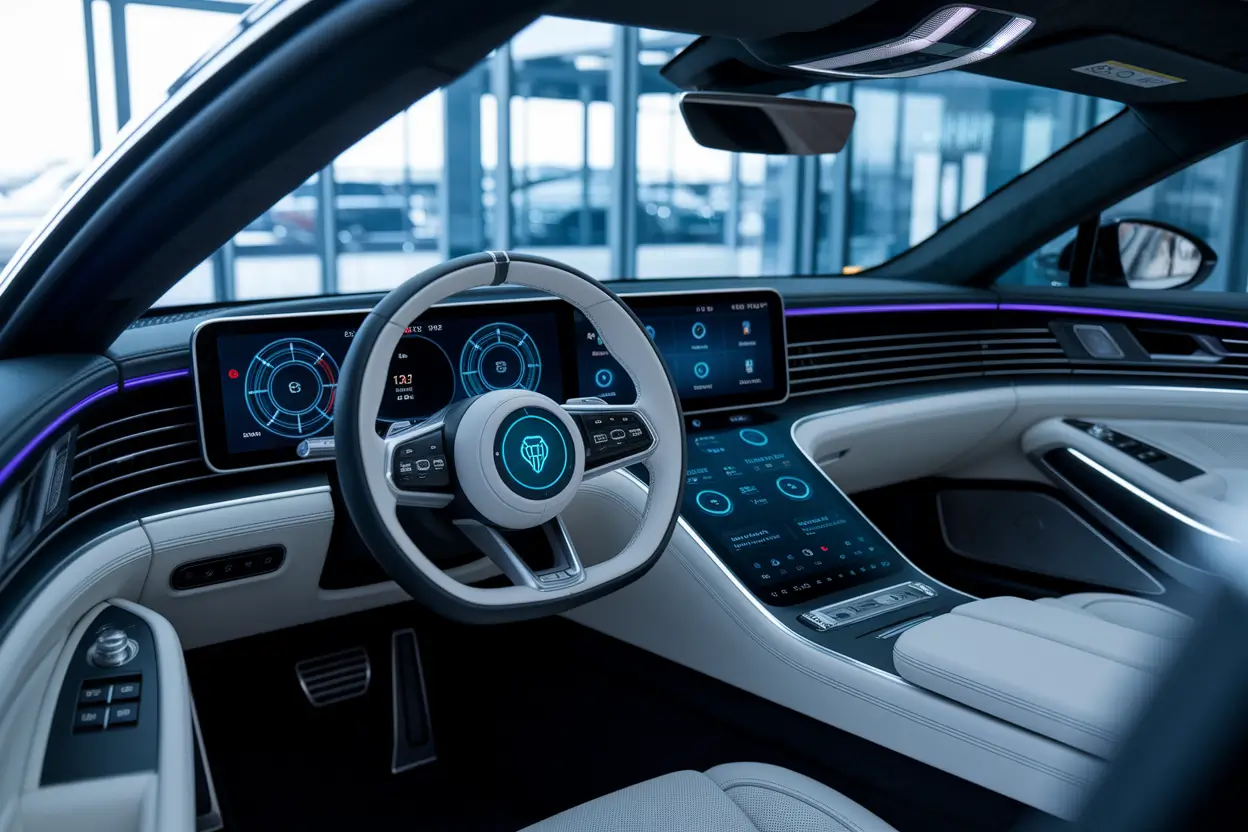
Automotive Software Guide 2026 explores the rapidly evolving world of automotive software, its core technologies, deployment platforms, and transformative impact on the global automotive industry. In an era defined by connected vehicles, digital ecosystems, and electrification, automotive software is at the heart of innovation. By 2026, it will power nearly every aspect of vehicles—from basic engine control to advanced self-driving algorithms, safety systems, and infotainment. This comprehensive guide explains what automotive software is, how it functions, key solutions and platforms driving this transformation, and where the future is headed.
Understanding Automotive Software Guide 2026
Automotive Software Guide 2026 refers to the in-depth knowledge of vehicle-based software, frameworks, and embedded systems used to manage, control, and enhance vehicle functionality. It incorporates software components ranging from embedded operating systems and middleware to cloud-based services and user interfaces. The goal is to optimize performance, efficiency, and user experience for both consumers and fleet operators.
Automotive software integrates with hardware components like sensors, microcontrollers, and actuators through protocols such as CAN (Controller Area Network), LIN (Local Interconnect Network), and Ethernet. This unified ecosystem ensures seamless communication and coordination across vehicle subsystems like braking, navigation, and infotainment. By 2026, the trend will lean toward software-defined vehicles (SDVs), where software updates and configurations determine vehicle behavior.
Core Concepts in Automotive Software Guide 2026
The key concept is the shift from hardware-centric to software-defined vehicles. Manufacturers now build vehicles with powerful electronic control units (ECUs), centralized computing architecture, and over-the-air update capabilities. Main software domains include:
- Embedded Software: Code running on ECUs for safety-critical operations like braking or airbag deployment.
- Middleware: A communication bridge between hardware and applications ensuring real-time data handling.
- Application Software: User-oriented layers managing infotainment, navigation, and driver settings.
- Cloud-Based Services: Platforms enabling remote diagnostics, data analytics, and OTA updates.
This structure creates a reliable foundation for connected, efficient, and automated vehicles.
How Automotive Software Works
Automotive software operates as a layered architecture system. At the base, embedded operating systems like AUTOSAR, QNX, or Linux control critical tasks. Middleware handles communication across devices and networks. Applications process information from sensors, perform computations, and deliver commands to actuators or display interfaces. Data flows continuously from vehicle components to cloud platforms for predictive maintenance or updates.
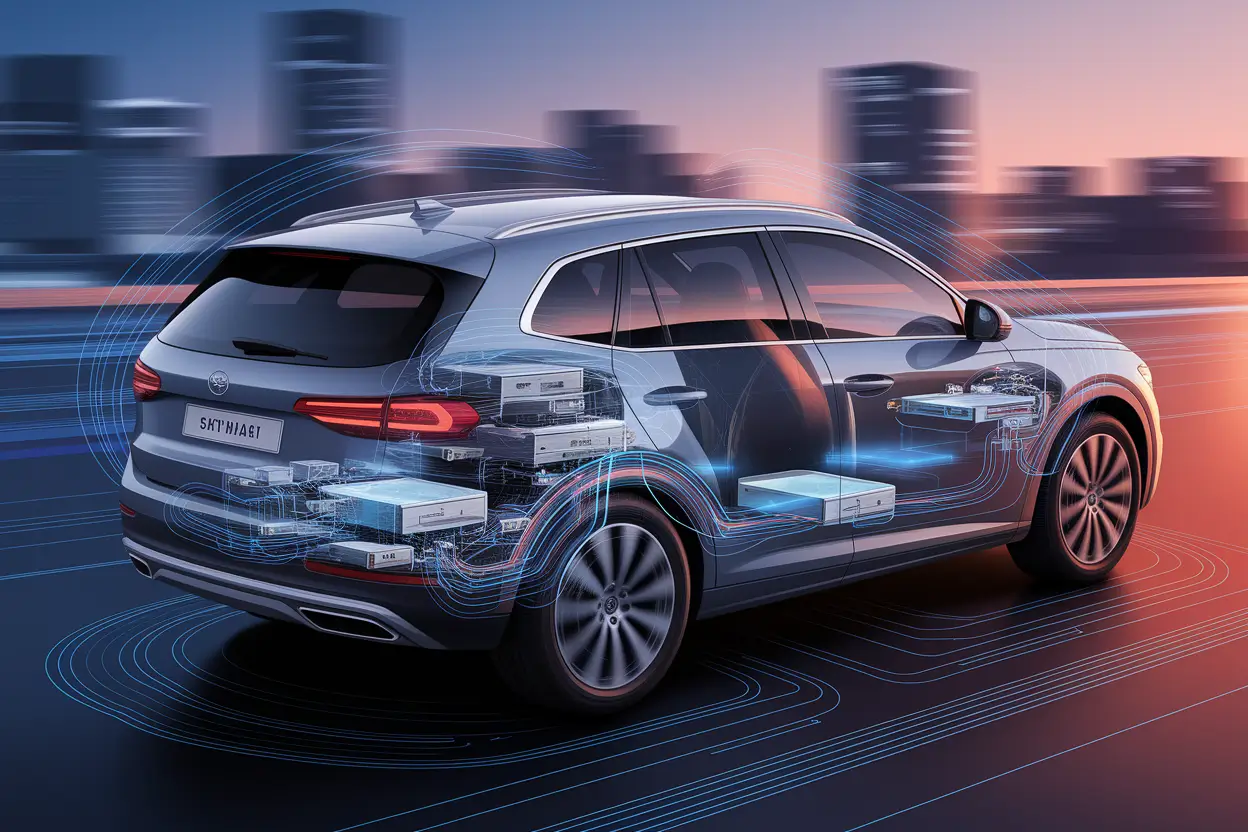
A simplified workflow might look like this: an Advanced Driver Assistance System (ADAS) software collects real-time inputs from LIDAR, radar, and cameras; these get processed by AI algorithms hosted on specialized chips; then decisions like braking or steering adjustments are enacted instantly. Cloud connectivity allows the software to get algorithm upgrades without visiting a service center.
Major Platforms in Automotive Software Guide 2026
Several platforms dominate the automotive software industry and will continue leading into 2026:
- AUTOSAR (AUTomotive Open System ARchitecture): The global standard platform for automotive ECU software development, promoting code reuse and modularity.
- Android Automotive OS: A Google-led open platform integrating infotainment and connectivity for vehicles, allowing app-based experiences.
- QNX: A real-time operating system renowned for its safety certification and stability in autonomous and embedded systems.
- Red Hat Automotive Platform: Tailored for centralized computing and Linux-based vehicle platforms with high scalability.
- Vector Informatik Tools: Development and testing environments for embedded automotive applications ensuring compliance with automotive standards.
Solutions in Automotive Software Guide 2026
In 2026, solutions are categorized by purpose:
- Safety Solutions: Software for ADAS, airbags, and stability control ensuring passenger protection.
- Connectivity Solutions: Enable real-time vehicle-to-everything (V2X) communication.
- Energy Management: Smart Battery Management Systems (BMS) optimizing electric vehicle (EV) range and charging.
- Infotainment Systems: Customizable digital dashboard and entertainment interfaces.
- Fleet Management: Software for tracking, analytics, and optimization of commercial fleets.
These solutions integrate via APIs to work seamlessly across a car’s digital ecosystem.
Use Cases of Automotive Software Guide 2026
Automotive software plays roles across multiple industry segments:
- Electric Vehicles (EVs): Battery monitoring, motor control, and renewable integration.
- Autonomous Vehicles: Sensor fusion, AI-based perception, and decision-making software.
- Connected Cars: Cloud-based analytics and over-the-air (OTA) updates for navigation and diagnostic improvements.
- Smart Mobility: Intelligent car-sharing, ride-hailing apps, and fleet telematics.
For example, Tesla’s OTA model exemplifies how automotive software can continuously evolve vehicle capabilities without physical intervention.
Pros and Cons of Automotive Software Guide 2026
Pros:
- Improves safety through automation and real-time analytics.
- Enhances driver comfort and UX with predictive assistance features.
- Reduces maintenance via OTA software updates.
- Boosts efficiency in fleet management and logistics.
Cons:
- High development cost and certification requirements.
- Cybersecurity risks increase with more connectivity.
- Complex integration of new systems with legacy hardware.
- Dependence on software suppliers for updates and support.
Technical Architecture and Integration in Automotive Software Guide 2026
In modern vehicle design, the shift to centralized electronic architecture reduces dozens of ECUs into powerful domain controllers. These controllers manage various subsystems using virtualization technologies and real-time operating systems. Key elements include high-performance processors, containerized deployments, and safety kernels compliant with ISO 26262 standards.
A simplified integration chain might involve edge computing at the vehicle level and cloud-based orchestration at the backend. Developers use development frameworks like ROS (Robot Operating System) for autonomous functionalities and AI-driven diagnostics.
Real-World Examples within Automotive Software Guide 2026
- Tesla: OTA software updates defining vehicle capabilities such as acceleration improvements and driver assistance enhancements.
- Volkswagen Cariad: Custom-built platform centralizing digital services and enabling unified digital ecosystems.
- Mercedes-Benz MB.OS: Modular software architecture integrating infotainment, powertrain, and self-driving systems.
- General Motors Ultifi: Software layer enabling subscription-based services and digital features on demand.
Each of these examples demonstrates how manufacturers strategically leverage software as a differentiator and revenue generator.
Comparisons and Alternatives in Automotive Software Guide 2026
| Feature | Traditional Vehicles | Software-Defined Vehicles |
|---|---|---|
| Update Cycle | Static, requires service center | Dynamic, over-the-air updates |
| Performance Optimization | Hardware limited | Software updates continuously improve performance |
| Customization | Minimal | App-based personalized features |
| Security | Less exposure | High cybersecurity focus needed |
The major difference lies in adaptability—software-defined vehicles evolve after purchase, offering continuous innovation.
Latest Trends in Automotive Software Guide 2026
Key trends shaping 2026 include:
- AI-Powered Control: Machine learning algorithms process driving patterns for improved safety.
- Edge Computing: Real-time decision-making processed in-vehicle to reduce latency.
- Digital Twins: Virtual replication of vehicles enabling simulation and diagnostics.
- Blockchain Integration: Secure communication and data verification for connected networks.
- Subscription Models: Monetization via on-demand software feature activation.
Technical Suggestions from Automotive Software Guide 2026
- Use containerization (Docker/Podman) for modular deployment environments.
- Adopt DevSecOps pipelines to improve safety and compliance.
- Leverage AUTOSAR Adaptive Platform for advanced driving systems.
- Implement cybersecurity intrusion detection using embedded AI.
- Integrate continuous validation frameworks to ensure ISO 26262 compliance.
Security remains a primary focus, demanding authentication layers, segmentation, and secure firmware updates through encryption technologies.
Future Outlook of Automotive Software Guide 2026
By 2026, most automotive OEMs will adopt unified software architectures across product lines. Vehicles will become ‘computers on wheels’ operating through centralized cloud ecosystems. Predictive analytics, real-time control, and AI-driven optimization will dominate.
Software monetization will broaden—drivers will pay for upgrades, features, or performance tuning. Continuous over-the-air updates will support regulatory compliance, environmental monitoring, and user customization. Automotive enterprises will transition from manufacturing-centric to digital service-first models.
Implementing Automotive Software Guide 2026: A Step-by-Step Overview
- Define safety and performance requirements aligning with ISO 26262 standards.
- Choose core platforms—AUTOSAR, QNX, or Linux-based architecture.
- Develop modular application layers.
- Integrate secure connectivity and encryption.
- Test via simulation environments and hardware-in-the-loop verification.
- Deploy updates OTA with validation routines.
This structured process ensures reliability, scalability, and a sustainable software lifecycle management approach.
Common Challenges in Automotive Software Guide 2026
Developers and manufacturers often encounter technical and operational challenges, such as ensuring compliance with industry safety standards, achieving interoperability across hardware vendors, and meeting real-time processing requirements. Cybersecurity risks also threaten the increasing connectivity of vehicles. Balancing innovation with security and cost-efficiency is critical for long-term success.
Automotive Software Guide 2026 Frequently Asked Questions
What is the importance of automotive software?
Automotive software is essential for vehicle safety, performance, and user experience. It allows functions such as automatic braking, advanced navigation, and remote diagnostics, making vehicles smarter and safer.
How does automotive software ensure security?
Security is achieved using encryption, intrusion detection, firewalls, and over-the-air validation mechanisms that prevent unauthorized access or tampering.
What is a software-defined vehicle?
A software-defined vehicle uses centralized computing and software control to manage hardware functions, enabling updates, feature additions, and performance improvements through software updates.
Which programming languages are used in automotive software?
Common languages include C, C++, Python, MATLAB/Simulink, and increasingly Rust for safety-critical systems. Embedded Linux environments often use shell scripting for automation.
What’s next for automotive software after 2026?
The next phase will involve AI autonomy at scale, decentralized data management, software monetization models, and full lifecycle cloud synchronization enabling vehicles to self-optimize and evolve.
Conclusion: The Value of Automotive Software Guide 2026
Automotive Software Guide 2026 represents a new era in automotive advancement. From embedded control systems to cloud-integrated analytics, software drives safety, performance, and customer engagement. As manufacturers evolve toward software-defined paradigms, success depends on secure design, modular architectures, and constant innovation. The future belongs to companies that see cars not as mechanical products but as ever-evolving digital platforms.