


Artificial Intelligence in the Fashion Industry is transforming the way brands design, manufacture, market, and sell their products. From predictive trend analysis to virtual try-ons and supply chain optimization, AI is redefining every aspect of fashion. As technology advances, AI becomes more accessible, helping designers and retailers create smarter, more sustainable, and more personalized fashion experiences for consumers worldwide.
Understanding Artificial Intelligence in the Fashion Industry
Artificial Intelligence in the Fashion Industry refers to the integration of machine learning, data analytics, computer vision, and natural language processing within the fashion world. The primary goal is to automate repetitive processes, enhance creativity, and improve decision-making through data-driven insights. AI leverages massive datasets—from social media trends, purchasing patterns, and visual inputs—to support designers, merchandisers, and marketers in delivering products that resonate with customers.
How Artificial Intelligence in the Fashion Industry Works
The working mechanism of Artificial Intelligence in the Fashion Industry involves collecting structured and unstructured data, feeding it into AI models, and deriving actionable insights. Algorithms analyze data such as historical sales, customer feedback, search patterns, and even runway images. Machine learning models can detect emerging styles or predict which product will sell best in the next season. Computer vision tools allow AI to recognize fabrics, patterns, and colors, making it easier for design tools to generate new fashion pieces or for consumers to search visually for similar items online.
Core Concepts Behind Artificial Intelligence in the Fashion Industry
Some of the fundamental concepts include data analytics, predictive modeling, and computer vision. Natural Language Processing (NLP) is used to understand customer opinions and sentiments from online reviews and social media. Machine learning algorithms analyze trends by filtering through millions of data points. Deep learning assists in automating design generation, recognizing silhouettes, and understanding context within fashion photography. These technologies work together to allow AI systems to emulate human intuition—but faster, more accurately, and at scale.
Advantages of Artificial Intelligence in the Fashion Industry
- Efficiency: Automates repetitive or time-consuming processes such as fabric sourcing or image tagging.
- Predictive capabilities: Helps brands forecast fashion trends and consumer behaviors.
- Personalization: Enables customized recommendations for each shopper based on browsing history and preferences.
- Sustainability: Reduces waste by predicting demand more accurately, leading to fewer unsold items.
- Enhanced customer engagement: Through chatbots and virtual assistants, AI personalizes interactions and improves service quality.
Disadvantages of Artificial Intelligence in the Fashion Industry
- High initial investment: Developing and maintaining AI models requires significant resources.
- Data dependency: Poor or biased data can lead to incorrect predictions.
- Job displacement: Automation can reduce manual roles in design, retail management, and production.
- Ethical considerations: Issues around privacy, supplier transparency, and sustainability must be handled responsibly.
Use Cases of Artificial Intelligence in the Fashion Industry
Artificial Intelligence in the Fashion Industry covers a range of applications such as:
- Trend Prediction: AI uses pattern recognition to identify emerging colors, fabrics, and designs.
- Visual Search: Consumers can upload a photo and the algorithm finds similar items from a retailer’s inventory.
- Style recommendation engines: Platforms like Zalando or Amazon use AI to suggest outfits tailored to consumer profiles.
- Inventory management: Predictive algorithms optimize stock levels by anticipating demand and weather trends.
- Chatbots and virtual stylists: AI assistants answer customer queries, recommend items, and streamline the shopping experience.
Real-World Examples of Artificial Intelligence in the Fashion Industry
Several brands have adopted AI-driven innovation. H&M uses AI for supply chain efficiency and inventory tracking. Stitch Fix applies machine learning to match customers with outfits they are likely to buy. Levi’s deploys AI chatbots for customer interaction. Nike integrates AI through its “Nike Fit” feature, helping consumers find perfect shoe sizes using smartphone cameras.
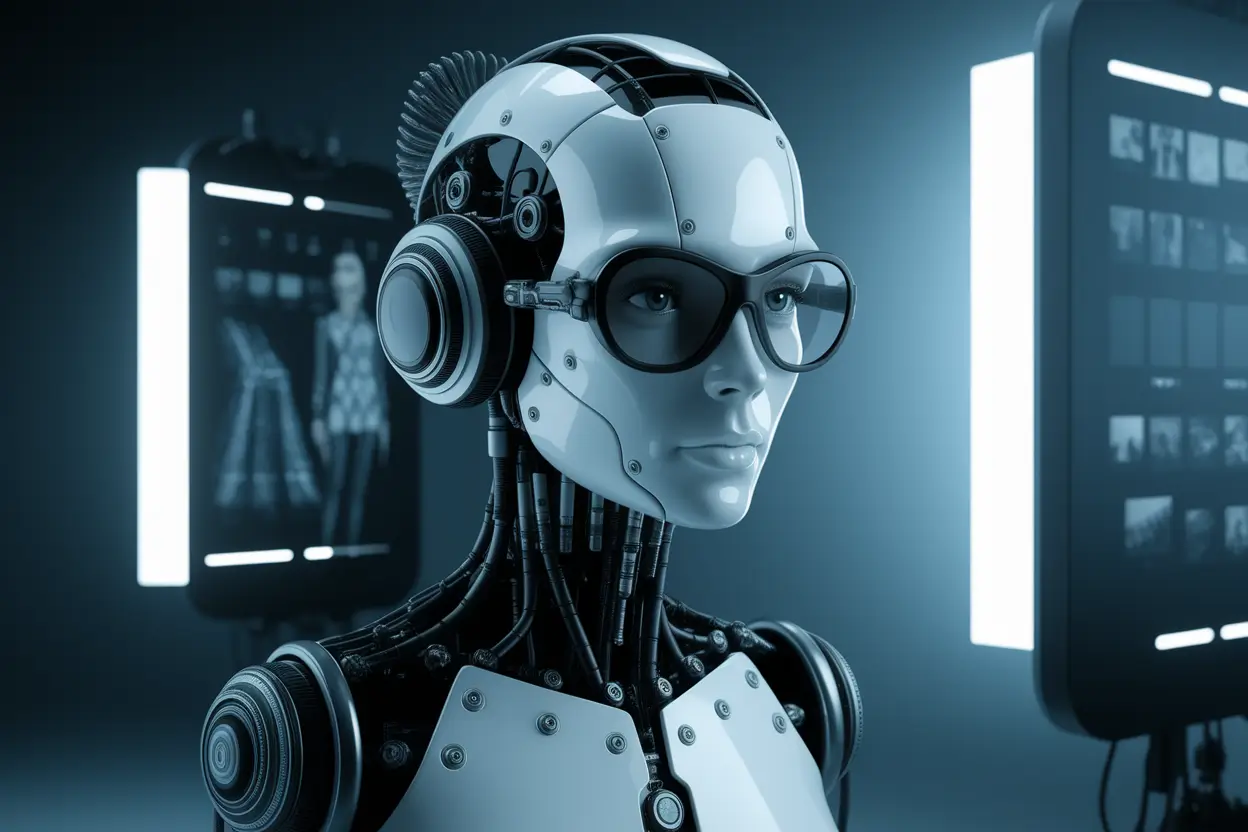
Additionally, luxury brands like Dior and Prada rely on AI to predict their next collection themes and influencer-driven trends.
Latest Trends in Artificial Intelligence in the Fashion Industry
The latest trends reveal a fusion of sustainability and technology. Few emerging practices include 3D design tools powered by AI, virtual fitting rooms using augmented reality, and generative AI that assists in new design creations. Blockchain and AI integration allow transparent tracking of product origin and authenticity. Additionally, AI’s combination with the metaverse enables fashion brands to create virtual stores, clothing NFTs, and immersive experiences.
Technical Implementation of Artificial Intelligence in the Fashion Industry
Implementing AI in fashion requires a structure composed of four stages: data acquisition, model training, integration, and deployment. Tools like TensorFlow, PyTorch, or cloud AI platforms are used for model training. Retailers integrate AI APIs for image recognition, such as Google Vision AI or Amazon Rekognition. Example dataset setups include fashion image datasets like DeepFashion or Zalando Fashion Data. A simplified technical workflow might involve preprocessing image data, training a convolutional neural network for feature detection, and then deploying that model into an e-commerce interface.
Example Code Implementation:
A basic setup could involve Python code that trains a machine learning model on retail data. Using TensorFlow or Keras, a CNN is built to classify fashion images or predict garment categories. Once trained, this model can identify product attributes like color, fabric, and texture in real-time product uploads.
Comparison of Artificial Intelligence in the Fashion Industry with Alternatives
Before AI adoption, manual analytics, human stylists, and traditional forecasting dominated fashion operations. Compared to these methods, AI can process datasets far faster, provide real-time insights, and adapt dynamically. However, traditional creativity often involves human intuition—something AI mimics but cannot fully replicate. Brands often adopt a hybrid approach, combining human expertise with AI assistance for best outcomes. Below is a comparative summary:
| Aspect | Artificial Intelligence | Traditional Approach |
|---|---|---|
| Speed | Instant, real-time insights | Slower and periodic updates |
| Accuracy | Data-driven precision | Subjective judgment |
| Cost | High setup but efficient later | Ongoing manual costs |
| Scalability | Highly scalable | Limited by workforce |
Impact of Artificial Intelligence in the Fashion Industry on Design
AI is revolutionizing fashion design by augmenting creativity with computational intelligence. AI tools assist designers in exploring countless pattern combinations, color palettes, and fabric textures in seconds. Machine learning-driven generative models design prototypes faster than traditional manual sketching. AI also ensures inclusivity by helping designers test styles on varied body shapes and sizes through 3D simulations, enhancing the accessibility of fashion collections.
Customer Experience Transformation Using Artificial Intelligence in the Fashion Industry
AI enables hyper-personalized shopping experiences. Recommendation systems track user behavior to deliver customized product offerings. Augmented reality-based virtual fitting rooms reduce return rates and improve satisfaction. AI chatbots answer questions 24/7, handle orders, and provide fashion advice, helping customers feel valued and informed. Through these applications, AI establishes deeper engagement and brand loyalty among consumers.
Sustainability Through Artificial Intelligence in the Fashion Industry
Fashion production has long been criticized for overproduction and waste. AI helps by forecasting demand accurately, which reduces unsold inventory. It supports sustainable material sourcing and lifecycle management of clothing. Machine learning models also analyze production energy use to identify greener alternatives. Predictive insights from AI help brands minimize discard rates, improving the overall ecological footprint of the fashion sector.
Challenges Facing Artificial Intelligence in the Fashion Industry
Despite substantial benefits, challenges remain. Data fragmentation across systems hinders real-time analysis. Many brands struggle with integrating AI tools into legacy infrastructure. High development costs can be a barrier, especially for small or emerging designers. Another critical challenge is ethical AI—ensuring that automated decisions do not reinforce biases in style preferences or body representation. Overcoming these limitations requires continuous model training, stronger regulation, and transparent data governance frameworks.
Future Outlook for Artificial Intelligence in the Fashion Industry
The future of Artificial Intelligence in the Fashion Industry lies in deep personalization, generative design, and real-time production systems. AI-driven design collaboration could allow customers to co-create garments with brand AI systems in virtual reality. As quantum computing and advanced neural networks progress, AI will predict market shifts with extraordinary accuracy. Furthermore, circular fashion systems managed by AI will enhance resale, recycling, and product tracking, solidifying sustainability goals. This future will likely merge human creativity and machine efficiency harmoniously.
Case Study: Artificial Intelligence in the Fashion Industry
A notable example is Stitch Fix, which employs AI to match users with personalized outfit boxes. By applying recommendation algorithms and human stylist validations, it achieved higher retention and satisfaction rates. Another case is Adidas using AI to analyze feedback data for material quality improvements. Burberry applies computer vision for counterfeit detection, ensuring brand authenticity. These examples illustrate practical AI deployment that not only boosts business efficiency but also maintains product integrity.
Common Mistakes and Solutions in Implementing Artificial Intelligence in the Fashion Industry
- Mistake: Not collecting enough diverse data. Solution: Aggregate datasets from varied demographics and regions.
- Mistake: Overfitting AI models due to small datasets. Solution: Use regularization and cross-validation techniques.
- Mistake: Ignoring ethical AI standards. Solution: Create transparency in data labeling and model decisions.
- Mistake: Lack of employee training. Solution: Conduct workshops to integrate AI literacy into teams.
FAQs about Artificial Intelligence in the Fashion Industry
How does Artificial Intelligence in the Fashion Industry improve trend forecasting?
AI analyzes large-scale data from social networks, search queries, and runway photos to detect emerging style trends before they go mainstream. This leads to proactive production planning.
Can small fashion businesses use Artificial Intelligence?
Yes, with cloud-based AI tools and subscription services, even small enterprises can leverage AI for inventory management, marketing, and customer service automation without heavy investment.
Does Artificial Intelligence replace designers in fashion?
No. AI supports designers by facilitating ideation and data insights but cannot replicate human creativity or emotional connection inherent in design.
What role does Artificial Intelligence play in reducing fashion waste?
AI optimizes production levels, predicts sales, and helps design sustainable collections that align with real market demand, significantly minimizing textile waste.
What is the future scope of Artificial Intelligence in the Fashion Industry?
The future includes generative fashion design, immersive metaverse experiences, predictive eco-manufacturing, and AI-driven customization at mass scale, making the industry smarter and more sustainable.
Conclusion: The Lasting Impact of Artificial Intelligence in the Fashion Industry
Artificial Intelligence in the Fashion Industry continues to innovate, optimize, and personalize the fashion ecosystem. It bridges the gap between creative design and data-driven insights, improving how fashion adapts to cultural, economic, and environmental shifts. With expanding AI adoption, the industry can expect improved sustainability, productivity, and customer satisfaction. Brands that integrate AI strategically today will define the future narrative of fashion tomorrow.