


The AI giants race has officially shifted its battleground. For months, tech companies chased raw benchmarks. They threw massive compute budgets at larger neural networks to outscore competitors. However, the era of unchecked token consumption is over. Today, cost efficiency is the ultimate moat.
The Financial Reality of the AI Giants Race
This week, several major launches shook up the industry. Grok 4.5, GPT-5, and OpenAI’s newest 6 model went wide. On the same day, Meta launched its first paid API. A common theme united these announcements: aggressive price reduction.
Sam Altman addressed this shift during a high-profile interview. He focused on efficiency rather than raw benchmarks. He revealed that top agentic coders use 54% fewer tokens in Sol, OpenAI’s new model family. You can read more about his perspective on Sam Altman’s recent CNBC interview where he discussed enterprise spending.
Altman admitted that enterprises are hyper-focused on spending. This is a crucial pivot in modern Ai Model Engineering strategies. Meanwhile, SpaceXAI claimed Grok 4.5 uses half the tokens of previous versions. Meta bypassed the token efficiency argument entirely by slashing prices.
Meta priced its API at a mere $1.25 per million input tokens. This undercuts OpenAI’s flagship tier, which sits at $5. Many startups trying to figure out How To Build Ai Automation Agency 2025 are celebrating this aggressive price war.
Why Tokenmaxxing Season is Dead
The first half of the year was defined by tokenmaxxing. Companies threw artificial intelligence at every workflow without counting the cost. But finance teams quickly stepped in to halt the bleeding.
Uber reportedly burned its entire 2026 AI coding budget in just four months. In response, Microsoft began reclaiming developer licenses to curb mounting bills. The argument of scoring higher on benchmarks fails when CFOs analyze the balance sheets.
This economic shift highlights the key Ai Consulting Services Benefits. Consulting firms now focus on resource optimization. Lower inference costs will drastically expand use cases like Ai For E Commerce Retail.
Enterprise adoption depends entirely on predictable pricing models. When execution cost drops, high-volume tasks like Text Classification Sentiment Analysis become highly viable. Efficiency is what you peddle when the capability gap dries up.
Washington Steps Into the AI Giants Race
National security and governance now dictate ship dates. Before launching GPT-5, OpenAI collaborated closely with government officials. These included Commerce Secretary Howard Lutnick and Treasury Secretary Scott Bessent. Cyber director Sean Cairncross was also consulted.
Only after federal alignment did OpenAI release its latest model. Anthropic faced similar challenges in June. Its Mythos and Fable models were temporarily held back by export controls. Fable did not return to the market until July 1.
AI labs no longer have complete freedom over their launch calendars. This dynamic affects how companies handle Natural Language Processing Nlp systems globally. A secure infrastructure requires collaboration with an established Blockchain Development Company In Munich to safeguard data integrity.
Anthropic, Musk, and the Colossus Power Play
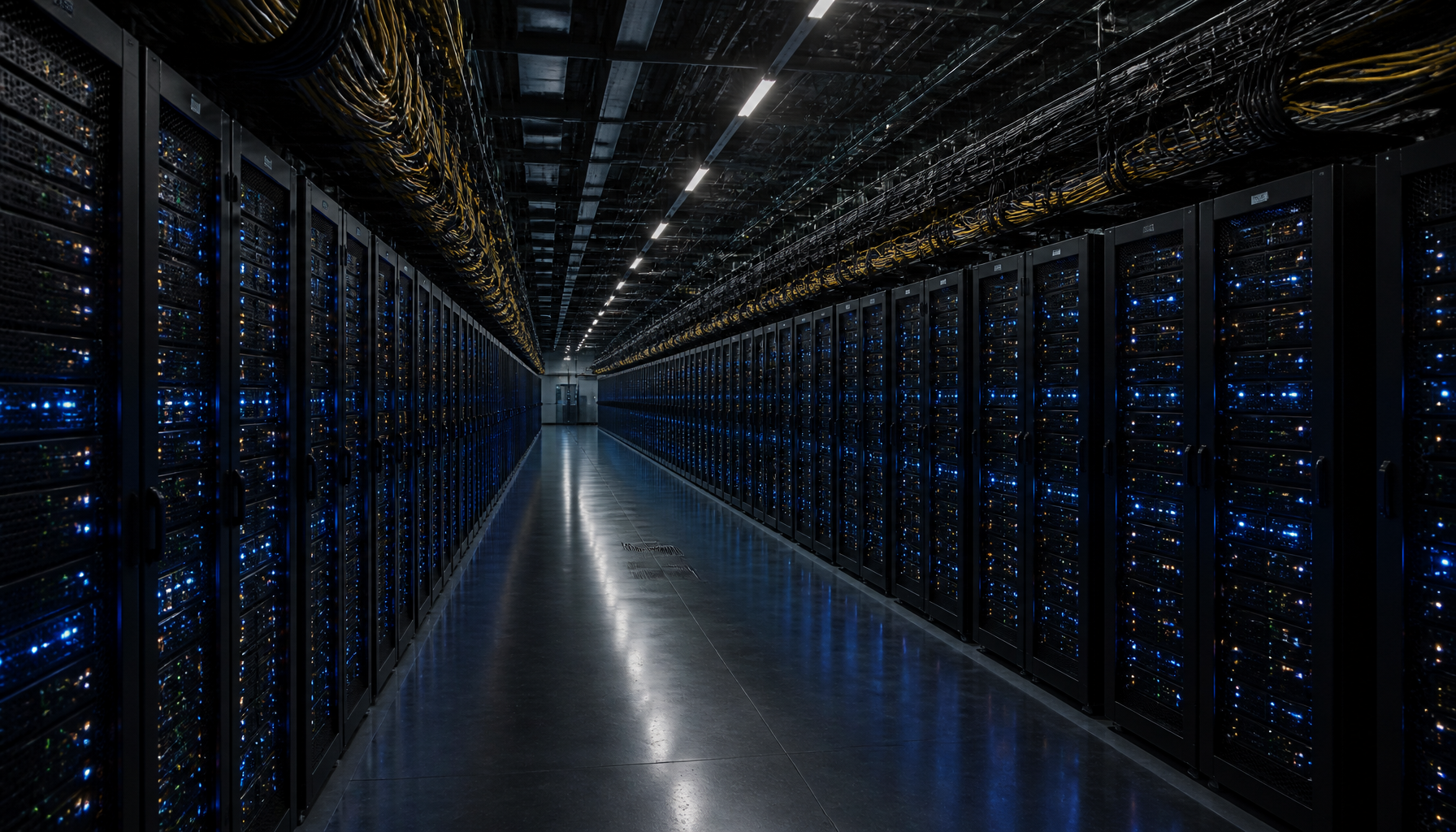
One of the most telling moments of the week involved compute infrastructure. Anthropic operates a massive $40 billion deal. They run most of their compute on Colossus 1, a Memphis facility owned by Elon Musk. This setup costs Anthropic approximately $1.25 billion monthly through 2029.
Because Anthropic competes directly with Grok, observers wondered if Musk might cut their power. Instead, Musk took a surprisingly diplomatic stance. He praised Anthropic as the clear leader in the AI space. He acknowledged that no rival has matched their Mythos or Fable models.
He dismissed the idea of cutting off their access, stating it was not in his character. This was a massive pivot from Musk’s previous remarks. Just months ago, he called Claude “misanthropic and evil.” Yet, independent benchmarks support Musk’s new stance.
Anthropic models continue to dominate industry charts. Musk’s massive influence extends beyond software. Rumors persist about how Elon Musk Becomes Worlds First Trillionaire Spacex Ipo will reshape global technology sectors.
SpaceX’s Underestimated Terrestrial AI Empire
SpaceX is quietly building a massive AI business. However, this empire is not located in space. Analysts reveal that SpaceX’s near-term revenue comes from terrestrial Colossus clusters.
These clusters are rented to Anthropic, Google, and Reflection AI. These contracts are projected to generate over $28 billion annually. This figure already surpasses SpaceX’s combined rocket and Starlink revenues. True space-based compute remains over a decade away.
For now, the real profits are grounded on Earth. This massive computational scaling mirrors how high-performance networks operate. Just as blockchain networks require Layer 2 Scaling Solutions to manage load, AI workloads need massive physical infrastructure. This hardware foundation allows any Ai Powered WordPress Company to access highly reliable server power.
The Sui Network Security Alarm: BlueMove Exploited
In the decentralized finance sector, security remains a constant challenge. On-chain detectives recently accused BlueMove, a DEX on Sui, of draining its own liquidity pools. Investigators claim a backdoor was inserted into a contract update back in May. Over 700,000 SUI tokens were subsequently drained.
The attacker was sent an on-chain message offering a 30% bounty. They were asked to return the remaining 70% within 48 hours. BlueMove has historically halted operations on other chains without warning. So far, the team has remained silent.
This incident recalls how Suis Cetus Dex Faces Hack 260m Crypto vulnerabilities shook investor confidence earlier. Such events highlight the risks of poorly audited protocols. The early days of token distribution often resembled the speculative mania of Understanding Initial Coin Offering For Blockchain projects. Deploying secure Fintech Smart Contracts is critical to preventing these structural exploits.
IRS Dilemma: Are Prediction Markets Gambling or Investing?
The financial world is also grappling with the rise of prediction platforms. The Internal Revenue Service (IRS) cannot decide how to classify World Cup prediction bets. Placing a bet on Kalshi versus a traditional sportsbook leads to wildly different tax brackets.
One is taxed as gambling income, while the other is treated as investment gains. Some contracts may even fall under complex 60/40 tax rules. The IRS has yet to issue clear guidelines. New regulations also limit the deduction of losses, frustrating retail users.
While decentralized finance matures, as noted in our Crypto Weekly Recap Bitcoin Hits 110k, traditional markets face regulatory scrutiny.
Conclusion: The Moat is Efficiency
The AI landscape has reached parity in raw capabilities. The true differentiator is now operational cost. As tech giants optimize their models, the focus shifts to enterprise viability. Winning the AI race requires more than just intelligence—it demands affordability.