

Exploring the latest Asia Fintech Market Trends reveals a massive structural shift across the continent. Rapid regulatory updates, colossal cross-border payment networks, and strategic mergers and acquisitions (M&A) are driving this vibrant ecosystem. From India’s soaring retail credit markets to Southeast Asia’s digital payment upgrades, the financial landscape is evolving faster than ever.
Key Drivers of Asia Fintech Market Trends
The financial markets across Asia are undergoing rapid maturation. Governments and private enterprises are actively collaborating to build resilient digital systems. By looking closely at the major corridors, we can see how technology bridges traditional finance and decentralized web solutions.
Many regional companies are looking for ways to adapt. From leveraging a White Label Lending Borrowing Platform to launching cross-border QR gateways, adaptation is the main focus. Let us dive deep into the specific developments shaping India and Southeast Asia (SEA).
India’s Banking and NBFC Boom: High Growth and NPA Cleanups
India’s financial sector continues to experience massive expansion. Non-Banking Financial Companies (NBFCs) reported ₹58.6 lakh crore ($613bn) in loan assets by end-May 2026. This represents an impressive 14.2% YoY growth rate. While this trails the banks’ 17.7% pace, retail lending remains highly robust.
This growth is heavily driven by retail lending, specifically gold-backed loans. In fact, gold loans captured a massive 31% market share in securitisation issuances. Securitisation issuances themselves surged by 22% YoY to INR 60,000 crores ($659.3M) in Q1 FY27, according to CRISIL Ratings. This shows a strong investor appetite for asset-backed retail pools in India.
Interestingly, credit dynamics are shifting away from traditional high-interest options. According to TransUnion CIBIL, credit cards’ share of unsecured borrowing fell from 56% in 2016 to 38% in 2026. Small personal loans have gained significant ground instead. Still, lenders continue to deepen card usage among existing customers. There are now 10.7 crore (107M) cards issued to 5.2 crore (52M) unique cardholders.
To understand how modern lending engines operate, many institutions are analyzing What Is Defi Lending And How Does It Work to adopt modern digital mechanics. Meanwhile, Indian auto financiers are urging the industry to adopt embedded finance to streamline car purchases, shifting away from traditional EMI models.
On the balance sheet side, Indian private sector banks wrote off 50% of non-performing assets (NPAs). This totaled ₹1.28 lakh crore ($13.4bn) in FY26. This write-off ratio is more than double the 24.3% ratio recorded by public sector banks. This aggressive cleanup has significantly bolstered balance sheet health, although net interest margins remain split across majors like HDFC, ICICI, and Axis Bank.
GIFT City and Global Financial Integrations
India is rapidly connecting its domestic financial markets to global investors. GIFT City has partnered with the Vietnam International Financial Center–Da Nang. This partnership aims to exchange institutional knowledge and explore cross-border investment opportunities. Furthermore, Bloomberg launched an electronic trading system on its terminal. This connects global investors directly to India’s Negotiated Dealing System-Order Matching (NDS-OM) platform for bond trading.
Simultaneously, global insurance major Aviva agreed to acquire a 26% stake in Aviva Life Insurance India from Dabur Invest Corp. This makes Aviva the first foreign life insurer with 100% ownership of an Indian insurer. Such moves show immense confidence in India’s financial future. This trend mirrors how cities like Surat are emerging as technology powerhouses, which you can read about in Why Surat Is Becoming A Major It Hub Software Companies.
Additionally, consumer fintech platforms are rolling out essential utility features. PhonePe partnered with TaxBuddy to launch hassle-free ITR and GST filing features. In the investment space, Belong launched GIFT Nifty Futures trading via NSE International Exchange (NSE IX) for NRIs. Also, US-based Bluevine launched a digital banking platform targeting India-resident founders, offering up to 3% APY interest.
For seamless retail fiat transactions, innovations like Metamask Upi Integration Onramp India are setting new benchmarks for convenient, fast-growing web3 integrations.
Southeast Asia’s Cross-Border Infrastructure and Blockchain Rails
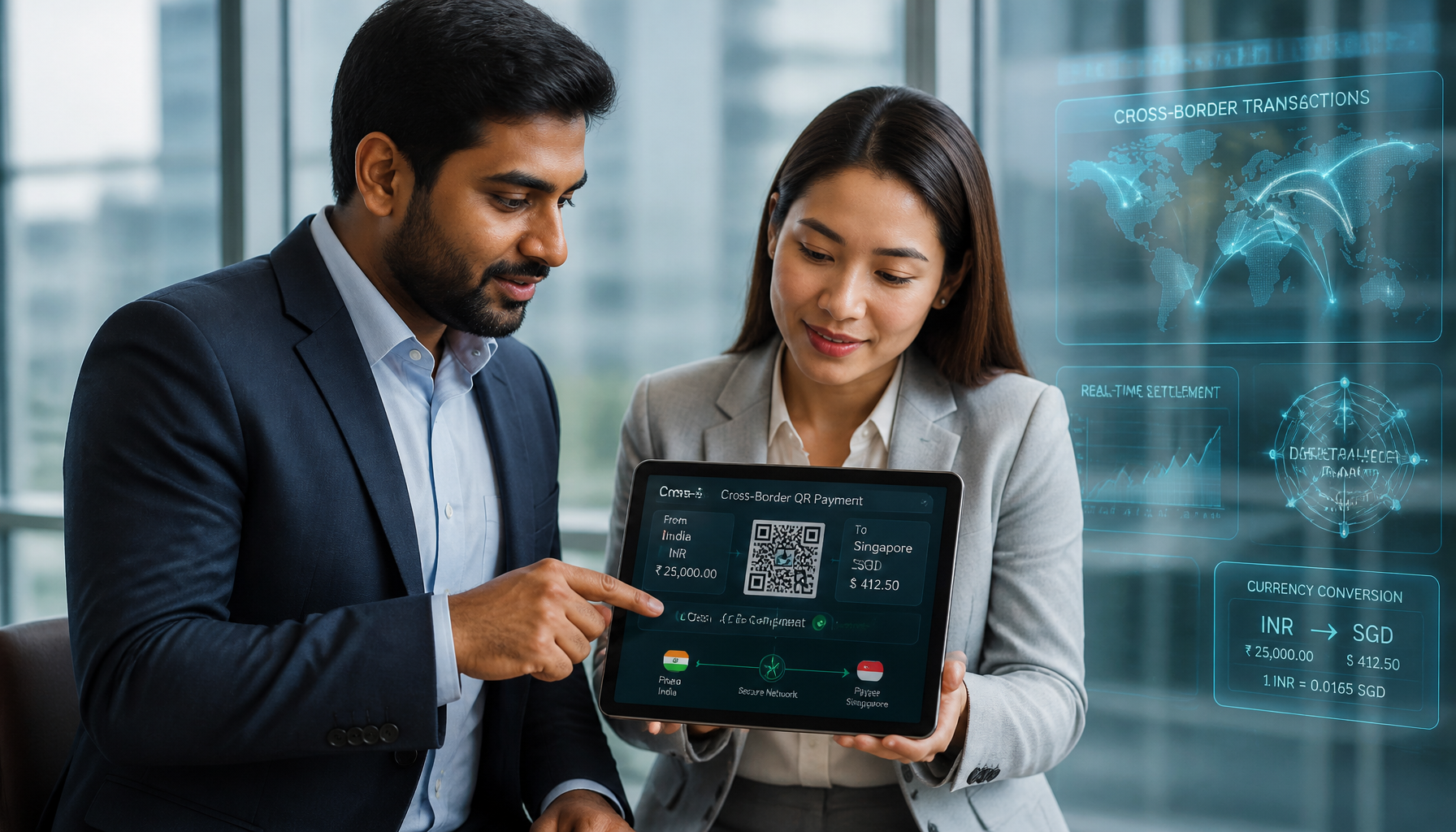
When studying modern Asia Fintech Market Trends, cross-border payments in Southeast Asia stand out. Physical and digital borders are melting away. Liquid Group partnered with the National Payment Corporation of Vietnam (NAPAS) and VietinBank to launch a seamless Vietnam-Singapore QR payment service. In addition, Singapore’s PayNow rolled out upgrades targeting merchants to compete directly with global card networks.
On the institutional front, Swift launched a breakthrough blockchain-based ledger. This ledger supports 24/7 cross-border transactions using tokenized deposits. Seventeen global banks are currently preparing for live pilot transactions. To understand how these changes fit into the global landscape, it is helpful to look back at the Latest Trends In Blockchain Technology 2024.
If you are new to this tech, you might ask What Is Blockchain to grasp how these decentralized ledgers operate. Understanding these networks is key, especially as we observe current Blockchain Trends And Market Statistics showing high adoption rates in transactional systems.
Fintech giants are also actively building. M-DAQ Global expanded into Vietnam through its METech partnership, securing regulated payment infrastructure across four ASEAN markets. Startups looking to establish secure apps are investing heavily in Unlocking Potential Dapp Development to capture this growing market. As these trends show, tokenization is transforming banking, making Top Ai Smart Contract Trends 2026 highly relevant for cross-border settlement systems.
Regulatory Shifts and Digital Compliance
Regulators across the Asia-Pacific region are tightening controls to foster trust and prevent fraud. The Monetary Authority of Singapore (MAS) recently ruled out case-by-case approvals for PayNow nicknames. This strict measure aims to prevent growing impersonation scams.
Meanwhile, the Australian central bank outlined a draft long-term roadmap for its account-to-account (A2A) payments system. This gives clear guidance to banks and PSPs as the Bulk Electronic Clearing System (BECS) is decommissioned. In Hong Kong, the Securities and Futures Commission (SFC) ordered brokers and virtual asset platforms to replace SMS OTPs with phishing-resistant authentication within 12 months.
In Southeast Asia, funding fell slightly by 4% YoY to $685M in H1 2026. However, regulatory easing, such as Indonesia’s OJK loosening credit scoring rules, is expected to boost loan disbursements. In the supply chain finance sector, platforms like Choco Up launched integrated Accounts Payable (AP) financing. This tool helps SMEs navigate longer payment cycles, highlighting the role of Ai Adoption Supply Chain Networks 2025 in predicting cash flow strains.
Strategic Acquisitions and Massive Tech-Led Funding
The consolidation of the fintech market is visible through high-profile M&A activities. B Capital Group, along with co-investors, acquired Russell Investments for an incredible $2.8 billion. They plan to modernize this 90-year-old asset manager using AI and tech-led systems. This highlights a broader trend discussed in the Web3 Vcs Crypto Ai Revolution, where venture capital shifts toward high-tech efficiency.
In India, BlackSoil acquired Credit Fair’s solar financing business, which manages ₹153cr ($16M) in assets. To scale green energy infrastructure further, TPG, alongside GIC Singapore and ICICI Bank, acquired Aseem Infrastructure Finance for ₹4,800cr ($500M) to launch a $1bn green financing platform.
Furthermore, consumer health insurer SaaS platform ekincare acquired Superclaims. This AI-powered claims adjudication platform will help expand global insurance distribution. Companies undergoing similar transformations frequently leverage Ai Consulting Services Benefits to integrate complex automation into legacy frameworks. Seeking expert advice from Top Ai Consulting Services 2025 is becoming a necessity for firms aiming to scale efficiently.
On the global stage, businesses expanding into dynamic regions such as the Middle East are partnering with a Blockchain Development Company In Dubai or a Blockchain Development Company In Uae to ensure their cross-border payment platforms comply with international standards.
Conclusion
The current Asia Fintech Market Trends signal a highly mature, secure, and integrated future. While funding numbers may fluctuate, the fundamental infrastructure—spanning A2A payments, blockchain tokenization, and AI-led compliance—is expanding rapidly. As regulators enforce safety and platforms expand cross-border, Asia is well-positioned to lead global fintech innovation.