

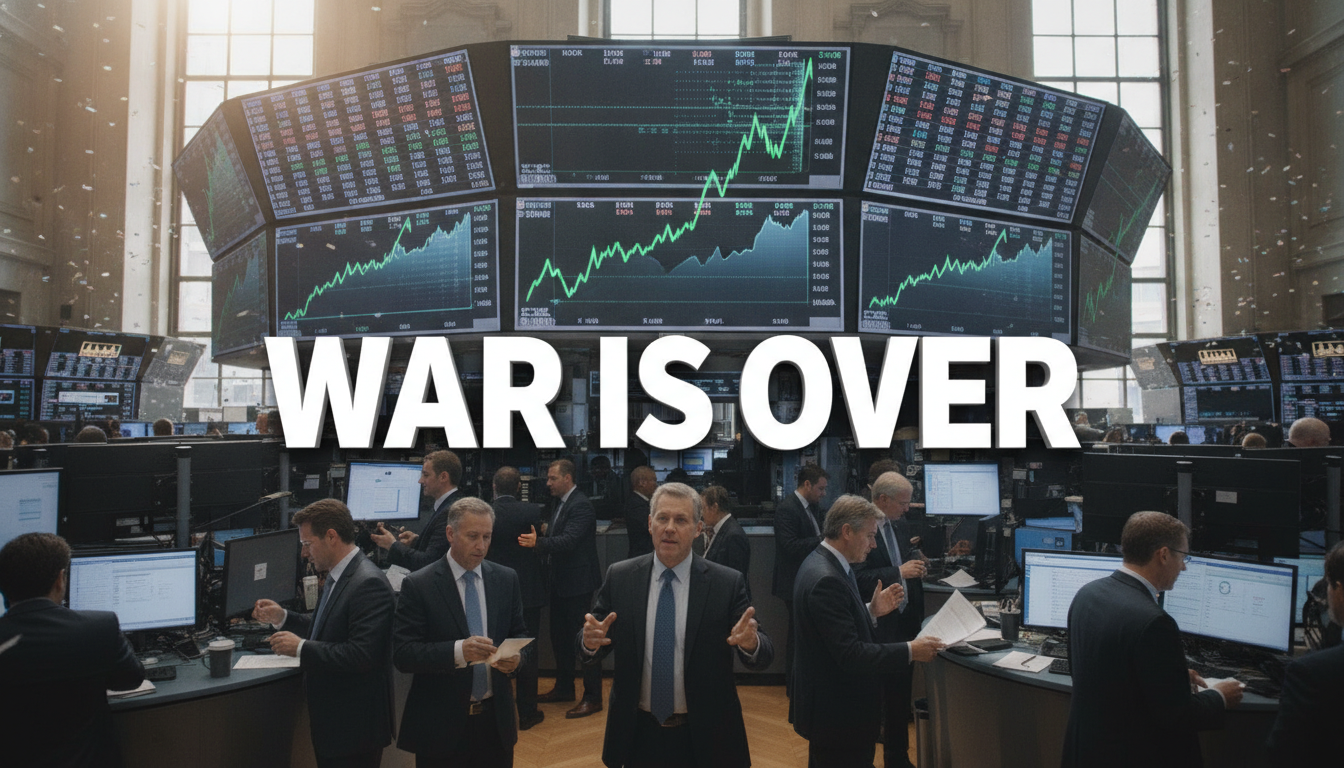
The US-Iran war is over, at least for now. This sudden geopolitical pivot has sent waves through global markets. It pushed oil sliding 4.4% down to $81.15 a barrel. Meanwhile, Bitcoin jumped and gold softened. The global financial landscape reacted instantly to this historic relief.
The 107-day conflict had severely strangled global trade. A naval blockade and a closed Strait of Hormuz caused massive economic friction. President Trump tweeted that the deal with Iran was “now complete.” He combined the reopening of Hormuz with lifting the US naval blockade in the same breath. Many feared a protracted conflict, but the swift announcement that the US-Iran war is over proved the power of secret diplomacy.
This milestone is one of the Top 10 Trending Topics World Right Now. Markets have responded with immediate, risk-on enthusiasm. Investors are now scrambling to adjust their portfolios to a post-conflict reality.
Deconstructing the Islamabad Memorandum
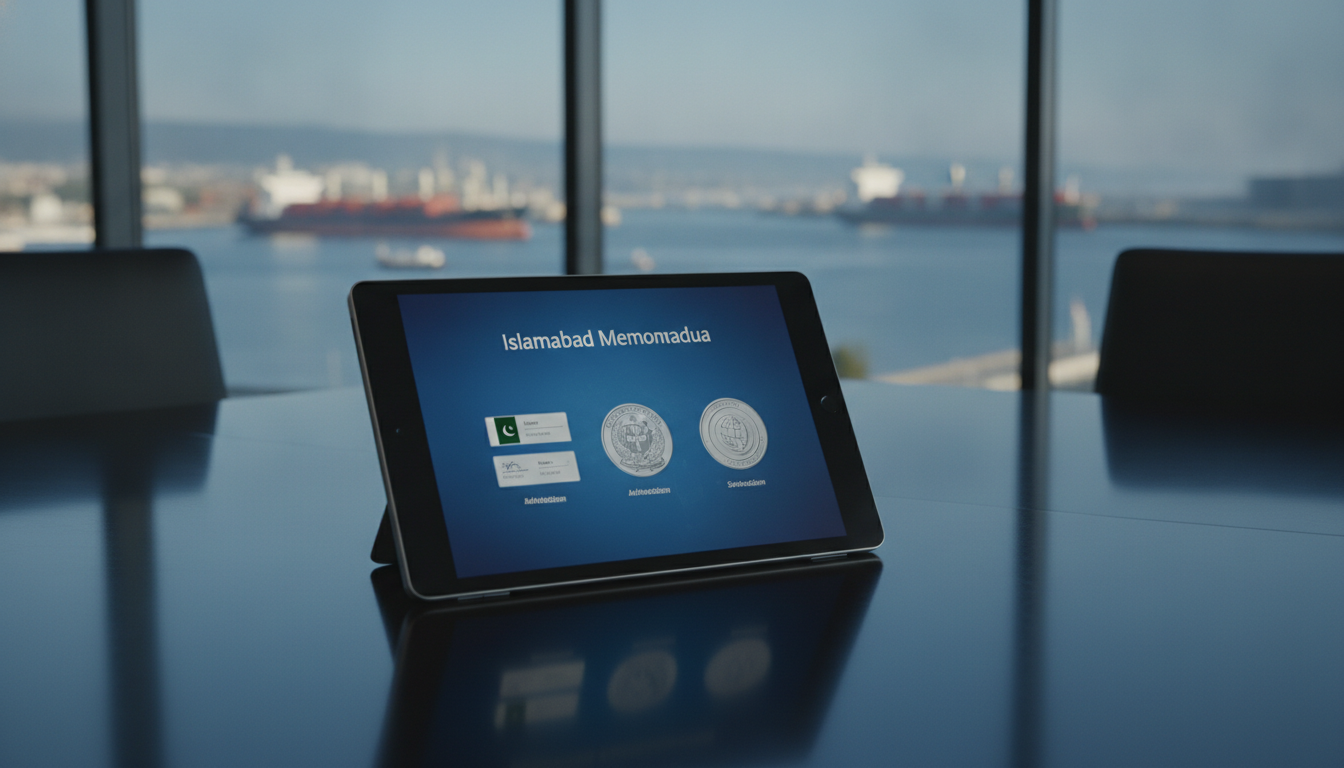
Though full terms remain confidential, the framework is outlined in a memorandum. It was brokered with the help of Pakistan, Saudi Arabia, Qatar, and Turkey. The agreement is formally known as the Islamabad Memorandum. It was digitally signed on Sunday, June 14, 2026.
Under the deal, the US releases $25 billion in frozen Iranian funds. In return, the Strait of Hormuz fully reopens in 30 days. The United States will end its naval blockade the following day. Iran has also agreed to halt nuclear weapon development. They will freeze their current enrichment capabilities during upcoming negotiations.
A signing ceremony is scheduled for Friday, June 19, in Geneva. Trump or Vice President JD Vance will sign the historic accord in person or electronically. This framework provides a vital 60-day window for follow-on talks.
Why “The US-Iran War Is Over” Reshapes Global Markets
The declaration that the US-Iran war is over is a critical relief valve for energy markets. The Strait of Hormuz handles 20% of global oil and gas supply. The area was effectively cut off since February 28. This caused unprecedented supply chain shocks.
The International Energy Agency (IEA) warns that recovery will take time. Returning supply chains to normal could require six to eight months. Refinery contracts were torn up during the fighting. Tanker routes were rerouted globally, spiking shipping insurance costs. Asia’s storage facilities fell to multi-year lows.
This massive disruption forced institutions to reconsider financial strategies. Understanding How Is Blockchain Technology Changing The Financial Sector is vital during such macro shifts. Modern trading firms rely heavily on decentralized networks to secure their operations. These systems offer robust alternatives during physical supply chain crises.
Oil at $81 today is sharply lowered from June’s high of $97. However, prices remain elevated compared to pre-war levels of $70. G7 finance ministers met in Geneva on June 15. They drove Hormuz normalization to the top of the economic agenda immediately.
The Fragile Road to Peace
Sunday was not a completely clean day. Hours before the announcement, south Beirut was hit by three Israeli strikes. Three people were killed and fifteen injured. This occurred after Hezbollah fired across the northern border.
Iranian negotiator Mohammad Baqer Qalibaf blamed Washington. He questioned the US ability to rein in its ally. Fortunately, President Trump condemned the strikes as a rogue incident. The peace talks held, though Netanyahu noted Israel had no role in the deal. The region remains a powder keg despite the truce.
Follow-on talks will occur over a 60-day landscape. This period will determine if the framework leads to a sustainable settlement. The nuclear issue remains a primary point of friction that could disrupt the ceasefire.
Kevin Warsh’s Inaugural FOMC Meeting
The macro picture now shifts to Washington. Newly confirmed Fed Chair Kevin Warsh faces his inaugural FOMC meeting this week. Rates are expected to stay put at 3.50% to 3.75%.
However, Warsh’s forward guidance language remains the key story. The May CPI hit 4.2% with continued strong hiring. The Fed must address this sticky inflation, which existed before the war. The rate cut narrative that was alive in early 2026 is effectively dead for now.
Warsh plans to reform Fed communication and tighten the balance sheet. He also wants to eliminate the dot plot. This transition reflects how central banks must modernize. For instance, How Indian Startups Use Ai Automation Scale 2026 shows how rapidly organizations adapt to economic stress. The Fed must similarly evolve its policy frameworks.
Traditional financial systems are changing, and many look to digital assets for transparency. This shift is explored in Blockchain In Finance Tradeweb Leads, highlighting the institutional march toward on-chain ledger technologies. As physical and digital markets merge, transparency becomes the ultimate commodity.
The Crypto Market Reaction: Bitcoin and Hyperliquid
Risk-on sentiment returned aggressively to the crypto space. Bitcoin had dropped from $81,000 to a low of $59,000 on June 5. However, it quickly reversed course upon Sunday’s news. Bitcoin’s price rebound reflects the easing of geopolitical risk.
Throughout the fear, certain decentralized platforms thrived. Hyperliquid grew its monthly active user base by 21.8% to 220,760 during the worst month. The platform now commands 56% of all on-chain perpetual trading volume.
More impressively, Hyperliquid secured a 7.6% share of all global perpetual volume. This includes centralized exchanges. For projects looking to build on such infrastructure, choosing a White Label Crypto Defi Integration is becoming standard practice.
Developers also utilize a Trust Wallet Clone Script to offer users safe self-custodial options. They can easily pair this with White Label Crypto Wallet Features to deploy specialized trading tools. This ensures security and control during periods of high market volatility.
With HIP-3, external teams can deploy their own perp markets. This modular design ensures long-term survival. Keeping up with The Future Is Now Crypto Api Trends is essential for developers seeking to match this high-throughput performance. On-chain trading is rapidly replacing legacy centralized options.
Worldcoin and the OpenAI Halo Effect
Worldcoin (WLD) also staged an impressive rally. The token soared 15% to break immediate resistance at $0.59. South Korean markets drove major volume, with the KRW pair accounting for 35% of trading. WLD has become the top traded asset on Upbit.
WLD has no direct structural link to OpenAI. Yet, it heavily benefits from Sam Altman’s connection. OpenAI’s confidential S-1 filing has generated immense market excitement.
For enterprise-level deployments, utilizing an experienced Ai Blockchain Development Company is crucial to capitalising on this trend. As AI and decentralized technologies merge, Ai Agents Smart Contracts Evolution will play an essential role in automated trading.
This integration is detailed in the Sui Blockchain Beginners Ai Guide. These tools help developers secure networks while managing high transactional loads. Advanced encryption is vital here, as outlined in Blockchain Strengthening Cybersecurity.
Furthermore, collaborations like the Soneium Chainlink Collaboration For Web3 Adoption highlight how networks are scaling. This is accelerating the transition toward decentralization. Companies aiming to lead this space should explore Binance Blockchain Development to build highly liquid systems.
These technical shifts reflect the broader Top Blockchain Trends To Watch In 2025 and their lasting impact. The industry is rapidly moving toward decentralized custody and scalable compute infrastructure.
What Lies Ahead for Investors?
The end of the war is a major relief. However, investors must remain vigilant. The 60-day negotiation window will decide the long-term reality. If talks stall, energy markets could face another sudden shock.
The global economy is entering a new chapter. Lower energy costs should help cool headline inflation. This gives the Fed more flexibility under Kevin Warsh. However, structural inflation remains a persistent threat that rate hikes may still need to address. While we can celebrate that the US-Iran war is over today, macroeconomic turbulence is far from over.
As we look forward, the Web 3 0 Development Impact On Future Businesses will only intensify. Decentralized financial infrastructure has proven its resilience. Whether markets enter a sustained bull run or remain volatile, the underlying technology continues to mature. Smart investors will focus on platforms that built through the fear.