

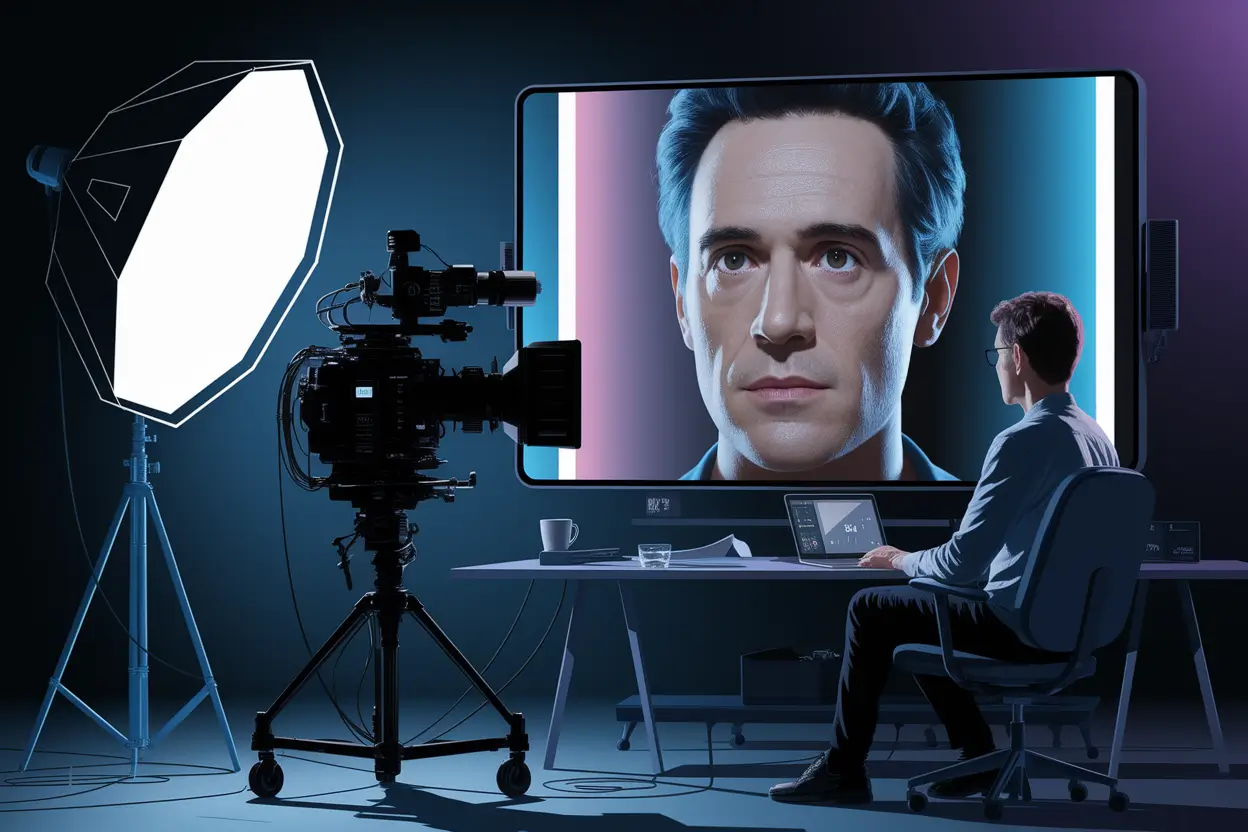
AI Deepfake Technology in Movies is transforming filmmaking by allowing digital recreations of actors, seamless visual storytelling, and cost-effective production enhancement. This technology, driven by artificial intelligence and deep learning, enables the creation of hyper-realistic video content where people appear to say or do things they never actually did. While its innovative potential is vast, it also brings serious ethical, privacy, and security concerns that require careful examination and regulation.
Understanding AI Deepfake Technology in Movies
AI Deepfake Technology in Movies refers to the use of advanced machine learning algorithms to mimic human likeness, speech, and behavior on screen. The term ‘deepfake’ combines ‘deep learning’ and ‘fake.’ It leverages neural networks to generate synthetic video or audio content that looks authentic. In cinema, this allows for digital cloning of actors, de-aging or aging effects, or even resurrecting deceased performers. Deepfake models are trained using generative adversarial networks (GANs) which pit two networks—the generator and the discriminator—against each other. The generator tries to create realistic images or video frames, while the discriminator evaluates their authenticity. Through repeated iterations, the system learns to produce highly convincing visual content.
How AI Deepfake Technology in Movies Works
The creation process of an AI deepfake begins with collecting extensive visual and audio data of the targeted actor or subject. High-quality images, video footage, and voice samples are required. The deep learning model is then trained using these datasets. The generator neural network produces synthetic outputs, and the discriminator network determines if the results look real or fake. Over time, both networks improve. Once trained, the model can superimpose one person’s face onto another actor’s body, replicate speech patterns, and match lip movements automatically. Deepfake systems often use tools like DeepFaceLab, FaceSwap, or custom-built GANs to achieve this. Rendering may involve multiple layers of computation and fine-tuning of lighting, shadows, and facial muscle movements.
Core Concepts Behind AI Deepfake Technology in Movies
The foundation of AI Deepfake Technology in Movies lies in several core concepts:
- Generative Adversarial Networks (GANs): The backbone of deepfake creation; they involve a generator and discriminator that compete to improve synthetic realism.
- Autoencoders: Used to compress and reconstruct visual data, enabling efficient face-swapping and image manipulation.
- Feature Extraction: Advanced algorithms analyze facial landmarks, skin texture, and lighting details to ensure authenticity.
- Data Augmentation: Expanding training databases with variations of existing images for better model accuracy.
Pros of Using AI Deepfake Technology in Movies
AI Deepfake Technology in Movies offers multiple advantages:
- Enhanced Visual Storytelling: Filmmakers can bring creative visions to life by showing scenes that would otherwise be impossible.
- Cost and Time Efficiency: Reduces the need for reshoots by allowing digital corrections and continuity fixes.
- De-aging and Reanimation: Enables realistic portrayal of characters at different ages or resurrecting late actors respectfully.
- Language Localization: Deepfake dubbing allows actors’ lip movements to match foreign language translations perfectly.
- Accessibility: Makes production accessible for smaller studios that can’t afford large-scale CGI teams.
Risks and Cons of AI Deepfake Technology in Movies
Despite its benefits, there are also serious risks associated with AI Deepfake Technology in Movies:
- Ethical Concerns: Misuse can lead to creating fake content or manipulating public figures.
- Privacy Violations: Replicating an actor’s likeness without consent is a breach of personal and professional rights.
- Legal Gray Areas: Lack of clear copyright laws governing digital identity.
- Trust Erosion: The line between fiction and reality blurs, potentially deceiving audiences.
- Data Security: Storing massive datasets of facial and voice recordings may lead to data leaks and exploitation.
Key Use Cases of AI Deepfake Technology in Movies
AI Deepfake Technology in Movies is applied in many areas:
- De-aging Characters: As seen in popular films where older actors are digitally made to appear decades younger.
- Recreating Deceased Celebrities: Posthumous performances made possible through facial mapping and synthetic voice cloning.
- Voice Dubbing and Translation: Deepfakes used to sync voiceovers in multiple languages while retaining natural visual flow.
- Stunt Double Replacement: Replacing stunt actors’ faces with that of the celebrities for continuous realism.
Real-World Examples of AI Deepfake Technology in Movies
High-profile films and studios have started adopting AI Deepfake Technology in Movies to remarkable effect. For example, actors have been digitally de-aged for cinematic franchises like superhero movies or trilogies requiring temporal storytelling. Another well-known use case involved digitally recreating historical figures for drama narratives. Filmmakers have also used deepfake-based systems to replace unsatisfactory scenes without requiring full reshoots, saving millions in production costs. Streaming services utilize deepfake-based dubbing models to release their content globally with localized accuracy.
Latest Trends in AI Deepfake Technology in Movies
Recent developments in AI Deepfake Technology in Movies include improvements in real-time rendering, high-definition synthesis, and ethical watermarking to identify synthetic content. OpenAI, NVIDIA, and other tech firms are developing solutions that automatically embed digital fingerprints within generated media to distinguish AI-made footage from authentic content. The integration of deepfake systems with cloud computing and edge AI enables faster rendering during production workflows. Moreover, advancements in virtual production setups are merging AI deepfakes with volumetric capture and motion tracking, allowing fully synthetic actors in cinema-quality quality scenes.
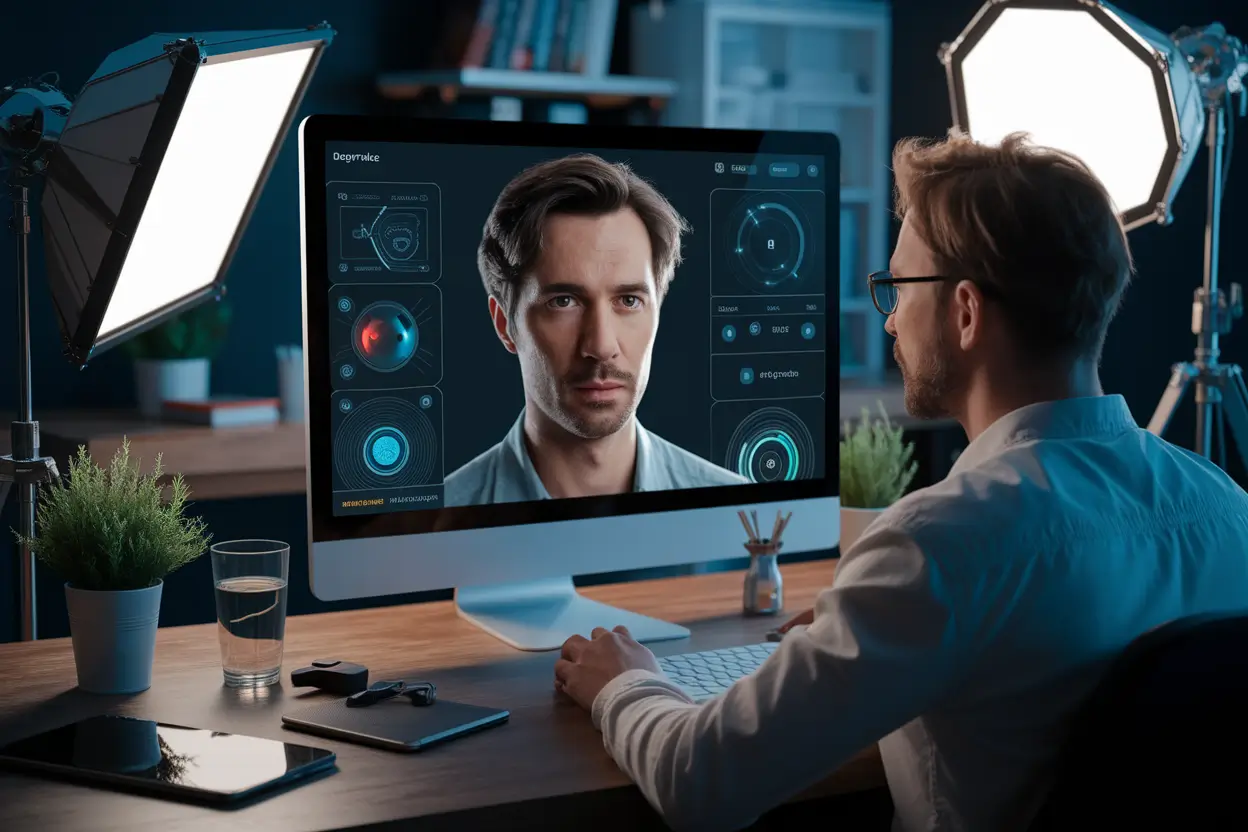
Technical Setups for AI Deepfake Technology in Movies
Establishing an environment for applying AI Deepfake Technology in Movies requires robust computational hardware and specialized software frameworks. Below is a basic setup overview.
Hardware Requirements:
- High-performance GPUs such as NVIDIA RTX series
- At least 64GB RAM for training large datasets
- Ample SSD storage to handle video data
Software and Libraries:
- Python-based frameworks: TensorFlow or PyTorch
- GAN and Autoencoder frameworks: DeepFaceLab or FaceSwap
- Data preprocessing tools: OpenCV for image manipulation
Sample Setup Code:
This code initializes a PyTorch GAN framework for facial synthesis:
Example Code Snippet:
import torch; from torch import nn; class Generator(nn.Module): … # define generator architecture class Discriminator(nn.Module): … # define discriminator architecture
Training involves running both models iteratively until the generator produces visually realistic faces with minimal discriminator loss. Post-training, the generator model predicts realistic facial frames that integrate seamlessly with the target actor’s body in the film.
Comparing AI Deepfake Technology in Movies with Traditional CGI
Traditional CGI (Computer Generated Imagery) has long been the standard for visual effects. However, when compared to AI Deepfake Technology in Movies, the differences are striking:
| Aspect | AI Deepfake | Traditional CGI |
|---|---|---|
| Cost | Lower once model is trained | High production costs |
| Realism | Highly realistic face and emotion replication | Animated, often less lifelike |
| Processing Time | Faster with sufficient data | Time-consuming rendering |
| Flexibility | Dynamic adjustments possible | Requires manual rework |
Ethical Frameworks Around AI Deepfake Technology in Movies
With the widespread use of AI Deepfake Technology in Movies, ethical responsibility has become a top priority. Productions must ensure consent from actors before using their likeness or voice models. Contractual agreements regarding digital reproductions are crucial. Industry guidelines advocate for watermarking, metadata tracking, and blockchain-based authentication of AI-generated footage. Studios are also advised to disclose when AI technology was used to enhance visual performance to maintain transparency with viewers.
Common Mistakes in Implementing AI Deepfake Technology in Movies
- Insufficient Training Data: Low-quality datasets produce unnatural facial motions.
- Ignoring Lighting Consistency: Mismatched shadows make deepfakes easily noticeable.
- Lack of Facial Expression Accuracy: Poor mapping of micro-emotions reduces realism.
- No Consent Management: Using actor likeness without approval can lead to litigation.
Best Practices for Implementing AI Deepfake Technology in Movies
- Ensure robust consent and licensing agreements.
- Utilize diverse and high-quality datasets for training.
- Incorporate ethical watermarking mechanisms.
- Maintain balance between creative liberty and realism.
- Regularly review AI outputs for bias or distortion.
Future of AI Deepfake Technology in Movies
The future of AI Deepfake Technology in Movies is promising yet demanding in governance. Deepfake models will become more accessible to independent filmmakers, bringing democratization in VFX production. We will see hybrid models combining deepfake-generated content with volumetric captures, yielding even more believable narratives. However, stricter content authentication systems will likely emerge to verify authenticity. International film organizations and legal entities are building guidelines to protect actors’ digital rights. Ultimately, success will depend on balancing creative possibilities with ethical oversight.
FAQs About AI Deepfake Technology in Movies
What is AI Deepfake Technology in Movies?
It is the use of artificial intelligence and deep learning models to create lifelike portrayals of actors, scenes, or voices in film production without traditional CGI.
How accurate are deepfakes in modern filmmaking?
Deepfakes have advanced to the point of near-photorealistic rendering. When combined with proper lighting and motion capture, they become indistinguishable from real footage.
Can AI deepfakes replace actors?
While deepfakes can replicate appearance, they cannot replace the creativity, emotions, and authenticity of real performances. They are more suited as supportive tools.
How are filmmakers preventing misuse of deepfakes?
They implement ethical AI guidelines, gain actor consent, and embed hidden digital watermarks in video frames to trace AI usage transparently.
Are there legal regulations for AI deepfakes in movies?
Legal frameworks vary by region, but most countries are drafting regulations that safeguard performers’ likeness rights and enforce disclosure of AI-altered content.
Conclusion on AI Deepfake Technology in Movies
AI Deepfake Technology in Movies symbolizes both innovation and responsibility within cinematic arts. It empowers directors to enhance immersion, revive lost legends, and revolutionize post-production workflows—yet its misuse could threaten trust, consent, and privacy. As technology evolves, collaboration between creators, lawmakers, and AI ethicists remains essential to ensure a future where AI-driven entertainment thrives ethically and creatively.