

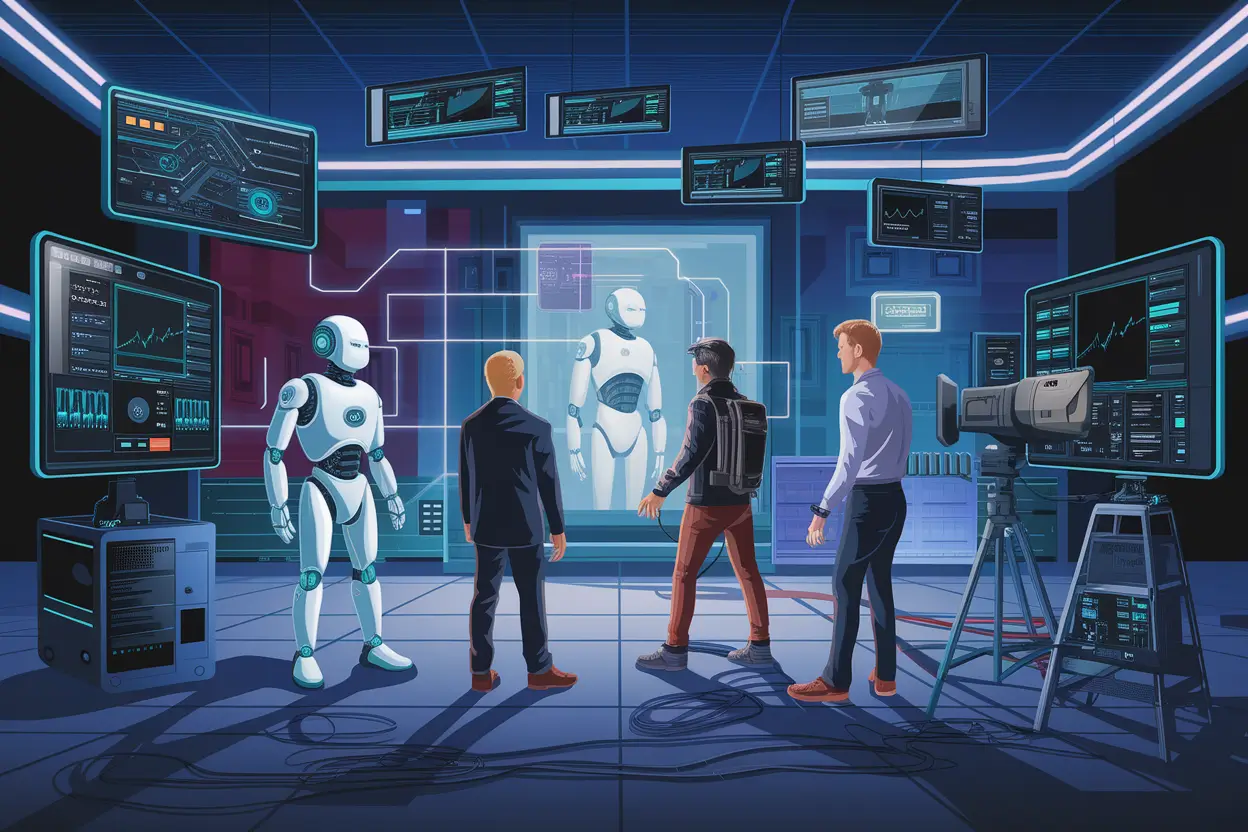
How AI is Replacing Traditional VFX Artists in Movies has become one of the most talked-about transformations within the film industry. Artificial Intelligence (AI) technologies are not only revolutionizing how visual effects (VFX) are produced but are also redefining the roles, workflows, and capabilities of artists. From automating tedious frame-by-frame editing to generating hyper-realistic environments, AI’s rise is altering Hollywood and independent filmmaking alike. The following article explores this change comprehensively — explaining how it works, its impact on traditional VFX artists, core techniques, industry case studies, and what the future holds for both humans and machines in cinematic creativity.
Understanding How AI is Replacing Traditional VFX Artists in Movies
Visual effects have always been an essential part of film production, enabling filmmakers to bring impossible worlds to life. Traditionally, these effects were created manually by artists using complex software such as Maya, Nuke, or Houdini. However, artificial intelligence is now streamlining and enhancing many of these processes. By leveraging machine learning algorithms, deep neural networks, and data-driven automation, AI can simulate realistic environments, replace backgrounds, create digital doubles, and even automate motion tracking. This change dramatically speeds up production timelines while reducing the need for intensive manual labor.
Core Technologies Behind How AI is Replacing Traditional VFX Artists in Movies
Several key AI technologies collectively power this shift. Machine learning models use vast datasets of images and video footage to understand shapes, motion, and light dynamics. Deep learning, particularly Generative Adversarial Networks (GANs), can generate new images or alter existing footage with stunning realism. Neural rendering and AI-driven compositing significantly enhance the visual experience. Furthermore, tools such as deepfake systems, image segmentation, and object recognition algorithms help identify and modify elements within scenes automatically. This allows for seamless blending and replacement that once required hours or days of artist effort.
How AI Works in Replacing Traditional VFX Artists in Movies
The process involves training deep learning models with large amounts of visual data. For instance, AI can learn how light behaves in specific scenarios and replicate it in 3D renders. It can track actors’ movements, replace or alter expressions frame by frame, and extend sets digitally. In film post-production, AI systems analyze every frame to detect facial structures, movements, and camera angles. Then they apply transformations like replacing an actor’s face with a digital double or replacing the background automatically through semantic segmentation. This automation drastically reduces manual frame-by-frame editing that artists traditionally performed.
Advantages of How AI is Replacing Traditional VFX Artists in Movies
- Efficiency: AI can process thousands of frames in hours compared to days of manual labor.
- Cost Reduction: Automated visual modifications reduce the need for large teams, lowering production costs.
- Consistency: AI ensures a uniform look across frames and scenes, minimizing human error.
- Speed to Market: Faster rendering and compositing mean movies can reach audiences sooner.
- Creative Expansion: Artists can focus more on concept design rather than repetitive editing tasks.
Challenges and Drawbacks of How AI is Replacing Traditional VFX Artists in Movies
Despite its advantages, AI in VFX raises concerns. Many artists fear job displacement. Creative control can diminish when algorithms dictate aesthetics. Moreover, AI-generated effects sometimes lack the emotional depth that human artists bring. Data bias can lead to unrealistic or inconsistent results if the training dataset isn’t diverse enough. Technical challenges include ensuring compatibility between AI algorithms and existing production pipelines and managing large computational requirements.
Use Cases Showcasing How AI is Replacing Traditional VFX Artists in Movies
AI is already being used widely in films. Studios have employed AI tools for scene cleanup, de-aging actors, reconstructing damaged footage, and merging live-action with CGI seamlessly. AI can recreate historical figures or young versions of actors, such as in blockbuster de-aging examples. Deepfake technologies have been used to generate digital performances without traditional keyframe animation. Predictive motion capture can recreate stunts that are too dangerous for humans, improving both safety and cost-efficiency.
Real-World Examples of How AI is Replacing Traditional VFX Artists in Movies
In Hollywood and international cinema, several examples showcase this trend. AI-assisted de-aging was used to create younger versions of characters in major franchises. AI-driven rotoscoping tools made complex background removal far quicker than before. For instance, streaming productions use AI to scale down costs while maintaining high-quality outputs. Independent filmmakers now use AI for crowd generation, weather simulation, and sky replacement. These systems intelligently integrate live footage with generated visuals to maintain realism.
Latest Trends in How AI is Replacing Traditional VFX Artists in Movies
Recent advancements include real-time rendering using neural engines and AI-driven volumetric effects that simulate realistic dust, smoke, or fire. Cloud-based rendering powered by AI is also on the rise, allowing productions to collaborate globally. AI-enhanced virtual production integrates live camera feeds into 3D scenes for on-set visualization. Additionally, generative AI now assists in concept design, storyboarding, and creating visual assets even before shooting starts.
Technical Setup and Implementation for How AI is Replacing Traditional VFX Artists in Movies
Integrating AI into VFX workflows involves several key steps. First, the dataset preparation: thousands of high-quality frames are collected to train the model. Next, data preprocessing includes normalizing images and aligning features. Frameworks like TensorFlow, PyTorch, and NVIDIA Omniverse are commonly used for neural training and inference. Once trained, models are deployed for tasks such as object tracking, auto-segmentation, and rendering enhancements. In production, pipeline integration ensures that AI outputs are compatible with post-production tools like After Effects or Nuke for final compositing.
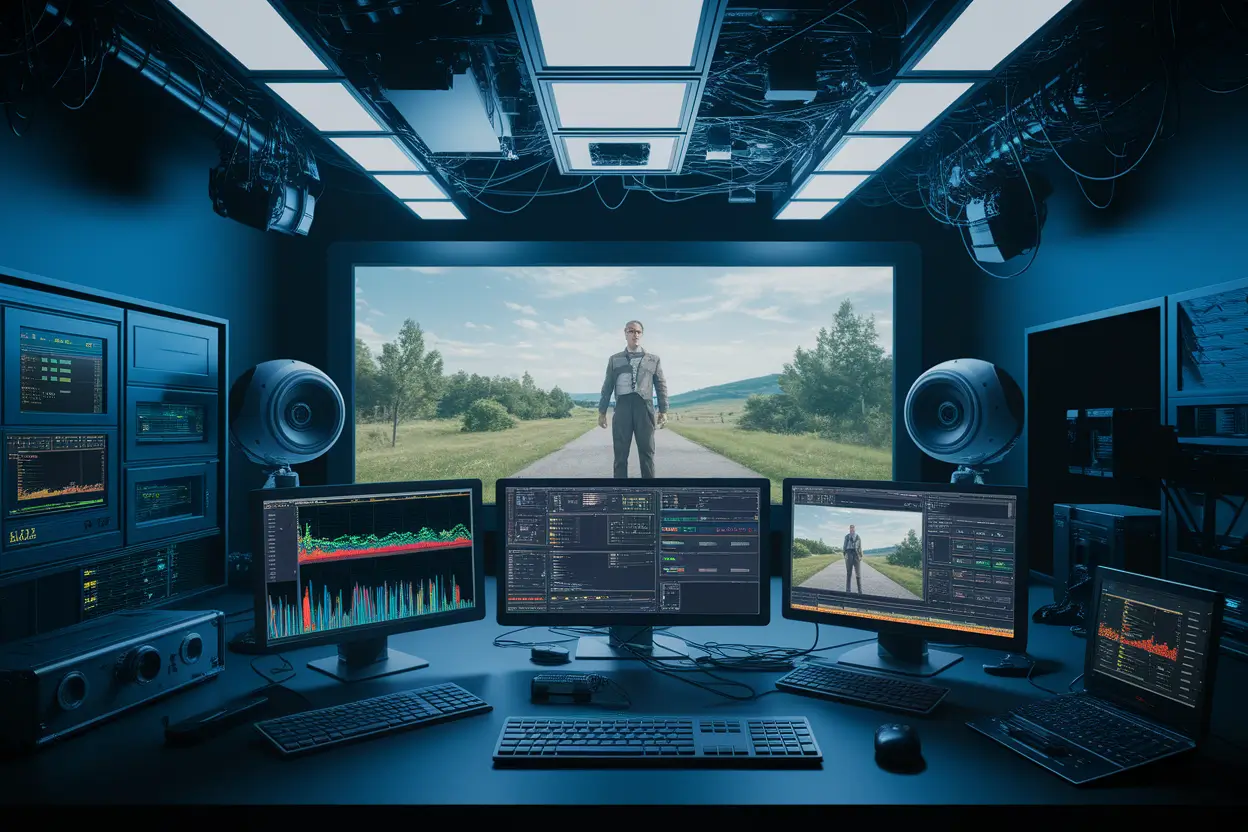
Example Code for Basic AI-Based Image Segmentation
Below is a simplified example of how an AI model can perform background removal using Python and OpenCV integrated with deep learning models. The workflow includes loading a pre-trained neural network for semantic segmentation, processing frames, and extracting foregrounds to merge with new digital scenes. Artists can then fine-tune results manually where precision matters most.
Comparative Study: How AI is Replacing Traditional VFX Artists in Movies vs Conventional Methods
| Aspect | Traditional VFX | AI-Based VFX |
|---|---|---|
| Time | Manual work, often weeks | Automated, faster rendering |
| Cost | High due to large teams | Reduced by automation |
| Quality | High with skilled artists | High but requires quality data |
| Scalability | Limited by manpower | Easily scalable with compute power |
| Flexibility | Artistic creativity driven | Algorithmic precision driven |
Ethical Implications of How AI is Replacing Traditional VFX Artists in Movies
The automation of visual artistry introduces serious ethical questions. Who owns AI-generated visuals? Should actors consent to digital replicas made via AI, even posthumously? There are also concerns around deepfakes being misused outside the film context. Establishing clear guidelines and rights management frameworks is essential to prevent digital exploitation and protect creative integrity.
Future Outlook of How AI is Replacing Traditional VFX Artists in Movies
The future is expected to hold a hybrid ecosystem where AI assists artists instead of fully replacing them. The integration of AI tools allows for higher productivity and innovation. Over time, artists will shift to more supervisory and creative roles, managing and guiding AI outputs rather than performing repetitious manual tasks. As models become more sophisticated, real-time adaptive effects could blur the line between pre-production and post-production entirely.
Impact on Employment and Skills as AI is Replacing Traditional VFX Artists in Movies
The professional landscape for VFX artists is rapidly evolving. While AI reduces certain job categories, it creates new opportunities in AI training, data preparation, and creative supervision. Artists with hybrid skills in both art and data science are becoming more valuable. The demand for technical expertise in machine learning pipelines within visual arts will continue to rise.
Educational Path for Professionals Adapting as AI is Replacing Traditional VFX Artists in Movies
To remain relevant, VFX professionals can educate themselves on AI frameworks and automation tools. Learning Python, machine learning concepts, and neural rendering techniques helps bridge art and technology. Many studios now prioritize candidates with both creative sensibilities and data literacy. Online learning platforms, workshops, and AI design courses are available for upskilling artists toward the new generation of intelligent VFX production.
Case Study: How AI Replaced Traditional VFX Artists in a Short Film
In a recent indie sci-fi short, AI replaced nearly 60% of conventional VFX tasks. The director used an AI-based background replacement model to substitute green screen compositing entirely. With minimal manual corrections, the AI delivered production-ready results in under 48 hours. This not only saved costs but also allowed the team to expand creative experimentation within tight deadlines.
Common Mistakes When Using AI to Replace Traditional VFX Artists in Movies
- Overreliance on automation without human review leading to unnatural visuals.
- Using insufficient training data causing visible artifacts.
- Ignoring color or lighting inconsistencies between AI outputs and live footage.
- Poor integration within existing production pipelines.
- Lack of version control or dataset transparency causing reproducibility issues.
FAQ on How AI is Replacing Traditional VFX Artists in Movies
Will AI completely replace traditional VFX artists?
Not entirely. While AI automates repetitive tasks, creative direction, storytelling, and artistic judgment remain inherently human. Future workflows will be collaborative rather than entirely automated.
What AI tools are popular in film VFX production?
Tools like Runway, DeepArt, NVIDIA Omniverse, and PIFuHD are widely used for AI-driven generation, segmentation, and rendering enhancements.
Is AI-based VFX affordable for smaller studios?
Yes. Cloud computing has lowered the entry barrier, allowing smaller or independent creators to leverage AI rendering and compositing affordably.
What skills do artists need to stay relevant?
Artists should focus on creative supervision, storyboarding, and AI tool proficiency. Learning Python, deep learning concepts, and data curation also increases job security.
How does AI affect film creativity?
AI expands creative potential by offering real-time visualization and experimentation, freeing artists to innovate faster and with fewer technical constraints.
Conclusion: The Evolution of How AI is Replacing Traditional VFX Artists in Movies
Ultimately, how AI is replacing traditional VFX artists in movies showcases a powerful intersection between creativity and technology. While AI transforms pipelines and speeds production, it should be viewed as an enhancer—not a replacement—of human creativity. The most successful future lies in collaboration, where AI handles labor-intensive tasks and artists focus on storytelling brilliance. As technology continues evolving, so too will the art of cinematic illusion, unlocking a new chapter in visual storytelling.