

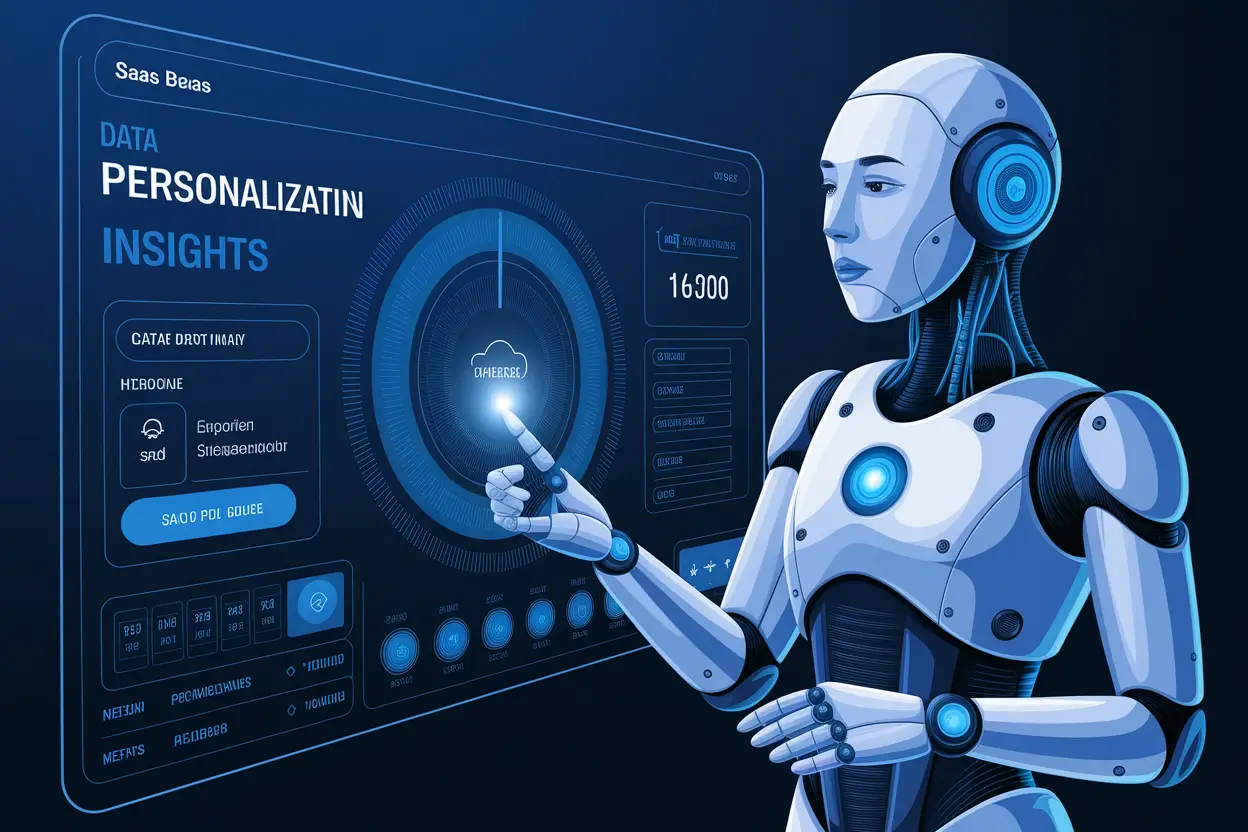
How AI Voice Bots Help SaaS Companies Deliver Personalization is a deep-dive into how artificial intelligence-driven voice interfaces enhance user experiences in the Software-as-a-Service domain. As SaaS businesses become increasingly global and customer-centric, personalization has emerged as the key differentiator. AI voice bots enable SaaS companies to replicate human-like conversations, understand context, and tailor experiences based on user behavior and preferences. This article explores the entire landscape—from the working mechanisms of AI voice bots to technical setups, real-world case studies, and future trends shaping their adoption.
Understanding How AI Voice Bots Help SaaS Companies Deliver Personalization
AI voice bots are artificial intelligence-powered systems designed to simulate real-time human conversation through speech recognition, natural language processing (NLP), and voice synthesis. In SaaS environments, these bots act as personalized virtual assistants, providing customer support, onboarding help, and proactive engagement around-the-clock. Instead of relying solely on manual teams or textual chat, voice bots give users an experience similar to speaking with a real agent, thereby boosting satisfaction and retention.
How AI Voice Bots Work to Help SaaS Companies Deliver Personalization
The main functionality behind AI voice bots involves three intertwined technologies: automatic speech recognition (ASR), natural language processing (NLP), and text-to-speech (TTS) generation. ASR converts spoken language into text, NLP processes that text to extract meaning, intent, and sentiment, and TTS uses neural networks to convert the system’s response back into speech. SaaS companies integrate these modules into their platforms using APIs and machine learning models like BERT, GPT, or open-source voice frameworks such as Rasa or DeepSpeech. The AI voice bot learns from user interactions, patterns, and contextual feedback to deliver customized responses.
Core Concepts Behind How AI Voice Bots Help SaaS Companies Deliver Personalization
The concept of personalization in SaaS means adapting the software’s behavior and communication to each individual user. AI voice bots enhance this by using three personalization layers: data-based personalization, contextual personalization, and predictive personalization. Data-based personalization leverages user information (e.g., usage frequency, location, preferences) to craft responses. Contextual personalization uses real-time cues (like tone or urgency), while predictive personalization draws on machine learning insights to anticipate user needs before they explicitly ask.
Benefits of How AI Voice Bots Help SaaS Companies Deliver Personalization
- Improved user engagement: Voice interfaces create more natural and interactive dialogues, enhancing engagement metrics.
- 24/7 customer support: AI bots operate continuously, offering instant responses at any hour worldwide.
- Reduced costs: Automating routine queries decreases the need for large customer support teams.
- Scalability: Voice bots handle thousands of interactions simultaneously, ideal for fast-growing SaaS user bases.
- Data-driven insights: Every conversation becomes a data source, improving personalization and product strategy.
Challenges in How AI Voice Bots Help SaaS Companies Deliver Personalization
- Accent and language barriers: Different accents and dialects can reduce recognition accuracy.
- Data security concerns: Storing and processing voice data raises privacy and compliance issues (like GDPR).
- Integration complexity: Linking AI voice layers with existing SaaS workflows may need robust APIs and engineering expertise.
- Limited contextual understanding: While NLP has advanced, bots may still misinterpret emotions or sarcasm.
Use Cases: How AI Voice Bots Help SaaS Companies Deliver Personalization
1. Customer onboarding: AI voice bots can walk users through product setup or configuration steps. 2. Customer support automation: Voice bots instantly resolve common support tickets such as password resets or billing queries. 3. Sales enablement: Bots assist sales teams with lead qualification calls and provide customized product demos. 4. Employee training: Internal SaaS tools use conversational bots for real-time assistance in training modules.
Real-World Examples of How AI Voice Bots Help SaaS Companies Deliver Personalization
Example 1: A CRM SaaS company integrated AI voice bots to automatically follow up with leads post-meeting. The system identified conversation context, scheduled follow-ups, and stored call summaries, boosting conversions by 30%. Example 2: A project management SaaS firm used voice bots for daily stand-up summaries. The bot recognized key updates from teams and summarized progress reports. Example 3: A data analytics SaaS provider embedded a voice bot that allowed users to ask queries like “Show me last month’s user churn” and received auditory and visual insights within seconds.
Latest Trends in How AI Voice Bots Help SaaS Companies Deliver Personalization
Trends show rapid integration of conversational AI within SaaS ecosystems. Popular trends include hybrid conversational interfaces combining text and voice, emotional AI that detects sentiment through tone, conversational analytics for deeper behavioral data, and low-code voice bot builders. SaaS vendors increasingly use open APIs from tools like Google Dialogflow, Amazon Lex, and Microsoft Bot Framework to create multilingual voice assistants optimized for personalization.
Technical Implementation of How AI Voice Bots Help SaaS Companies Deliver Personalization
Technically, integrating AI voice bots into a SaaS application involves several key steps: speech-to-text capture, NLP intent recognition, business logic mapping, and dynamic TTS generation. Below is a simple pseudocode outline:
Example Implementation Flow:
1. Capture voice input using microphone API.
2. Convert voice to text via speech recognition API.
3. Pass recognized text into NLP engine for intent extraction.
4. Match intent with SaaS service logic (e.g., CRM query).
5. Generate response and pass through TTS engine.
6. Output audio response to user interface.
Integration usually requires backend endpoints built with Python (Flask/FastAPI), Node.js, or Go connected with cloud platforms such as AWS Lambda, Azure Functions, or Google Cloud Functions for scalability.
Comparing How AI Voice Bots Help SaaS Companies Deliver Personalization with Alternatives
| Approach | Pros | Cons |
|---|---|---|
| AI Voice Bots | Human-like communication, real-time personalization | Requires speech AI setup, data privacy measures |
| Chatbots (Text) | Simple integration, cost-effective | Less natural, lower engagement rates |
| Email Automation | Scalable communication, measurable analytics | No interactivity, delayed response |
Optimization Tips for How AI Voice Bots Help SaaS Companies Deliver Personalization
- Use user segmentation data to pre-train personalization models.
- Ensure seamless omnichannel integration by syncing voice and chat histories.
- Deploy real-time analytics dashboards to measure interaction quality and conversion events.
- Continuously improve language models with reinforcement learning from human feedback.
- Adopt edge AI architectures for faster and more secure voice data processing.
Common Mistakes in How AI Voice Bots Help SaaS Companies Deliver Personalization
- Overcomplicating conversations without fallback mechanisms.
- Failing to maintain clear opt-in compliance for voice data recording.
- Neglecting model training for diverse accents and languages.
- Not providing human handoff when voice bot confidence is low.
- Underestimating latency issues during real-time calls.
Case Study: How AI Voice Bots Help SaaS Companies Deliver Personalization in CRM
A SaaS-based CRM platform integrated an AI voice bot to automate lead engagement. The bot connected through phone and in-app voice, greeted clients by name, referenced past purchases, and followed up with tailored recommendations. This reduced average response time from 2 hours to 3 minutes and improved customer satisfaction by 42%. The company implemented sentiment analysis via NLP to detect client tone, further tuning recommendations for user satisfaction.
Future of How AI Voice Bots Help SaaS Companies Deliver Personalization
The future of AI voice bots in SaaS is moving toward more context-aware, autonomous systems capable of running full-fledged process automation via voice commands. The integration of neural symbolic AI, federated learning for privacy-centric personalization, and zero-shot voice transfer will enable hyper-personal yet secure experiences. SaaS companies will leverage synthetic voice cloning for branding, multilingual support, and emotional intelligence, ensuring greater consistency and personal touch in customer interactions.
FAQs on How AI Voice Bots Help SaaS Companies Deliver Personalization
What technologies power AI voice bots in SaaS?
They use automatic speech recognition, NLP, and TTS. Frameworks like Google Dialogflow, IBM Watson, and Rasa are popular choices.
How do AI voice bots improve SaaS personalization?
They analyze historical data, detect tone and sentiment, and tailor interactions based on individual preferences and context.
Are AI voice bots secure for SaaS integration?
Yes, if implemented with encryption, anonymization, and compliance with standards such as GDPR and SOC 2.
Can AI voice bots handle multiple languages?
Yes. Modern solutions support multilingual processing, enabling global SaaS businesses to serve users in regional languages.
What is the ROI of implementing voice bots in SaaS?
Improved customer retention, reduced operational costs, and faster support turnaround typically lead to high ROI within months.
Conclusion: How AI Voice Bots Help SaaS Companies Deliver Personalization
AI voice bots help SaaS companies deliver personalization by blending human-like communication with data-driven intelligence. They enhance user satisfaction, transform support operations, and offer scalable, contextual engagement. With rapid evolution in AI, NLP, and speech technology, SaaS providers adopting voice bots early will gain a competitive advantage in creating deeply personalized and emotionally intelligent digital experiences.