


A Comprehensive Guide on Customer Lifecycle Management begins with understanding the complete journey of customers as they interact with a brand. Customer Lifecycle Management (CLM) encompasses tracking, analyzing, and optimizing every stage of a customer’s relationship with a business from initial awareness to post-purchase engagement. It integrates marketing, sales, and customer support to maximize retention and lifetime value. Businesses that master CLM can create stronger relationships, boost revenue, and ensure loyalty through precise, data-driven strategies.
What is Customer Lifecycle Management
Customer Lifecycle Management is a strategic process for managing customer interactions across various stages of engagement. It enables companies to deliver personalized experiences, improve conversion rates, and foster long-term retention. The goal is to map and understand each phase — awareness, acquisition, conversion, retention, and advocacy — then design tactics to move customers seamlessly from one stage to the next.
At its core, CLM relies on data collection, segmentation, and automation tools. By examining behavioral data, demographics, and psychographics, brands can anticipate customer needs and serve appropriate messages at every touchpoint.
How Customer Lifecycle Management Works
Customer Lifecycle Management operates as a continuous feedback loop. A company begins by identifying target customers and understanding their behavior through analytics tools. These insights guide marketing and communication plans that nurture prospects into buyers and promote brand advocacy.
Typical workflow steps include: data acquisition, segmentation, engagement campaigns, sales conversion optimization, post-purchase relationship nurturing, and feedback collection. The lifecycle process evolves dynamically as customer expectations change and new insights emerge.
Core Concepts of Customer Lifecycle Management
Several foundational principles define CLM’s success:
- Segmentation: Categorizing customers based on behavior, demographics, or needs to deliver tailored messaging.
- Personalization: Customizing communications and offers to each user’s lifecycle stage.
- Automation: Using CRMs or marketing platforms to trigger timely and relevant interactions automatically.
- Predictive Analytics: Leveraging data models to forecast customer actions, churn risks, or product preferences.
- Continuous Improvement: Monitoring lifecycle results, analyzing performance, and refining strategies.
Stages of Customer Lifecycle Management
Customer Lifecycle Management typically includes five main stages:
- Awareness: Potential customers first become aware of the brand or product through marketing channels.
- Acquisition: Engaging potential buyers through targeted campaigns, signups, or lead generation forms.
- Conversion: Turning interested leads into paying customers.
- Retention: Building long-term relationships through support, loyalty programs, and personalization.
- Advocacy: Transforming satisfied clients into brand promoters who share referrals or positive feedback.
Benefits and Advantages of Customer Lifecycle Management
Implementing Customer Lifecycle Management provides measurable benefits:
- Improved customer acquisition efficiency.
- Higher average customer lifetime value (CLV).
- Enhanced loyalty and retention rates.
- Better insights into customer behavior and preferences.
- Optimized marketing budget allocation and reduced churn.
By focusing on the customer journey, brands create stronger connections and consistent satisfaction.
Challenges and Drawbacks of Customer Lifecycle Management
Despite its benefits, CLM poses challenges such as data silos between departments, inconsistent tracking metrics, lack of integration between CRM systems, and privacy issues related to customer data. Moreover, implementing CLM can require significant investment in tools and expertise.
Businesses must address these challenges by fostering data collaboration, choosing the right technology stack, and ensuring compliance with data protection regulations.
Use Cases of Customer Lifecycle Management
Practical applications of CLM are abundant across industries:
- Retail: Personalizing promotions based on buying history.
- Telecom: Identifying churn risk customers via predictive modeling.
- Finance: Nurturing leads through email journeys that align with investment goals.
- E-commerce: Automating post-purchase feedback and cross-sell suggestions.
- Healthcare: Engaging patients with appointment reminders and satisfaction surveys.
Real-World Examples of Customer Lifecycle Management
Several global brands successfully use CLM strategies:
- Amazon: Utilizes behavioral analytics to personalize recommendations and retain customer loyalty.
- Netflix: Employs predictive algorithms to recommend content, increasing average session duration.
- Starbucks: Uses mobile app rewards programs to drive repeat visits and influence customer habits.
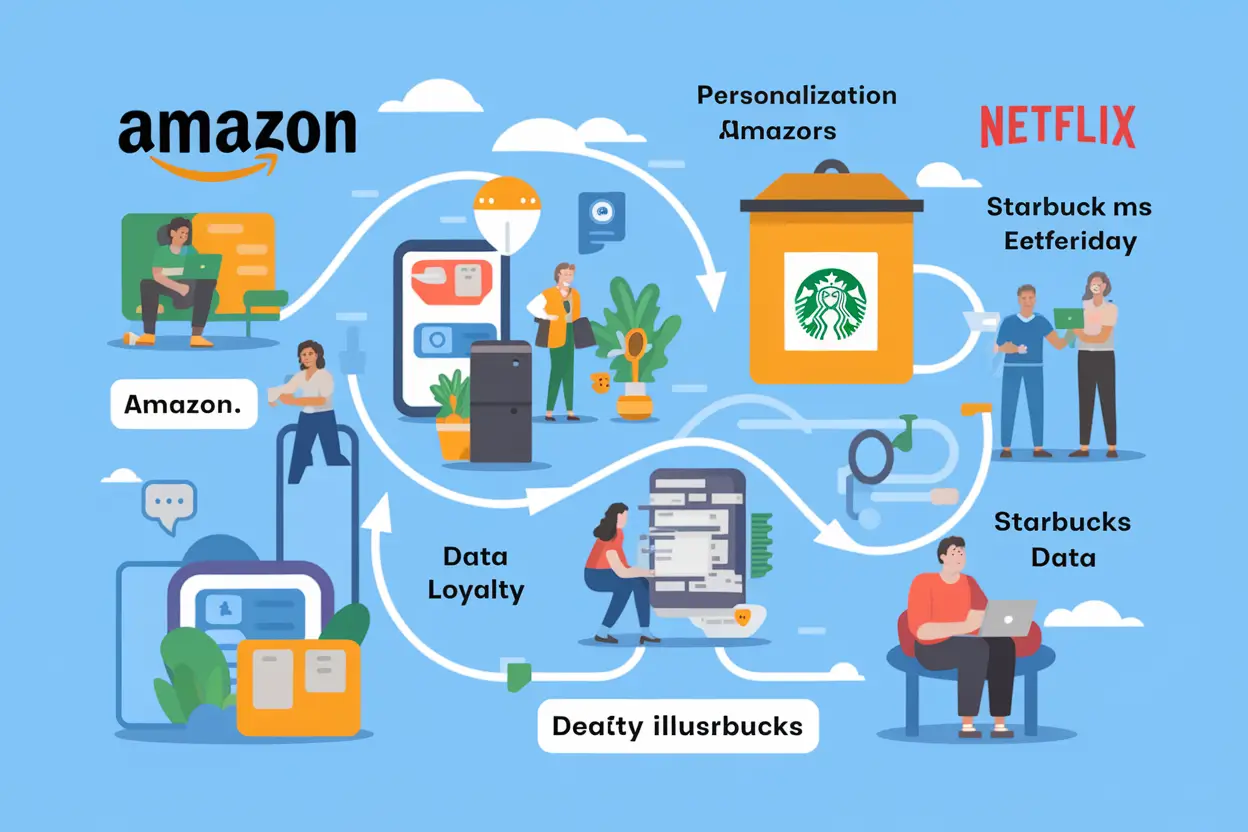
These cases show that when data-driven approaches are integrated with customer experience initiatives, both loyalty and profit margins improve.
Technical Components and Tools for Customer Lifecycle Management
Customer Lifecycle Management operates through advanced tools and frameworks, including:
- CRM systems such as Salesforce, HubSpot, or Zoho.
- Marketing automation platforms like Mailchimp or ActiveCampaign.
- Analytics engines such as Google Analytics and Mixpanel.
- Data warehouses for centralizing metrics and customer information.
Implementation Steps:
- Integrate all data sources into a centralized platform.
- Define lifecycle stages and target KPIs for measurement.
- Automate workflows using email sequences, triggers, and event-based actions.
- Set up dashboards to monitor engagement and conversion trends.
Code Example for Setting Up Automated Customer Segmentation
Businesses often use customer data APIs or marketing automation scripts to segment users. Below is a conceptual code snippet (Python-like) showing how automation can work:
Example:
Segment customers based on purchase frequency and engagement score, then automatically assign nurturing campaigns via API calls to a marketing platform.
Comparing Customer Lifecycle Management vs CRM
Customer Relationship Management (CRM) refers mainly to storing and managing customer data, while Customer Lifecycle Management focuses on optimizing the relationship over time through analytics, engagement, and personalized journeys.
| Aspect | CRM | CLM |
|---|---|---|
| Focus | Data and contacts | Entire customer journey |
| Goal | Relationship management | Lifecycle optimization |
| Approach | Static record-keeping | Dynamic, stage-based tracking |
Modern Trends in Customer Lifecycle Management
Several emerging trends redefine CLM implementations:
- AI personalization: Machine learning models predict customer behavior.
- Omnichannel automation: Unified messaging across email, SMS, social, and apps.
- Predictive retention: Churn analysis models detect early disengagement signs.
- Voice-of-customer analytics: Real-time sentiment analysis enhances responsiveness.
These trends enable businesses to deliver consistent, proactive experiences rather than reactive support.
Measuring Success in Customer Lifecycle Management
Key performance indicators (KPIs) used in CLM include:
- Customer Lifetime Value (CLV)
- Conversion Rate
- Retention Rate
- Net Promoter Score (NPS)
- Customer Acquisition Cost (CAC)
Tracking these metrics provides full visibility into the financial and relational health of a brand’s customer lifecycle strategy.
Best Practices for Effective Customer Lifecycle Management
- Develop comprehensive customer profiles from multiple data sources.
- Use automation responsibly to maintain human authenticity.
- Regularly update segmentation models with new behavioral data.
- Encourage interdepartmental collaboration between marketing, sales, and service.
- Establish feedback mechanisms for ongoing optimization.
Future Outlook for Customer Lifecycle Management
The future of Customer Lifecycle Management lies in leveraging AI-driven predictive intelligence, hyper-personalization, and real-time engagement analytics. As privacy standards evolve, consent-based marketing will rise, requiring ethical data collection frameworks. Businesses that adapt early to these trends will enjoy sustainable growth and reduced churn.
Common Mistakes and Solutions in Customer Lifecycle Management
Mistake: Treating all customers the same. Solution: Use detailed segmentation and tailor outreach based on stage and behavior.
Mistake: Over-automation without personalization. Solution: Combine automated workflows with human insight.
Mistake: Ignoring post-sale engagement. Solution: Implement loyalty programs, surveys, and rewards to sustain interest.
FAQs about Customer Lifecycle Management
What is the main purpose of Customer Lifecycle Management?
Its primary goal is to nurture relationships through each stage of the customer journey to increase satisfaction and profitability.
How can small businesses use Customer Lifecycle Management?
Small businesses can use simple CRM tools to collect customer data, automate email sequences, and analyze repeat purchase behavior.
What technologies are essential for Customer Lifecycle Management?
CRMs, data analytics tools, marketing automation suites, and communication platforms are key enablers of efficient CLM implementation.
What metrics help evaluate Customer Lifecycle Management efficiency?
Tracking CLV, retention rate, and conversion ratio helps assess the strength of lifecycle management efforts.
What trends will shape the future of Customer Lifecycle Management?
AI prediction, ethical personalization, and omnichannel optimization will define next-generation CLM strategies.
Conclusion: The Importance of Customer Lifecycle Management
Customer Lifecycle Management isn’t just a marketing framework; it is an organizational philosophy that ensures every customer interaction counts. By combining data, personalization, and automation, companies can deliver unmatched experiences, improve revenue consistency, and build brand advocates. In today’s fast-moving digital market, mastering Customer Lifecycle Management is not an option but a necessity for growth and differentiation.