


Email verification is a foundational practice that ensures email addresses within a contact list are correct, active, and capable of receiving messages. It plays a pivotal role in safeguarding sender reputation, avoiding high bounce rates, and maintaining data accuracy. Businesses, marketers, and IT teams rely on it to ensure reliable communication and secure digital interactions.
How Email Verification Enhances Deliverability
One of the chief objectives of email verification is to improve email deliverability. When messages consistently fail to reach recipients, Internet Service Providers (ISPs) may flag the sender as untrustworthy. Email verification filters out invalid or dormant addresses and increases the success rate of email delivery. With verified lists, marketers can achieve significantly higher open and engagement rates.
Email Verification Process: Step-by-Step Breakdown
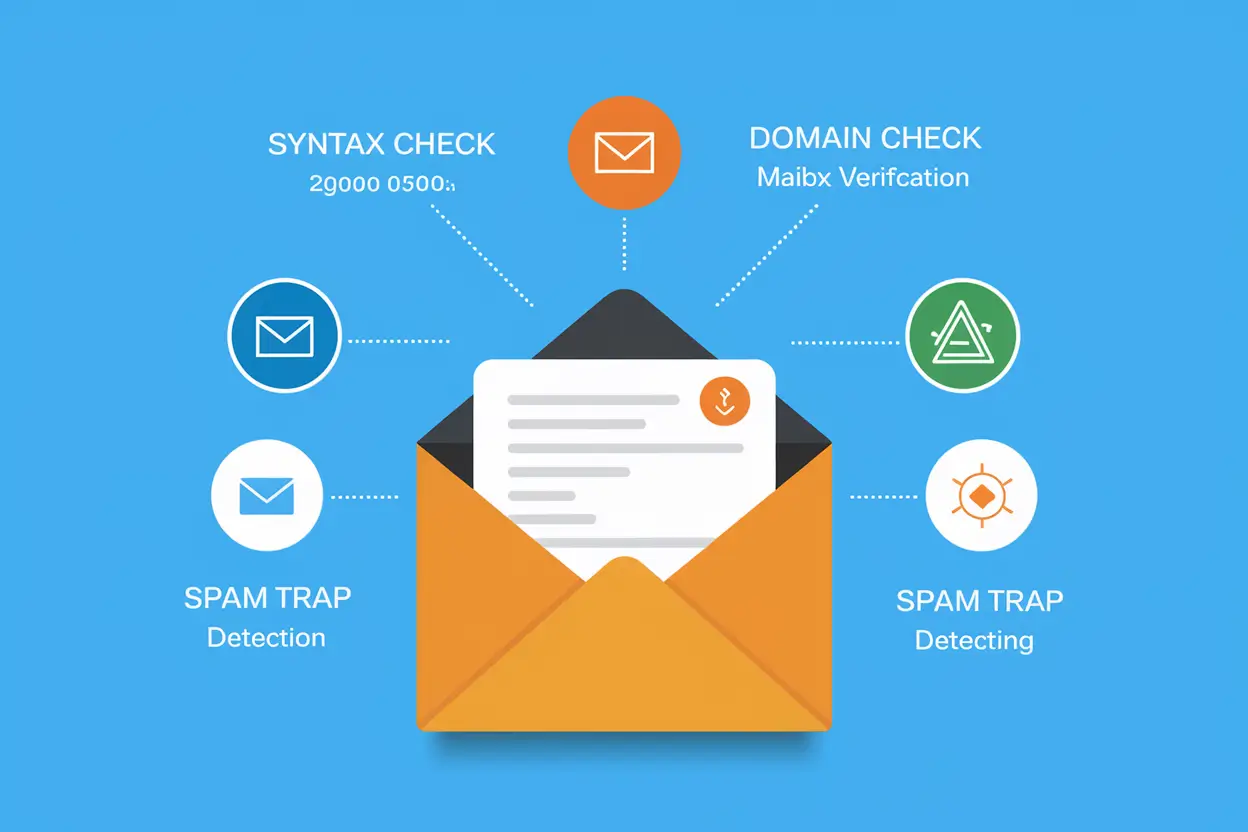
The process involves a series of automated checks that examine the authenticity and reliability of each address in a list:
- Syntax Check: Detects format errors like misspelled domain extensions or misplaced characters.
- Domain Check: Verifies if the domain exists and is configured to handle email traffic.
- Mailbox Check: Tests whether the specific inbox is active and able to receive messages.
- Role-Based Detection: Flags addresses that may not represent individual users, such as info@ or support@.
- Disposable Email Detection: Identifies temporary inboxes that users create for one-time use.
- Spam Trap Identification: Recognizes addresses meant to catch spammers, helping avoid severe sender penalties.
Email Verification: Impact on Sender Reputation
A positive sender reputation is vital for ensuring inbox placement. Activities such as sending bulk emails to unverified or inactive addresses can severely degrade your IP and domain reputation. Verified lists contribute to consistency in sending metrics and better engagement, which ISPs interpret as trustworthy behavior.
Key Components in Email Verification
Understanding the core areas email verification supports will help align it with your broader marketing or security goals:
- Deliverability: A clean, verified list reduces bounce rate and guarantees better inbox visibility.
- Sender Score: A calculated measure ISPs use to determine the quality of your messages.
- Spam Trap Avoidance: Essential for enterprises relying on email-based marketing and communication.
Email Verification: Pros and Cons to Consider
Like any technical process, email verification has its advantages and drawbacks:
Pros:
- Improved Deliverability: Higher chances that your message reaches a real person.
- Better ROI: Save money by focusing resources on valid contacts only.
- Sender Reputation: Fewer bounces and more reliable traffic ensure your email campaigns are not blacklisted.
- Marketing Effectiveness: Accurate data aids personalized messaging and better analytics.
Cons:
- Possible False Positives: Some valid addresses may be mistakenly flagged.
- Resource Intensiveness: Verifying large lists can strain time or budgets without the right tools.
- Legal/Privacy Challenges: Handling personal data must comply with regulations like GDPR or CCPA.
Email Verification for Email Marketing
Email marketing campaigns thrive on valid recipient addresses. Engaging with users who don’t exist or whose inboxes are inactive wastes marketing budget and can lead to spam complaints. Email verification enables segmentation strategies to be more targeted, which ultimately improves click-through and conversion rates.
Use of Email Verification in Registration Forms
Email verification is often embedded into forms during account creation. This real-time approach prevents typos, confirms user intent, and blocks fake sign-ups. It’s particularly useful for SaaS, ecommerce, and fintech platforms that require verified communication channels.
Email Verification and Fraud Prevention
Fraudulent activity, including spam or account abuse, often begins with disposable or malicious email addresses. Email verification identifies and flags these threats early, allowing mitigation steps to be taken before they can cause harm. This is critical for industries like finance, healthcare, and government services.
Email Data Cleaning with Verification
Using verification for data cleaning helps businesses maintain the integrity of CRM and database systems. Removing outdated emails protects your resources and ensures you’re working with real-time data—not stale contacts. Clean data helps achieve tighter reporting and attribution on marketing activities.
Email Verification Case Study: Verifications.io Breach
The Verifications.io data breach in 2019 exposed more than 2 billion records. This catastrophic leak occurred due to poor infrastructure and misconfigured systems. It emphasized how essential strong data privacy policies and secure handling practices are in the email verification industry.
Advanced Technologies in Email Verification
AI and machine learning have revolutionized email verification systems:
- AI-Powered Spam Detection: With EvoMail’s advanced model, spam traps and malicious detection are improved rapidly through data learning.
- Graph Neural Networks: They analyze email networks and communication patterns to uncover fraudulent or compromised accounts in real-time.
Real-Time Email Verification Implementation
Modern tools now provide API access to real-time validation. Businesses embed verification directly into user interfaces and registration systems. The benefit is twofold: better data input and immediate feedback for the user, which reduces errors from the start.
Email Verification and Data Compliance
Compliance with GDPR (Europe) and CCPA (California) requires organizations to handle user data responsibly. Email addresses are personal data and must be safeguarded during verification. Always use services that encrypt transmitted data and delete customer lists after checks.
Integrating Email Verification with Marketing Platforms
Major platforms like HubSpot, Mailchimp, and Salesforce support plug-and-play integrations with verification tools. This automation ensures your campaign list is always up-to-date and automatically purged of risky entries.
Improved Email Verification for Spam Trap Detection
Spam trap detection has advanced dramatically. Algorithms can now distinguish between typo traps (common typos like gmal.com) and pristine traps (emails never used by real users). Avoiding these addresses protects your campaigns from being flagged and blocked by ISPs.
Technical Tips for Successful Email Verification
- Opt for API-Based Services: These enable real-time checks and integrate easily with forms and CRMs.
- Double Opt-In: Asking users to confirm registration via email ensures genuine interest and accuracy.
- Schedule Regular Cleanups: As inboxes expire or users change jobs, verification ensures long-term data health.
- Monitor Campaign Metrics: Keep an eye on bounce rates and change strategies if discrepancies appear.
Email Verification vs. Opt-In Methods
| Method | Advantages | Disadvantages |
|---|---|---|
| Single Opt-In | Faster list growth | Prone to fake or mistyped emails |
| Double Opt-In | High-quality leads, confirms interest | Slightly lower total sign-ups |
Email Verification Best Practices for 2024
- Incorporate real-time verification on data capture forms.
- Ensure periodic list cleaning every 3–6 months.
- Adopt AI-enabled tools for faster processing and higher accuracy.
- Educate staff on privacy compliance and proper handling of email data.
Email Verification: Future Outlook and Innovations
Future advancements continue to make email verification smarter, faster, and more secure. Predictions include:
- AI-Powered Threat Identification for dynamic spam analysis.
- Zero Trust Infrastructure to prevent inbound threats.
- End-to-End Encryption for all communications during verification.
- Voice-Controlled Email Interaction using AI-powered assistants.
- Sustainable Email Operations with lower energy use and better server utilization.
Conclusion: Why Email Verification is Non-Negotiable
Email verification is no longer an optional process. It is a strategic, operational, and compliance necessity for any organization relying on digital communication. Beyond deliverability, it protects brand reputation, ensures legal compliance, and helps unlock the best results across all forms of email engagement. Act now, and future-proof your outreach with verified contacts.
FAQs About Email Verification
Why is email verification important before launching a campaign?
Email verification ensures your list contains only valid and active emails, which improves deliverability and reduces bounce rate.
Are real-time verification tools better than batch processing?
Real-time tools provide instant feedback and prevent bad data entry from the beginning, making them more efficient for ongoing campaigns.
How often should you clean an email list?
It’s best to clean your list every 3–6 months or prior to major campaigns for optimal results and compliance.
Does email verification protect against fraud?
Yes, it helps identify fake, malicious, or disposable email addresses that are commonly associated with fraud attempts.
Can email verification help with GDPR compliance?
Absolutely. When done properly, it supports data accuracy requirements and protects user data as required by regulations.