


UPI & Digital Payments Latest Update: What Changes for Users in 2026? is a topic that holds immense importance as India continues its journey toward a fully cashless economy. Unified Payments Interface (UPI) has revolutionized financial transactions, making instant money transfers easy through a simple mobile interface. In 2026, new government and RBI-led reforms are set to reshape the UPI and digital payments ecosystem. This article dives deep into what UPI is, how it functions, existing and upcoming features, technical updates, and expected changes in user experience, security, and interoperability. It provides a complete understanding of where digital payments are heading, helping users and businesses prepare for this financial shift.
Understanding UPI & Digital Payments
UPI & Digital Payments refer to a technology-driven system that allows users to transfer money instantly between bank accounts using smartphones and internet connectivity. Unlike traditional banking systems that rely on account numbers or IFSC codes, UPI simplifies transactions by using virtual payment addresses (VPAs), such as name@bank. It was developed by the National Payments Corporation of India (NPCI) and launched in 2016, marking the start of real-time mobile-based banking convenience.
Digital payments include multiple channels such as cards, mobile wallets, AEPS (Aadhaar Enabled Payment System), and UPI. By 2026, the ecosystem will expand further through international UPI networks, tap-to-pay solutions, and AI-driven security analytics.
How UPI & Digital Payments Work
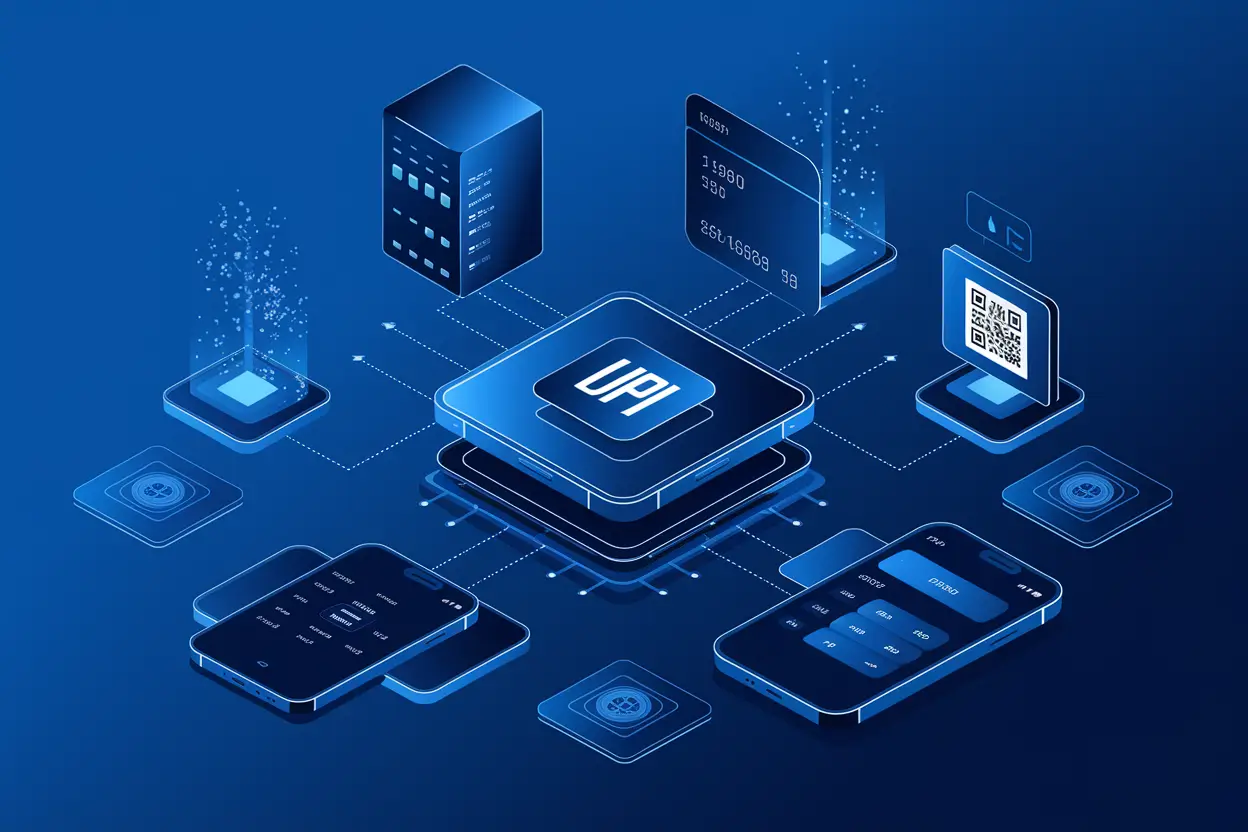
UPI operates on an immediate payment service (IMPS) framework, connecting multiple banks through a unified interface managed by NPCI. When a transaction is initiated through a UPI app, the app communicates with the bank’s PSP (Payment Service Provider) system to authenticate and process the request. Once validated via a secure PIN or biometric, funds move instantly between sender and receiver accounts. The entire process generally takes under 10 seconds.
Digital payment tools like UPI integrate authentication mechanisms such as two-factor verification, device binding, and dynamic QR codes to enhance trust and prevent fraud.
Core Concepts of UPI & Digital Payments
- Virtual Payment Address (VPA): A unique identifier for each UPI user that replaces bank details.
- PSPs: Banks or third-party apps authorized by NPCI to process UPI transactions.
- UPI ID Linking: One UPI ID can be linked to multiple bank accounts, offering flexibility for users.
- UPI Lite: A simplified version for offline payments, beneficial in low connectivity regions.
- AutoPay: Used for recurring payments such as bills, subscriptions, and EMIs.
Pros and Cons of UPI & Digital Payments
Advantages
- Instant fund transfers, 24/7 availability
- Zero or minimal transaction cost for users
- Highly secure, regulated by RBI and NPCI
- Promotes financial inclusion across urban and rural India
- Supports interoperability among multiple banks and payment apps
Challenges
- Internet dependency for most transactions
- Occasional downtime due to network overload
- Rising concerns about phishing and fraud attempts
- Need for strong user data protection and awareness
Real-World Use Cases of UPI & Digital Payments
UPI has gained massive adoption across all demographics. Street vendors accept payments via QR codes, students use UPI for online subscriptions, and large businesses integrate it with billing systems. Platforms like Google Pay, PhonePe, Paytm, and BharatPe dominate the fintech space, while integration with e-commerce and government portals continues to rise. International acceptance, such as UPI usage in Singapore and UAE, represents the next big chapter in global expansion.
Latest Trends in UPI & Digital Payments 2026
Several technology-focused updates and initiatives are in the pipeline for 2026 to make UPI & digital payments even more powerful:
- Credit on UPI: Linking pre-approved digital credit lines for consumer transactions directly via UPI apps.
- UPI Internationalization: Expanded cross-border payment service for NRI and global merchants.
- Offline Tap & Pay: NFC-based solutions will enable secure offline UPI payments.
- AI-powered fraud detection: Machine learning models integrated into PSPs to flag unusual activities in real-time.
- Voice-based Payments: Enabling voice command and regional language interaction for accessibility.
Technical Setup and Development of UPI & Digital Payments
Developers and fintech startups often interact with UPI through the NPCI API interface. The setup involves registering as a Payment Service Provider or Technical Service Provider with necessary approvals. APIs facilitate functions such as fund transfer, QR code generation, and transaction verification. Security standards such as PCI-DSS, tokenization, and two-factor authentication must be followed strictly.
Sample UPI Payment API Call
An example flow: The client app sends a POST request with payer details to the bank PSP endpoint. The server validates and processes the transaction via NPCI switches. The response contains a transaction reference ID, status, and confirmation timestamp. Each layer of this process is encrypted to protect sensitive data.
Comparing UPI & Digital Payments with Other Alternatives
| Method | Processing Time | Cost | Accessibility |
|---|---|---|---|
| UPI | Instant | Mostly Free | High |
| Credit/Debit Cards | Few Seconds | Merchant Fees | High |
| IMPS/NEFT | Minutes to Hours | Minimal | Moderate |
| Mobile Wallets | Instant | Processing Fee | High |
UPI stands out because it provides real-time settlement without direct card dependency. It bridges the gap between users and their banks efficiently and securely.
Security Framework in UPI & Digital Payments
As the system evolves, data privacy and cybersecurity have become vital. UPI follows multiple layers of encryption, device fingerprint checks, and dynamic PIN authentication. The 2026 upgrade focuses on creating a decentralized trust model with advanced AI algorithms that detect anomalies in milliseconds. NPCI’s proposed framework includes stronger end-to-end encryption keys and enhanced KYC verification.
Government Policies Shaping UPI & Digital Payments
Government policies play an active role in making UPI a global brand. Payment data localization, interoperability rules, and zero MDR policies have made UPI cost-effective for merchants. By 2026, the Digital India initiative plans to push more features, including integration with CBDC (Central Bank Digital Currency), further merging cashless and digital transactions seamlessly.
User Experience Updates in UPI & Digital Payments 2026
The 2026 updates aim at simplifying onboarding and improving UI/UX across all devices. Users will experience faster app loads, offline transaction recovery options, and AI chat assistance for failed transactions. Enhanced dashboard analytics will show spending habits, reward tracking, and credit utilization insight. For senior citizens, voice-assisted transactions and simplified PIN recovery processes will make usage smoother.
Future Outlook of UPI & Digital Payments
The future of UPI & digital payments looks promising. It is expected to grow beyond India’s borders while integrating with international payment systems. The potential merger with digital identity services such as DigiLocker can provide a single window for all financial actions. The ecosystem may also leverage blockchain for additional transparency, ensuring secure and trackable cross-border remittances. By 2030, micro-payments, government disbursements, and social benefits will likely be fully digital, replacing the need for cash across most sectors.
Common Mistakes in Adopting UPI & Digital Payments
- Using unverified third-party apps that may store personal credentials.
- Ignoring transaction notifications that could indicate fraudulent activity.
- Sharing UPI PINs or OTPs, which compromises account safety.
- Failing to update UPI apps regularly for security patches.
Best Practices for Safe UPI & Digital Payments Usage
- Enable biometric or two-factor authentication on devices.
- Use official apps verified by NPCI or the bank.
- Check transaction limits before transferring high amounts.
- Avoid scanning unknown QR codes or clicking unverified payment links.
Expert Technical Suggestions for Developers
Developers building for UPI integration should focus on maintaining compliance with NPCI specifications. Each payment SDK must be validated with sandbox testing and NPCI certification. APIs should support fallback mechanisms for failed transactions, cloud resilience, and data encryption through TLS 1.3 standards. Developers should also optimize UPI components for lightweight load times to retain users in poor connectivity areas.
Industry Case Studies of UPI & Digital Payments Growth
In 2023, PhonePe became the first platform to cross 50% market share in UPI transactions with over 10 billion payments processed. Similarly, RBI’s inclusion of UPI123Pay enabled feature phones to transact without internet, bringing millions of users online. By 2026, micro and small businesses are expected to gain more digital inclusion with incentives and zero-cost QR setup mandates.
FAQs on UPI & Digital Payments
What new features will UPI & digital payments bring in 2026?
UPI in 2026 will integrate credit lines on UPI, AI-based fraud detection, offline tap-to-pay, and cross-border payments, enhancing user convenience and transaction safety.
Will international users be able to use UPI?
Yes, UPI International will enable Indian users abroad to pay merchants in local currencies via NPCI’s foreign partnerships, starting with UAE, Singapore, and Europe.
How safe is UPI?
UPI is regulated by NPCI and RBI, using two-factor authentication and advanced encryption to ensure top-level security and prevent unauthorized transactions.
Will UPI replace physical cash completely?
While UPI adoption is extensive, cash will still exist for certain offline or remote regions. However, most urban and semi-urban payments are moving entirely digital.
What are the key advantages of digital payments?
They promote transparency, convenience, traceability, and fast settlement while supporting the national goal of a cash-free economy.
Conclusion: What Users Should Expect from UPI & Digital Payments 2026
The evolution of UPI & Digital Payments by 2026 symbolizes India’s rapid transformation into a technology-first economy. As UPI expands across borders, integrates credit systems, and enhances user experience with AI and voice features, both users and businesses stand to benefit. Maintaining security awareness, adopting verified apps, and staying informed on policy updates will ensure smooth financial operations in this new era of digital banking.