

Smart Contract Audit is the process of systematically evaluating the code, logic, and security of a smart contract before and after deployment on a blockchain. In the world of decentralized finance, NFTs, and blockchain-based applications, ensuring the trustworthiness and accuracy of smart contracts is crucial. This detailed guide explains how auditing works, its essential methodologies, advantages, risks, and best practices. You will learn everything from basic principles to advanced approaches, so you can understand how smart contract auditing ensures safety, reliability, and efficiency in blockchain ecosystems.
What is Smart Contract Audit
A smart contract audit is a comprehensive review of a blockchain contract’s codebase to identify errors, vulnerabilities, and inefficiencies. Smart contracts are self-executing agreements that operate autonomously when certain conditions are met. Since these contracts handle valuable assets, they must be secure, deterministic, and free from critical bugs or backdoors. Auditors evaluate the source code for compliance with best practices, code conventions, and logic correctness.
Typically, developers submit the smart contract’s source code for an independent review. The auditors use a combination of automated tools and manual analysis to find coding issues, potential exploits, and performance bottlenecks. The goal is to ensure that the contract performs exactly as intended and cannot be exploited by malicious actors.
How Smart Contract Audit Works
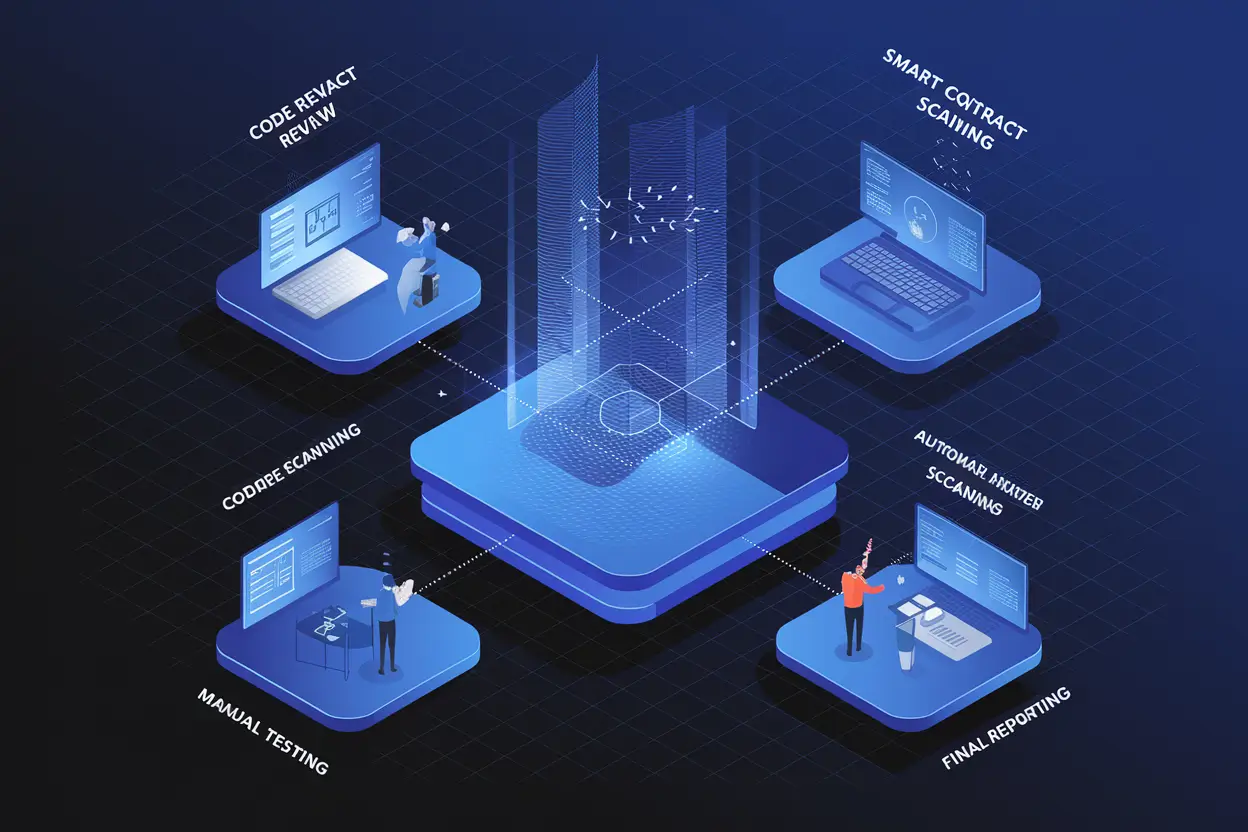
The audit process follows a structured methodology involving several key steps. First, auditors gather the project documentation, including requirements and specifications. They then perform a preliminary assessment to understand the contract’s logic and objectives. Next, both automated scans and manual reviews are conducted using static and dynamic analysis tools to detect security flaws.
Key Steps in a Smart Contract Audit
- Code review for syntax and logical errors
- Automated vulnerability scanning using tools like MythX, Slither, or Oyente
- Manual testing for business logic issues
- Gas optimization and efficiency checks
- Testing on testnets under simulated attack conditions
- Generating the final audit report with identified risks and recommendations
After the review, the audit team provides a detailed report. The developers fix the issues, and sometimes an additional verification audit ensures that the fixes were properly implemented.
Core Concepts of Smart Contract Audit
Key principles define how audits maintain blockchain integrity. Immutability, transparency, and decentralization are core to blockchain, but also mean that once deployed, a contract cannot be easily modified. Therefore, auditing secures the contract before deployment.
- Immutability: Since smart contracts cannot be changed once deployed, errors can result in irreversible loss.
- Atomicity: All contract operations must execute completely or revert entirely.
- Gas Efficiency: Optimized code saves users transaction fees.
- Security Standards: Adhering to Secure Software Development Lifecycle (SSDLC) principles is essential.
Advantages of Smart Contract Audit
Performing a smart contract audit brings several benefits to developers, projects, and users:
- Increased Security: Audits identify vulnerabilities before exploitation.
- Enhanced Trust: Audited projects attract more investors and users.
- Regulatory Compliance: Some jurisdictions mandate audits for blockchain-based financial products.
- Performance Optimization: Audits improve contract efficiency, reducing costs.
- Reduced Risk of Exploits: Prevents loss of funds due to bugs or reentrancy attacks.
Disadvantages of Smart Contract Audit
Despite its benefits, Smart Contract Audit also faces limitations:
- Cost: Comprehensive audits can be expensive.
- Time-Intensive: Large contracts require weeks for thorough analysis.
- Complexity: Auditors need deep blockchain and programming knowledge.
- No 100% Guarantee: Even after audits, new vulnerabilities may emerge due to evolving attack vectors.
Use Cases of Smart Contract Audit
Smart contract audits apply across several blockchain sectors:
- DeFi Platforms: Lending, staking, and token swap protocols are high-risk and need constant auditing.
- NFT Projects: Ensures minting, royalties, and transfers are handled safely.
- DAOs: Audits verify governance voting mechanisms and fund allocations.
- Gaming Platforms: Auditing ensures fair mechanics and proper reward distributions.
- Token Launches: Ensures compliance with standards like ERC-20 or BEP-20.
Real-World Examples of Smart Contract Audit
Many blockchain projects rely heavily on audits before launch. For instance, Compound Finance and Uniswap underwent audits from multiple firms before achieving large-scale use. In contrast, unaudited protocols like the infamous DAO hack of 2016 demonstrated how a single bug can cause millions in losses. The DAO example motivated the industry to standardize audit practices. Another case is the Wormhole exploit in 2022 that caused significant losses due to overlooked security issues.
Technical Suggestions for Smart Contract Audit
From a technical perspective, developers should follow specific best practices to support smoother audits:
- Use secure libraries such as OpenZeppelin for token and proxy contracts.
- Follow consistent naming conventions and create clear function documentation.
- Use modifiers and access control patterns correctly to limit unauthorized actions.
- Perform local unit testing and code coverage analysis before submitting for audit.
- Adopt continuous integration flows that include automated vulnerability scans.
Comparing Smart Contract Audit with Alternatives
Traditional security reviews differ significantly from blockchain audits. A conventional code audit focuses mainly on performance and functional correctness within centralized systems. By contrast, a Smart Contract Audit targets decentralized, immutable environments where bugs cannot be patched easily.
| Aspect | Traditional Audit | Smart Contract Audit |
|---|---|---|
| Environment | Centralized | Decentralized |
| Code Changeability | Updatable | Immutable |
| Main Focus | Performance, compliance | Security, logic validation |
| Tools | Static code analyzers | MythX, Slither, Echidna |
Common Vulnerabilities Found in Smart Contract Audit
Auditors typically focus on detecting specific vulnerabilities:
- Reentrancy Attacks: Exploits allowing repeated function calls before state updates.
- Integer Overflow/Underflow: Arithmetic operations exceeding data bounds.
- Front-running: Miners manipulate transactions based on observed contracts.
- Access Control Issues: Lack of proper role verification.
- Timestamp Dependence: Inconsistent outcomes due to manipulation of block timestamps.
Code Snippet Example in Smart Contract Audit
Below is an example illustrating a basic reentrancy vulnerability and its fix.
Vulnerable Code
Example: A withdrawal function allowing repeated calls before balance updates.
function withdraw(uint amount) public { require(balances[msg.sender] >= amount); msg.sender.call.value(amount)(); balances[msg.sender] -= amount; }
Fixed Code
function withdraw(uint amount) public { require(balances[msg.sender] >= amount); balances[msg.sender] -= amount; payable(msg.sender).transfer(amount); }
This fix ensures that the state change occurs before the external call, preventing attackers from repeatedly draining the balance.
Latest Trends in Smart Contract Audit
Recent advancements show integration of Artificial Intelligence and Formal Verification. AI-based auditing tools can scan massive codebases quickly, while formal verification mathematically proves correctness. Cross-chain compatibility auditing is also emerging as projects integrate multiple blockchain environments. Auditors now also focus on ensuring smart contracts comply with sustainability and gas-efficiency standards.
Future Outlook of Smart Contract Audit
The demand for smart contract auditing will continue to expand as blockchain adoption increases. Auditors may soon leverage decentralized autonomous auditing protocols (DAAPs) where community validators assess contract quality. Smart auditing using AI agents promises automation and real-time monitoring post-deployment. Additionally, regulatory agencies may define global standards to improve audit consistency.
Best Practices for Conducting a Smart Contract Audit
Follow these best practices to ensure effective auditing:
- Perform audits early and iteratively during development.
- Include third-party audits to eliminate bias.
- Conduct internal bug bounty programs.
- Document all changes and maintain a version history.
- Implement continuous monitoring post-deployment.
Smart Contract Audit and Risk Management
Risk management is central to the auditing process. Audits quantify the severity of vulnerabilities using threat modeling and prioritize fixes accordingly. Developers must maintain risk registers and assign mitigation strategies. A proactive security culture helps maintain trust among users and investors.
Frequently Asked Questions on Smart Contract Audit
What is the purpose of a Smart Contract Audit?
It ensures the contract’s code is secure, bug-free, and behaves as intended before deployment.
How long does a Smart Contract Audit take?
Depending on complexity, audits usually take from one to three weeks for average-sized contracts.
Can Smart Contract Audit prevent all exploits?
No, audits significantly reduce risks but cannot guarantee complete immunity, as new attack vectors emerge.
Do all blockchain projects need Smart Contract Audit?
Highly recommended for any project dealing with financial or sensitive data, especially in DeFi or DAO ecosystems.
What happens after Smart Contract Audit report completion?
Developers fix highlighted vulnerabilities and may request a re-audit to confirm successful implementation.
Conclusion: Why Smart Contract Audit Matters
A Smart Contract Audit strengthens faith in blockchain applications by ensuring transparency, reliability, and safety. It minimizes risks and boosts adoption of decentralized solutions. As blockchain ecosystems evolve, thorough auditing practices will remain critical. Investing in professional auditing helps guarantee trust among investors, developers, and users, ensuring long-term stability in the decentralized economy.