


How to Launch a Web3 Startup Using AI and Smart Contracts is a strategic roadmap for entrepreneurs looking to merge blockchain innovation with artificial intelligence. This guide explores the technical, strategic, and operational steps required to build a decentralized business that leverages AI tools and smart contracts for automation, transparency, and scalability. By understanding how these emerging technologies integrate, entrepreneurs can turn innovative decentralized ideas into real-world, revenue-generating ventures.
Understanding How to Launch a Web3 Startup Using AI and Smart Contracts
Launching a Web3 startup involves developing decentralized applications (dApps) powered by blockchain technology. These apps eliminate traditional middlemen, offering users greater transparency and control. Smart contracts—self-executing code stored on the blockchain—automate transactions and ensure trustless interactions. Artificial Intelligence enhances these functions by optimizing data analysis, decision-making, and user experiences. Together, AI and smart contracts create self-operating, intelligent systems that redefine business processes in industries like finance, supply chain, healthcare, and digital ownership.
Core Components of How to Launch a Web3 Startup Using AI and Smart Contracts
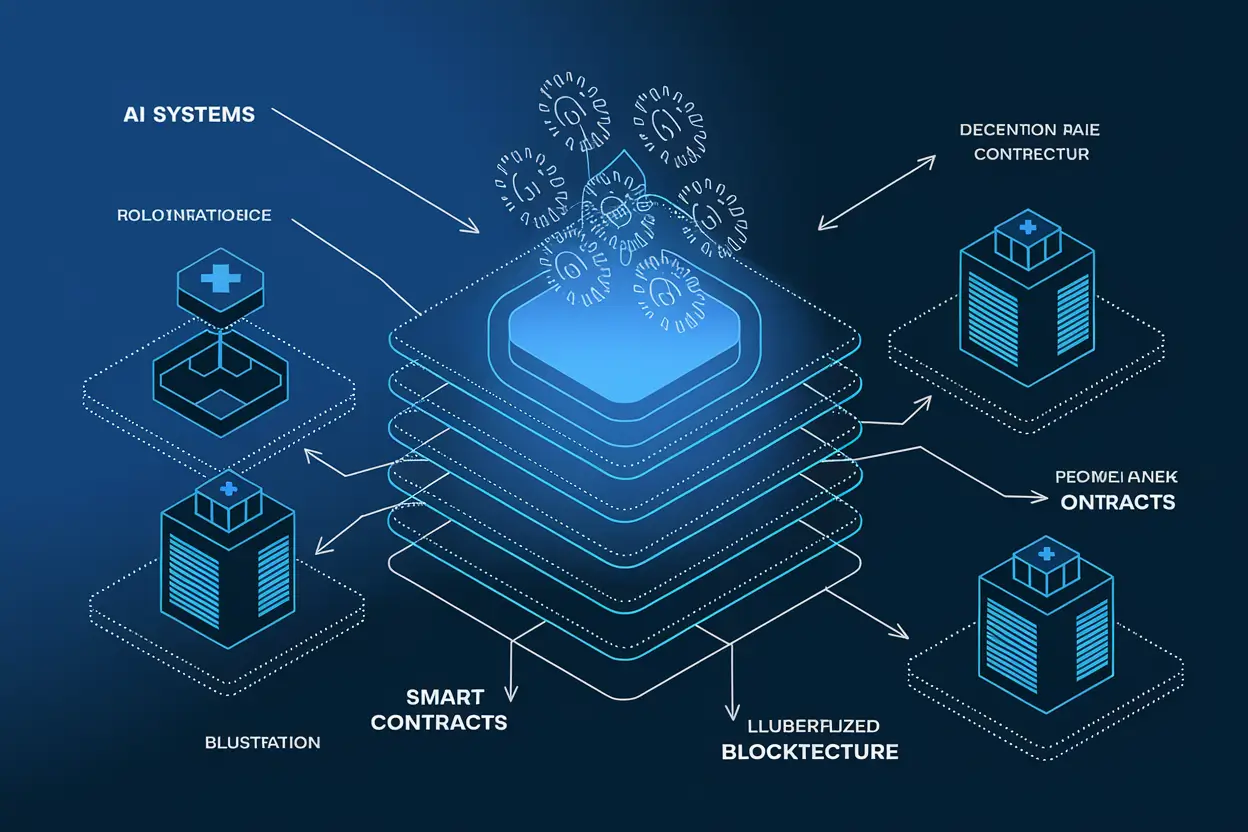
Every Web3 startup follows a layered structure consisting of three key elements: blockchain infrastructure, smart contracts, and an AI integration layer. The blockchain ensures tamper-proof and immutable records. Smart contracts handle automation and security logic, allowing transactions to execute autonomously when predefined conditions are met. AI extends capabilities by predicting outcomes, personalizing user interactions, and managing on-chain data efficiently. By combining these, startups can create new decentralized ecosystems with automated governance and adaptive intelligence.
How to Launch a Web3 Startup Using AI and Smart Contracts in Practice
The process begins with conceptualization—identifying a problem that can be improved through decentralization. Once the idea is validated, founders select a blockchain platform such as Ethereum, Polygon, or Avalanche. Smart contract development follows, using programming languages like Solidity. AI algorithms are then integrated to enhance automation or analytics. The ecosystem expands through tokenomics design, community-building, and compliance with decentralized governance frameworks like DAOs.
Development teams must adopt agile methodologies, aligning technical tasks like smart contract deployment and AI integration with marketing and community engagement goals. A strong go-to-market strategy ensures sustainable token demand and network effects.
Benefits of How to Launch a Web3 Startup Using AI and Smart Contracts
- Automation of complex business workflows with minimal human input
- Trustless operations through decentralized and transparent systems
- AI-powered decision-making based on real-time blockchain data
- Lower operational costs due to elimination of intermediaries
- Enhanced scalability and global user access
This combination empowers startups to deliver more accurate, secure, and efficient services, positioning them at the forefront of the next internet revolution.
Challenges in How to Launch a Web3 Startup Using AI and Smart Contracts
While the potential is vast, startups also face challenges. Technical complexity can hinder development. Smart contract vulnerabilities may lead to financial risks if not audited properly. AI integration requires clean and accessible data—something blockchains often lack due to their limited storage and computational capabilities. Regulatory uncertainty further complicates operations, particularly around token issuance and user data management. Overcoming these challenges requires skilled teams, certified audits, and compliance-oriented governance structures.
Real-World Examples in How to Launch a Web3 Startup Using AI and Smart Contracts
Several startups illustrate this synergy successfully. SingularityNET operates as a decentralized platform where AI algorithms are exchanged using smart contracts, allowing developers to monetize their AI models. Ocean Protocol focuses on decentralized data marketplaces powered by blockchain, giving AI developers access to quality datasets without central authority. Fetch.ai combines AI and DeFi principles to create autonomous economic agents that transact on their own according to programmed goals. These projects showcase how AI and smart contracts create entirely new categories of decentralized intelligence.
Technical Architecture for How to Launch a Web3 Startup Using AI and Smart Contracts
The technology stack typically includes smart contract development tools, AI frameworks, and integration bridges connecting off-chain computation to on-chain verification. Most startups use Ethereum Virtual Machine (EVM)-compatible environments for smart contracts. For AI models, frameworks such as TensorFlow or PyTorch are connected via oracles or API endpoints. Chainlink oracles, for instance, feed AI-generated data to blockchain nodes. Below is an example pseudo-snippet of how a smart contract might interface with AI-generated predictions:
Example:
pragma solidity ^0.8.0; contract AIPrediction { function storePrediction(uint value) public { /* store AI-generated values */ } }
This simplified logic highlights how smart contracts can securely store off-chain data predictions, forming the backbone for autonomous decision-making.
Use Cases in How to Launch a Web3 Startup Using AI and Smart Contracts
- DeFi Risk Analysis: AI models analyze market volatility, while smart contracts auto-adjust lending rates.
- Supply Chain Optimization: Smart contracts verify goods’ origin; AI predicts demand.
- Healthcare Data Sharing: Patient data stored on blockchain; AI performs diagnostics under patient-controlled consent.
- Energy Trading: Peer-to-peer smart contracts trade renewable energy; AI balances grid supply and demand.
- Digital Identity: AI handles identity verification; smart contracts ensure data privacy and compliance.
These examples demonstrate how decentralized logic and intelligent automation unify to redefine how businesses function.
Latest Trends in How to Launch a Web3 Startup Using AI and Smart Contracts
Emerging trends driving growth include Zero-Knowledge Machine Learning (ZKML), on-chain AI models for decentralized inference, and cross-chain smart contracts enabling multi-network interoperability. Developers are also exploring decentralized GPU networks for distributed AI training. The rise of modular blockchains allows startups to customize performance parameters, combining high-speed transaction processing with secure AI inference workflows. The convergence between DAOs and AI governance systems is another strong trend—automating decision-making while reducing human bias.
Comparing How to Launch a Web3 Startup Using AI and Smart Contracts With Traditional Startups
| Aspect | Web3 + AI | Traditional Startup |
|---|---|---|
| Infrastructure | Decentralized blockchain | Centralized servers |
| Automation | AI and smart contracts | Manual processes |
| Data Control | User-owned | Company-owned |
| Security | Blockchain-native encryption | Database encryption |
| Monetization | Token economy | Direct payments |
This comparison reveals how deeply integrated intelligence and automation reshape traditional business structures.
Step-by-Step Process in How to Launch a Web3 Startup Using AI and Smart Contracts
- Ideation: Identify pain points that decentralization can solve.
- Market Research: Evaluate competitors and blockchain demand.
- Technology Stack Selection: Choose blockchain network, AI framework, and data oracles.
- Smart Contract Development: Write and test your contracts thoroughly using frameworks like Hardhat or Truffle.
- AI Model Training: Develop machine learning models and prepare connection bridges.
- Integration: Connect smart contracts with AI predictions using secure APIs.
- Testing and Audit: Conduct code audits, simulation tests, and bug bounties.
- Tokenomics and Governance: Define token supply, staking, rewards, and DAO voting logic.
- Launch and Marketing: Deploy mainnet app and build user community through incentive programs.
By following this process systematically, startups can ensure scalability and regulatory compliance while staying user-focused.
Best Practices for How to Launch a Web3 Startup Using AI and Smart Contracts
- Perform rigorous smart contract audits to prevent exploits.
- Adopt modular design patterns for AI system integration.
- Use decentralized storage like IPFS or Arweave for data reliability.
- Incorporate explainable AI to enhance algorithm transparency.
- Implement multi-signature wallets for secure asset management.
These best practices foster user trust and long-term ecosystem sustainability.
Common Mistakes When You Try to Launch a Web3 Startup Using AI and Smart Contracts
- Skipping professional audits resulting in smart contract exploits
- Underestimating data preparation needs for AI models
- Lack of governance and token utility planning
- Ignoring community engagement or transparent communication
- Overcomplicating AI integration when simpler automation works better
Avoiding these pitfalls helps ensure the project maintains reliability and user adoption.
Future Outlook: How to Launch a Web3 Startup Using AI and Smart Contracts
The convergence between AI and Web3 is set to revolutionize automation, finance, and governance. As decentralized computing power grows and privacy-preserving AI becomes mainstream, startups will access more powerful autonomous capabilities. Blockchain scalability through Layer 2 solutions and AI-driven consensus optimization makes decentralized intelligence even more efficient. Future Web3 startups will seamlessly embed AI agents that execute smart contracts automatically—operating decentralized marketplaces, DAOs, and industries without human intermediaries. Regulatory maturity will further stabilize adoption, ensuring transparency and global integration.
FAQs About How to Launch a Web3 Startup Using AI and Smart Contracts
What is the main benefit of merging AI with smart contracts?
It allows automation of intelligent decision-making processes using a transparent, trustless framework, ensuring efficiency and accountability across decentralized ecosystems.
Which programming languages are commonly used for building such startups?
Solidity for smart contracts, Python for AI development, and JavaScript or TypeScript for front-end integration are the most common languages in Web3 project stacks.
How do startups ensure data privacy when integrating AI models?
They use decentralized storage and privacy-preserving techniques such as homomorphic encryption and zero-knowledge proofs to protect user information while enabling AI functionality.
What is the best way to fund a Web3 startup using AI and smart contracts?
Seed raising through token sales, venture capital backing, or decentralized fundraising platforms can help ensure project financial sustainability while maintaining user-based ownership structures.
Are smart contracts secure?
Yes, but only when properly audited. Vulnerabilities can exist if code logic is poorly written. Regular audits and bug bounty programs significantly strengthen contract security.
Conclusion: The Road Ahead for How to Launch a Web3 Startup Using AI and Smart Contracts
Integrating artificial intelligence and blockchain through smart contracts empowers the creation of decentralized, intelligent systems that self-operate securely and transparently. Entrepreneurs who learn how to launch a Web3 startup using AI and smart contracts will lead the future of business innovation. As both fields evolve, the synergy between trustless computation and adaptive intelligence will drive Web3 into its next transformative phase.