


Artificial Intelligence in Healthcare is transforming the medical industry by redefining how diagnoses are performed, therapies are planned, and healthcare systems operate. With the infusion of machine learning, natural language processing, and computer vision, AI is enhancing medical precision, patient care, and administrative efficiency across healthcare ecosystems.
Understanding Artificial Intelligence in Healthcare
Artificial Intelligence in Healthcare refers to the application of AI technologies such as machine learning (ML), natural language processing (NLP), and computer vision to analyze medical data and support healthcare providers in diagnosis, treatment planning, and patient engagement. These tools empower ecosystems to derive insights from diverse data types including electronic health records (EHRs), imaging, and genetic information.
Core Technologies Driving Artificial Intelligence in Healthcare
- Machine Learning (ML): Used for predictive analytics, helps determine potential disease outcomes from patterns in historical data.
- Natural Language Processing (NLP): Extracts and processes information from unstructured clinical notes, physician dictations, and published research.
- Computer Vision: Essential in analyzing imaging data like X-rays and MRIs to detect anomalies such as tumors or fractures.
Benefits of Artificial Intelligence in Healthcare
AI offers transformational advantages across multiple areas of healthcare delivery and operations:
1. Enhanced Diagnostic Accuracy
AI algorithms outperform traditional diagnostic tools in image recognition and disease detection. AI-enabled systems use pattern recognition to identify abnormalities in radiological scans with exceptional precision.
2. Personalized Treatment Plans
AI supports the development of customized treatment plans by analyzing individual patient’s medical history, genetic profiles, and lifestyle data, leading to highly personalized care strategies.
3. Operational Efficiency
Administrative tasks such as appointment scheduling, billing, and transcription are streamlined using AI, which reduces human errors and allows healthcare professionals to focus on critical medical services.
4. Predictive Analytics
AI models can forecast disease progression and identify at-risk patients by combining data from wearable devices and past health records, enabling proactive healthcare measures.
Challenges Associated with Artificial Intelligence in Healthcare
While AI presents myriad benefits, it also brings significant challenges that must be addressed responsibly:
1. Data Privacy and Security
Working with massive datasets containing patient records calls for stringent data protection protocols to ensure confidentiality and compliance with privacy regulations such as HIPAA and GDPR.
2. Algorithmic Bias
Biases in training data can propagate through AI models, potentially leading to unequal diagnostic or treatment outcomes for minority groups.
3. Regulatory Compliance
Healthcare AI tools must gain clearance from regulatory bodies and align with existing legal frameworks, which often trail behind technological progress.
4. Integration with Legacy Systems
Incorporating AI solutions into existing infrastructures remains a challenge as many healthcare institutions operate on outdated or proprietary systems lacking interoperability with AI platforms.
Real-World Applications of Artificial Intelligence in Healthcare
Artificial Intelligence in Healthcare has moved beyond the theoretical phase, evidenced by tangible use cases in hospitals and research institutions:
1. Diagnostic Imaging
AI improves diagnostic imaging interpretation by assisting radiologists in identifying patterns such as tumors in mammograms, enhancing speed and reducing diagnostic errors.
2. Predictive Patient Care
AI is used to forecast disease likelihood and suggest preemptive care strategies. For instance, predicting heart failure in patients based on trends inside EHRs is becoming increasingly feasible.
3. Administrative Automation
Natural language processing tools automate clinical documentation processes and transcription, drastically cutting time on data entry.
4. Drug Discovery
AI accelerates new drug development by analyzing biomolecular interactions and reducing the timeline for preclinical validation.
Recent Trends Elevating Artificial Intelligence in Healthcare
Technology is advancing at an unprecedented rate, with the following AI applications disrupting conventional healthcare paradigms:
1. Genomic Analysis
AI algorithms are now capable of analyzing genomic sequences to identify disease-linked mutations and optimize treatment regimens for genetic disorders.
2. Conversational AI and Virtual Assistants
AI-based chatbots and virtual nurses offer 24/7 assistance, answering patient queries, managing appointments, and aiding medication adherence.
3. Reinforcement Learning
Reinforcement learning enables AI systems to optimize treatment plans over time by interacting with real-world data in feedback loops.
4. Healthcare System Optimization
Hospitals apply AI in resource allocation, bed management, and emergency scheduling to reduce wait times and enhance service delivery.
Technical Considerations: Deploying Artificial Intelligence in Healthcare
Deploying AI in real-world medical settings cautiously requires several technical components:
1. Data Quality
Ensuring that the data used for training and testing AI algorithms are clean, unbiased, and statistically robust is essential for model performance.
2. Interoperability Standards
AI systems must be compatible with EHRs and diagnostic equipment to allow seamless communication and avoid siloed operations.
3. Model Interpretability
Explainable AI (XAI) principles must be embedded so physicians understand and trust AI-recommended diagnostics or treatments.
4. Continuous Improvement
AI models should be set up for continual learning, retraining in real-time to remain relevant as medical data evolves.
Comparison: Artificial Intelligence in Healthcare vs Traditional Methods
| Feature | Traditional Methods | AI-Powered Methods |
|---|---|---|
| Diagnosis Speed | Manual, slow | Real-time, automated |
| Accuracy | Human-dependent, subject to fatigue | High precision, consistent |
| Scalability | Resource-limited | Highly scalable |
| Customization | Limited personalization | Hyper-personalized treatment |
Future Prospects of Artificial Intelligence in Healthcare
As development continues, the future of Artificial Intelligence in Healthcare looks promising across several fronts:
- Multi-Modal Data Integration: Aggregating and analyzing data from genomic sequences, clinical texts, and imaging into centralized AI frameworks.
- Ethical AI Design: Frameworks to build responsible AI systems that promote fairness and transparency.
- Adaptive Regulation: Development of dynamic legal standards aligned with evolving AI capabilities.
Common Mistakes to Avoid in Implementing Artificial Intelligence in Healthcare
- Skipping Pilot Tests: Direct deployment without small-scale testing often leads to integration failures.
- Ignoring End-User Training: Physicians and nurses must be trained in how to interact with AI tools.
- Lack of Data Governance: Poor data management undermines model integrity and security.
Actionable Tips for Successful Use of Artificial Intelligence in Healthcare
- Build partnerships with AI-savvy vendors and healthcare IT firms.
- Regularly audit AI outputs for quality and ethical conformance.
- Maintain hybrid environments where AI supports, not replaces, human decisions.
Frequently Asked Questions: Artificial Intelligence in Healthcare
What is the primary role of Artificial Intelligence in Healthcare?
AI plays a pivotal role in diagnostic assistance, personalized medicine, operational streamlining, and predictive modeling within healthcare systems.
Is AI replacing doctors?
No. AI enhances the capabilities of healthcare professionals but does not replace them. It supports clinical decisions and automates routine tasks.
How is AI improving patient outcomes?
By offering accurate diagnoses, timely intervention, and tailored therapies, AI supports evidence-based decision-making, directly contributing to improved outcomes.
What are the key risks of using Artificial Intelligence in Healthcare?
Major risks include data breaches, algorithmic bias, over-reliance on black-box models, and limited explainability of decisions.
Conclusion: The Transformative Impact of Artificial Intelligence in Healthcare
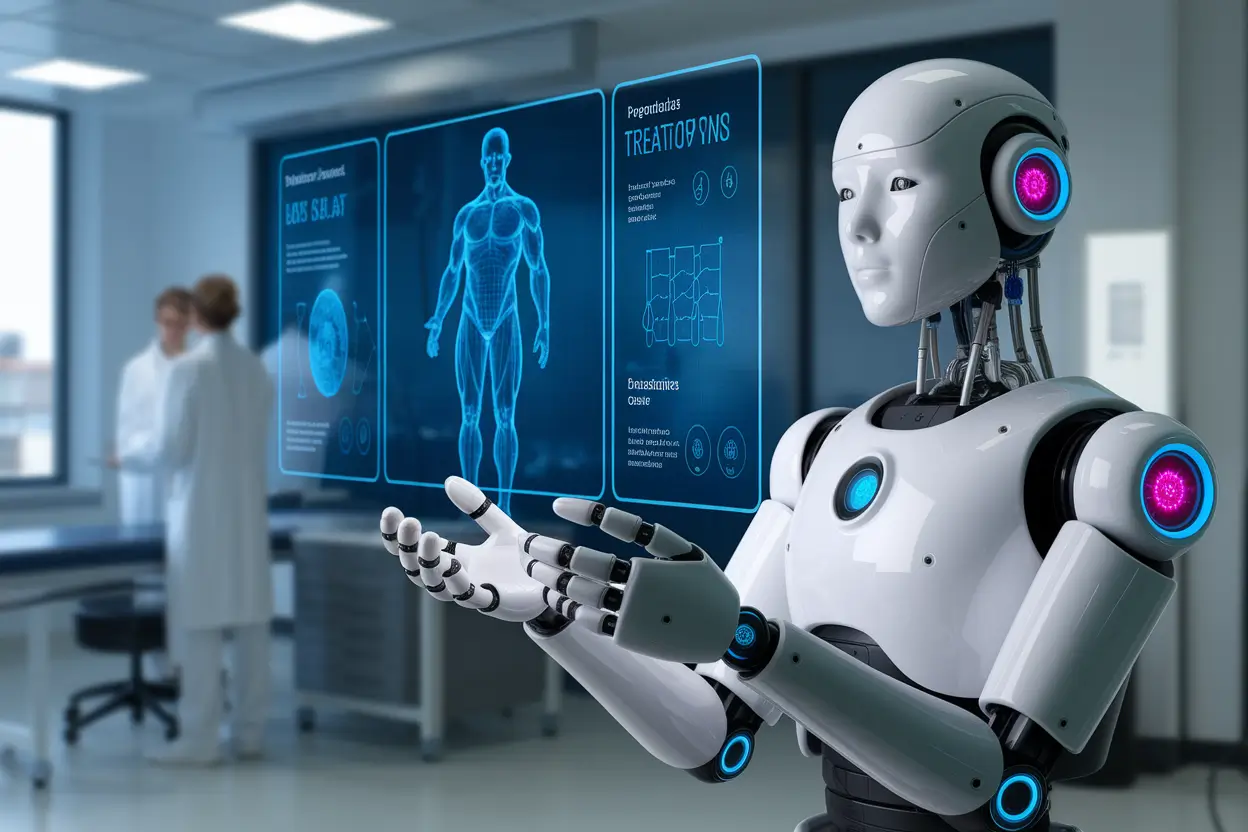
Artificial Intelligence in Healthcare is revolutionizing every aspect of the industry—from diagnosis and treatment to operational management and patient engagement. With its immense potential for scalability and personalization, AI promises to define the future of medicine. While challenges such as data confidentiality and model bias remain, a responsible and ethical approach to development and deployment ensures AI’s contributions will be both sustainable and life-enhancing.