

As the generative AI landscape accelerates, Anthropic adds invisible watermarks to newer Claude-generated content. This massive transparency shift aligns with EU safety rules. However, it has triggered serious friction among global developers who utilize Claude for codebases and production applications.
For organizations working with a prominent Ai Development Company In Usa, tracking these changes is vital. Security and code ownership remain primary concerns. Many teams that rely on an Ai Agent Design Best Practices Guide are now evaluating how these watermarks affect automated software pipelines.
Why Anthropic Adds Invisible Watermarks to Claude Text
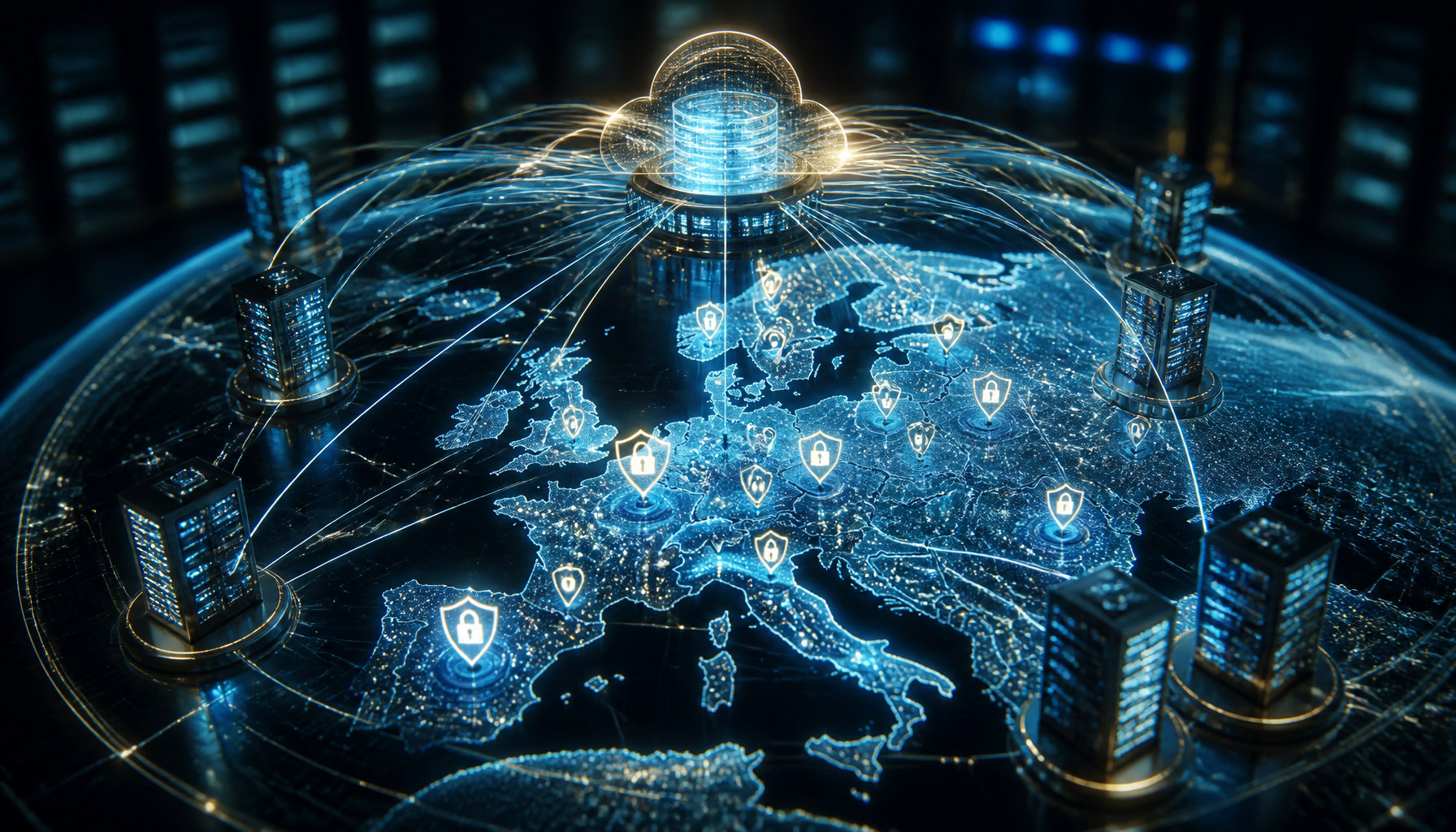
Anthropic officially signed the EU AI Act’s Article 50(2) Code of Practice. This framework enforces transparency for AI-generated content. To comply, Anthropic is embedding imperceptible markers into newer model outputs. This update is rolling out globally across the Claude API, Claude Code, and major cloud deployments.
The EU AI Act’s Article 50(2) places strict transparency demands on developers of generative models. Any system interacting with European citizens must clearly signal if its outputs are AI-generated. Rather than limiting this to Europe, Anthropic decided to apply watermarking globally. This includes their web platform, developer API, and public cloud environments like AWS and Google Cloud.
How Invisible Watermarking Works Under the Hood
Unlike traditional methods, this watermark does not use hidden metadata or special Unicode characters. Instead, it uses statistical token manipulation during generation. The model subtly prioritizes specific words when multiple synonyms share equal probability. This creates a cryptographically signed signature embedded within the writing style.
Because the watermark resides in the text itself, it survives standard copy-and-paste actions. It can even withstand light editing and summarization. Developers utilizing Prompt Tuning Embedding Optimization should note that the system operates at the foundational model level.
The Dev Backlash: Why Developers Are Frustrated
The update has sparked major pushback from the developer community, as covered in a recent Forbes report. Many programmers are upset that paid accounts still include hidden signatures. One developer questioned why a paid codebase assistant should leave invisible footprints in proprietary code.
Developers are voicing major concerns over code privacy and intellectual property. When writing code with Claude, developers expect clean, untagged text. Injecting a watermark into codebases raises questions about code scanning tools flagging legitimate developer contributions as entirely machine-made. It remains unclear if these watermarks will trigger false positives in plagiarism or code-auditing platforms.
Claude Sonnet 5 Pricing Locked Internationally
Alongside the watermark rollout, Anthropic locked down Claude Sonnet 5’s pricing tier. The rate is set at $2 per million input tokens and $10 per million output tokens. While this matches standard pricing, developers face a hidden catch.
Sonnet 5 introduces a new tokenizer. This tokenizer yields roughly 1.0 to 1.35 times more tokens for identical text inputs. This reflects the complexities of modern Model Training Scaling. Thus, while the base price is locked, actual API costs may slightly increase depending on your codebase structure.
OpenAI Expands Daybreak Initiative with GPT-5.6-Cyber
As agentic cyber threats rise, security remains a top priority. OpenAI has responded by expanding its Daybreak program. They introduced a highly capable defensive model called GPT-5.6-Cyber. This specialized model helps security teams find critical bugs before malicious actors do.
Daybreak Red vs. Blue Tiers
OpenAI has structured the Daybreak program into two distinct pathways:
- Daybreak Blue (Defensive): Grants defensive teams access to GPT-5.6 Sol. This model is optimized for safe code reviews, malware analysis, and secure patching. Businesses can leverage it for Ai For Document Email Intelligence to parse security advisories quickly.
- Daybreak Red (Offensive Research): Provides expert researchers access to GPT-5.6-Cyber. This model focuses on finding active vulnerabilities and simulating threat vectors.
According to OpenAI, this initiative has already uncovered real-world flaws. It identified bugs in an operating system kernel, a database, and Google Chrome’s V8 engine. Developers can now apply to join the program.
Meta Muse Glimmer 30B: Zuckerberg’s Vision for Local Agents
Meta recently released Muse Glimmer, a 29.6-billion-parameter dense multimodal model. This model is designed specifically to run on local machines, including consumer GPUs and Apple Silicon Macs. This release aligns with a rare personal essay from Meta CEO Mark Zuckerberg. He argued that AI superintelligence should be broadly distributed rather than controlled by a few corporate gatekeepers.
Muse Glimmer’s unique architecture relies on a specialized five-layer speculative drafter called DFlash. DFlash proposes candidate tokens in blocks, which the larger model verifies in parallel. This speculative decoding method can boost inference speeds up to 3.1x on compatible hardware like the NVIDIA RTX 5090. Because it is released under permissive open-source licenses, developers can run it locally without restrictive corporate terms.
Muse Glimmer excels at multi-step tool calls, structured function execution, and error recovery. It is highly useful for teams deploying Ai Agents For Internal Ops locally. By using local hardware, companies can guarantee absolute privacy and zero latency overhead.
To assist with local deployment, enterprises are partnering with specialized agencies. If you are located in Europe, consulting an Ai Development Company In Germany can help optimize local model inference. Meanwhile, teams in North America often leverage an Ai Development Company In Washington to build private agent networks.
MatrAIx: The Harvard-MIT Simulation with 8.3 Billion Agents
In a groundbreaking scientific milestone, researchers from Harvard and MIT unveiled MatrAIx. This is a massive population-scale simulation platform. Over 200 scientists contributed to the project, including experts from OpenAI, Anthropic, and Google DeepMind. Details can be explored further in the official MatrAIx research paper.
The platform runs an astounding 8.3 billion virtual persona agents. These agents mirror real human demographics, psychology, and behaviors across 1,290 categorical dimensions. Built on public data and supplemented by synthetic profiles, MatrAIx allows companies to test products at a global scale.
To validate the simulator’s accuracy, researchers conducted a 400-trial controlled study. The simulated persona agents successfully adhered to their assigned behaviors in 91.5% of the trials. This high level of behavioral fidelity opens the door for hyper-realistic agent interactions in simulated market spaces. It is a massive step forward for companies looking to stress-test their services prior to public deployment.
This research is vital for teams learning How To Build Ai Automation Agency 2025. It demonstrates how multi-agent simulation can replace tedious human beta testing. Teams looking to launch virtual services can reference an Ai Token Development Cost Guide to power tokenized synthetic agent economies. This intersects directly with Ai Based Crypto Coins In 2024 and other Top Blockchain Trends To Watch In 2025, where decentralized multi-agent platforms are gaining massive momentum.
Other Major Tech Highlights: Cloudflare and Spotify
The developer ecosystem continues to evolve with practical tools and interview insights. Spotify recently launched a new collaborative coding tool. It integrates Claude Code and OpenAI’s Codex to enable seamless multi-model pair programming. Additionally, an insider look into Cloudflare’s engineering interview process revealed a growing emphasis on practical AI integration and system design.
These tools are transforming how teams approach software development. Developers are mastering advanced prompting styles, such as Few Shot Zero Shot Prompting, to drive these code assistants. Understanding these workflows is essential, whether you work with an Ai Development Company In Montreal or build in-house.
Furthermore, Understanding Chatbots Effective Tools is no longer optional for modern enterprises. As platforms like Claude and ChatGPT introduce invisible security layers and watermark tracking, staying ahead of technical regulations is key to long-term success.