

Ai Model Api Integration has quickly become the primary driver of enterprise software evolution. Businesses are racing to connect frontier intelligence to practical workflows. In this article, we explore the latest breakthroughs reshaping AI compute, smuggling crackdowns, orbital systems, and terminal-native tools.
Alibaba’s Wan 3.0 and the $10.2 Billion AI Bet
The global race for generative supremacy requires immense capital. Chinese tech giant Alibaba recently announced an issue of $10.2 billion in new shares. The capital raised from this Hong Kong offering will fund full-stack AI investments. Although stock markets reacted cautiously and shares sank, the strategic commitment is clear.
Alongside this fundraise, Alibaba expanded access to Wan 3.0. This new model generates up to 30-second, 1080p video clips. It represents a massive upgrade over prior generations. Users can submit text, images, video, and audio to guide generation. Crucially, it can also ingest complex business documents.
Users can upload PDFs, spreadsheets, slides, and web pages. Wan 3.0 parses these inputs to create highly aligned, native audio-visual assets. This is no longer just an experimental toy. Instead, it is a tool geared toward enterprise workflows. Identifying such opportunities requires deep Enterprise Use Case Discovery sessions.
Alibaba is serving Wan 3.0 via Qwen Cloud and its Bailian platform. The model directly competes with other tools like HappyHorse 1.1. For businesses, implementing these capabilities relies heavily on robust Ai Model Api Integration frameworks. This allows companies to feed operational documents straight into video engines.
The Geopolitics of Compute: Taiwan Indicts Nine in B300 Chip Smuggling Scheme
The physical hardware running these massive models remains highly protected. U.S. export controls aim to restrict China’s access to high-end accelerators. However, a black-market trade continues to find loopholes. Recently, Taiwanese prosecutors announced indictments against nine individuals in a major server smuggling operation.
The key figures allegedly include a senior Nvidia distribution partner manager surnamed Chang. Two former senior sales managers at Super Micro Computer (SMCI) were also indicted. The group allegedly falsified end-user documentation to route restricted systems. They successfully diverted 74 advanced servers containing Blackwell architecture B300 chips into China.
Customs officials intercepted another 56 servers before they could leave. Prosecutors claim the group used Japan and Indonesia as pass-through markets. To bypass checks, the suspects reportedly staged physical audits. They took Supermicro staff to an unleased data center space owned by Flying Tiger. They pretended the servers were safely housed in Taiwan.
A single B300 system can retail for hundreds of thousands in the U.S. In China, black-market buyers pay close to double. This financial incentive drove the document forgery and breach of trust. This high-profile case is documented in detail by The Japan Times. It highlights the urgent need for robust hardware-level verification and Model Governance Safety Layers across the semiconductor supply chain.
SpaceXAI and Nvidia Partner on Orbit-Bound Vera CPUs
While terrestrial hardware faces geopolitical friction, SpaceXAI is looking to the stars. The company has adopted Nvidia’s new 88-core Vera CPU platform. SpaceXAI plans to use this silicon to power terrestrial Grok agentic workloads. They also designed a space-optimized system.
This orbital AI compute platform will ride aboard Starmind AI satellites. The target launch is set for Q4 2027, with scaling in 2028. Many developers assume AI is solely a GPU story. However, agentic applications lean heavily on host CPUs. AI agents spend significant time orchestrating tools and running simulations between GPU inference passes.
Nvidia’s Vera CPU uses custom Olympus cores and high-bandwidth memory. It delivers up to 1.2TB/s of memory bandwidth. SpaceXAI President Mike Nicolls noted that Vera maximizes GPU utilization. This enables real-time orchestration in demanding environments. This milestone reflects massive scaling trends, reminiscent of news around a potential Spacex Acquire Cursor Ai 60 Billion valuation or acquisition.
AgentSky: The OpenRouter for Coding Agents
On the software side, developer-centric agent tools are maturing rapidly. Silicon Valley startup AgentSky just launched its unified API. The startup positions itself as the “OpenRouter for coding agents.” It simplifies how development teams build with autonomous software engineers.
Currently, developers must build custom integrations for every different coding agent. Swapping agents often means losing chat history. With AgentSky, teams can switch agents using a simple configuration change. This simplifies the process of coding agent management and streamlines your broader Ai Model Api Integration strategy.
The platform also features an interactive Agent Playground. Teams can connect their GitHub tools and run tasks across different agents simultaneously. They can compare cost, speed, and accuracy side-by-side. This capability is perfect for Top Agentic Ai Web Development Companies looking to optimize their development pipelines.
Eigen Labs’ Darkbloom: Putting Idle MacBooks to Work
While enterprise developers streamline agent workflows, everyday consumers can now monetize their hardware. AI startup Eigen Labs has launched Project Darkbloom. This decentralized marketplace routes AI requests to idle Apple Silicon Macs. This approach delivers private inference at about half the cost of traditional providers.
The platform supports open-weight models like Google’s Gemma 4, Qwen 3.6, and GPT-OSS. It exposes these models through a standard, OpenAI-compatible endpoint. This enables incredibly smooth Ai Model Api Integration for cost-conscious startups. It operates as a unique White Label Marketplace Software engine for decentralized compute.
The chief hurdle for distributed networks is always privacy. To solve this, Darkbloom implements hardware-level security. It runs inference in-process via Apple’s MLX library. It blocks debuggers at the kernel level. Every request is encrypted using NaCl Box. Providers never see your plaintext data.
Eigen Labs estimates Mac owners can earn between $120 and $200 monthly. This represents one of the most innovative and 20 Creative Ways To Earn Money in the modern gig economy. This crowdsourced paradigm will undoubtedly Ai Help Businesses Cut Costs on massive inference jobs.
Interestingly, Eigen Labs originally built its reputation on blockchain restaking protocols. While they still support White Label Staking Platforms Defi Startups, they are aggressively diversifying. Darkbloom represents their leap into decentralized physical infrastructure networks (DePIN).
ElevenLabs CLI v1: Voice Workflows Go Terminal-Native
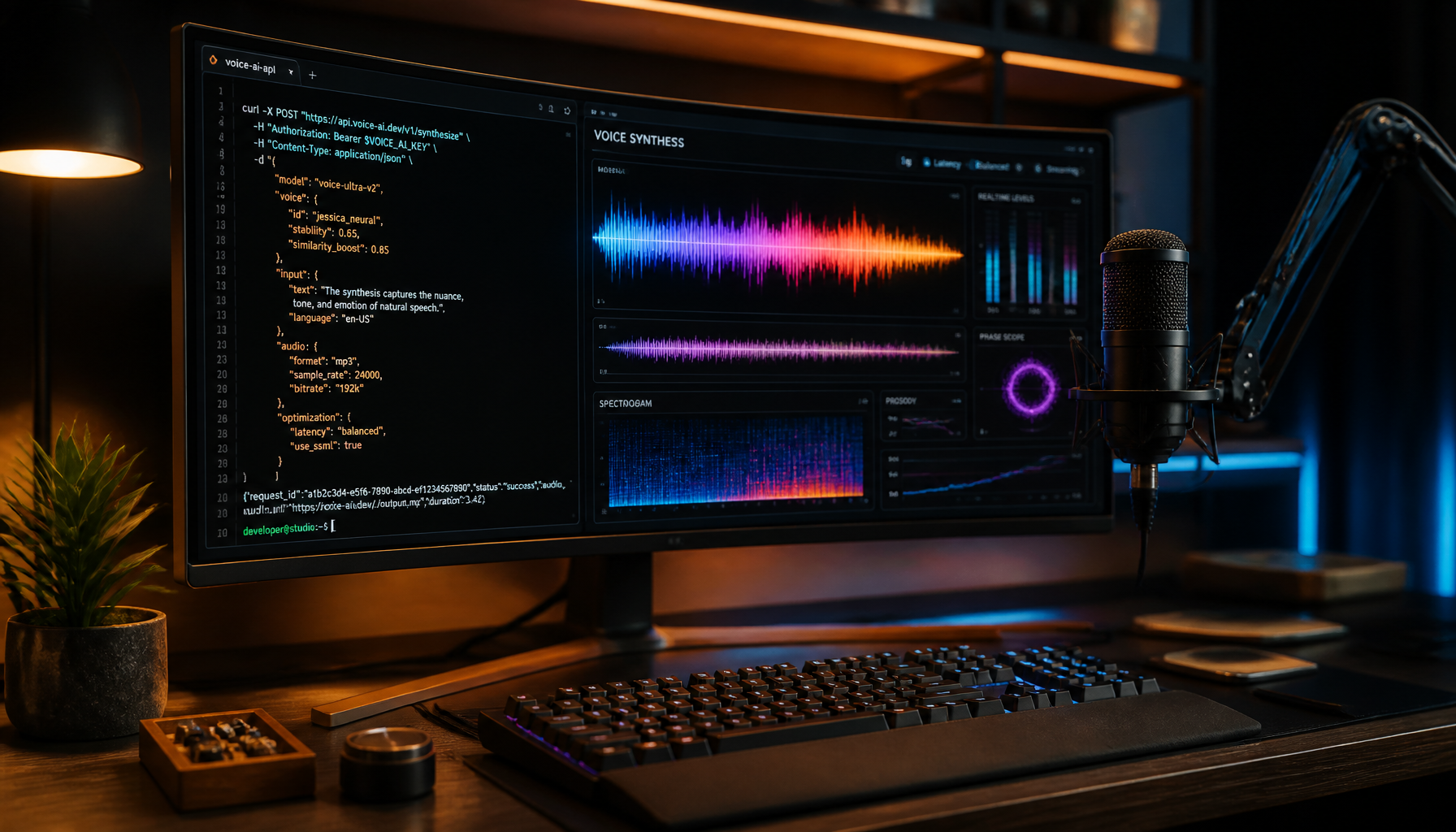
The rise of autonomous systems requires tools designed for machine interaction. Voice AI leader ElevenLabs has released its CLI v1. This command-line interface brings the company’s entire audio suite directly to the terminal. It represents a paradigm shift toward “agents as code.”
The tool is designed from the ground up for developer automation. It contains no human-focused confirmation prompts. Instead, every command outputs clean, structured JSON. It also exposes machine-readable schemas. This allows developers and coding assistants to manage workflows programmatically.
The CLI supports core actions like text-to-speech, dubbing, and music generation. It serves as a great companion for advanced Ai Model Api Integration projects, making it incredibly easy to Deploy Intelligent Assistants across massive enterprise fleets.
Furthermore, CLI v1 integrates directly with Claude’s Model Context Protocol (MCP). It includes built-in skills to teach coding agents how to use it. Developers can use it for Language Translation And Localization tasks automatically. They can also use it for Prompt Tuning Embedding Optimization in complex speech workflows.
By moving audio workflows directly into terminal scripts, teams can eliminate manual steps. This boost in orchestration speed directly translates into enhanced Business Productivity. Voice agents are no longer isolated products; they are fully scriptable system components.
Conclusion: The Future of Unified Ai Model Api Integration
The rapid evolution of generative technologies shows no signs of slowing down. We are seeing massive investments like Alibaba’s $10.2B push. At the same time, we face geopolitical challenges like the Taiwan smuggling incident. Hardware is scaling beyond Earth with SpaceXAI’s orbital Vera CPU system.
At the software layer, frameworks are becoming highly structured. AgentSky, Darkbloom, and ElevenLabs CLI v1 show a clear trend. The industry is moving toward unified interfaces, cost-efficiency, and machine-first design. Seamless Ai Model Api Integration will be the bedrock of this exciting autonomous future.