

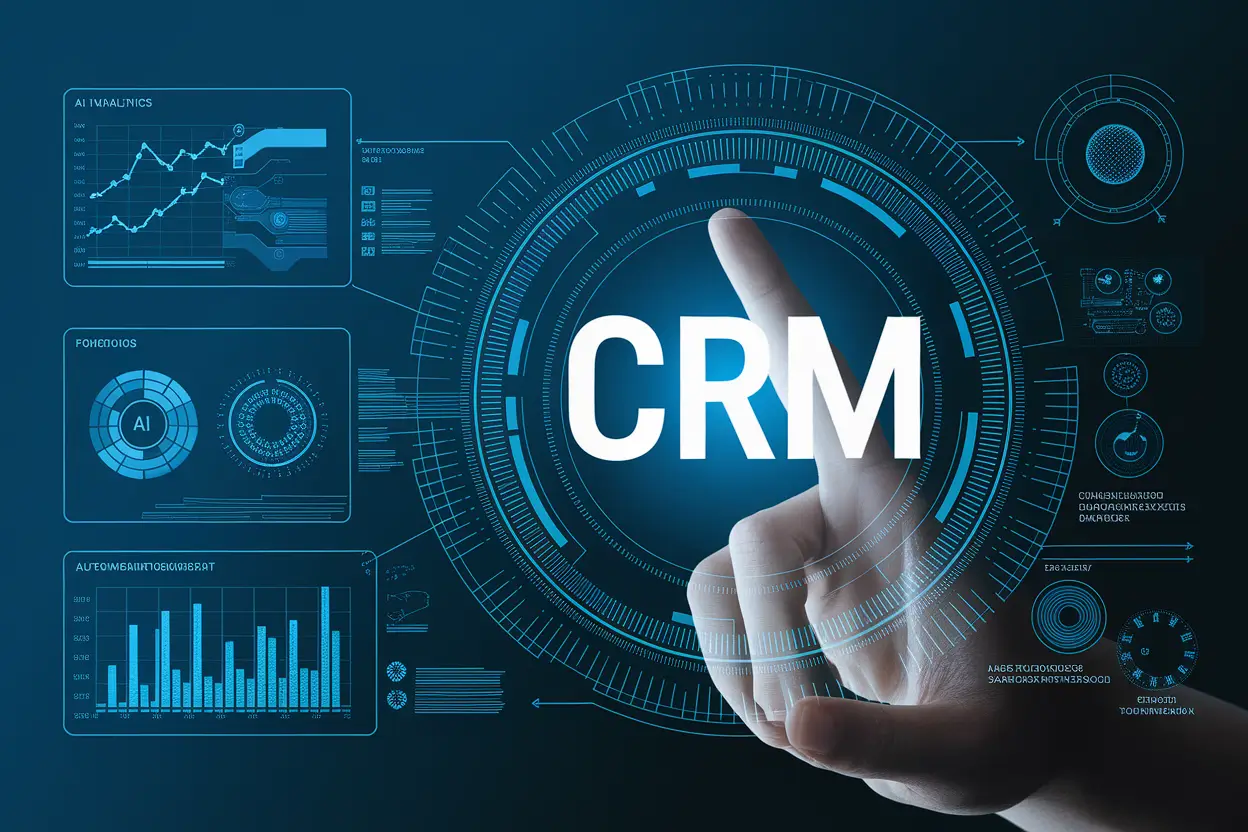
AI‑Driven Custom CRM Development is revolutionizing how businesses interact with customers, manage data, and enhance sales efficiency. By combining Artificial Intelligence and tailored Customer Relationship Management systems, companies can automate routine tasks, gain deep insights through predictive analytics, and deliver personalized experiences. This type of CRM allows organizations to understand customer behavior, predict needs, and improve decision-making, leading to higher retention and satisfaction rates. It integrates seamlessly with business workflows, providing real-time intelligence that drives sustainable growth.
1. Understanding AI‑Driven Custom CRM Development
AI‑Driven Custom CRM Development involves building a CRM system specifically designed to meet a company’s unique needs while leveraging AI technologies like machine learning, natural language processing, and predictive analytics. Rather than relying on generic CRM solutions, custom AI‑driven CRMs are tailored to align with the organization’s industry, sales process, and customer engagement strategy. The system continuously learns from data, improving its recommendations and automation capabilities over time.
2. How AI‑Driven Custom CRM Development Works
In AI‑Driven Custom CRM Development, AI algorithms analyze patterns from thousands of customer interactions, emails, social media messages, and transactions. The system segments customers based on behavior, predicts purchase intent, and recommends actions to sales teams. It also automates lead nurturing processes, identifies cross‑selling opportunities, and provides insights through dashboards. Integration of APIs and cloud platforms enables smooth data exchange between CRM and external tools such as ERP, marketing automation platforms, and e‑commerce systems. Using machine learning models, the CRM continuously refines its predictions as new data comes in.
3. Core Components of AI‑Driven Custom CRM Development
Core components include smart data processing modules, AI engines, predictive analytics layers, and automation scripts. Machine learning models track customer sentiment and behavior, while natural language processing interprets text inputs or chat interactions. Data visualization dashboards present insights visually, allowing users to draw correlations quickly. An effective AI‑driven CRM also leverages chatbot integration, workflow automation, and recommendation engines for lead scoring and follow‑ups.
4. Advantages of AI‑Driven Custom CRM Development
The top 10 benefits of AI‑Driven Custom CRM Development encompass automation, personalization, data accuracy, sales efficiency, and customer engagement. Companies can streamline repetitive tasks, analyze large datasets faster, and enhance ROI. AI enhances marketing precision, improves forecasting accuracy, and helps management monitor KPIs in real time. Furthermore, it reduces human error and ensures that customer interactions remain consistent across channels.
4.1 Enhanced Customer Insights
AI algorithms identify hidden patterns and customer behavior trends. Through sentiment analysis and predictive modeling, businesses can anticipate customer needs well before direct requests are made.
4.2 Automation and Efficiency
Automating lead assignments, reminders, and follow-ups allows sales teams to focus on strategic interactions instead of administrative tasks, improving closing rates.
5. Challenges and Considerations in AI‑Driven Custom CRM Development
Although powerful, this approach requires sophisticated data governance and skilled technical resources. Data privacy compliance (GDPR, CCPA) must be prioritized. Training AI models demands clean, labeled data. There is also a risk of over‑automation leading to a loss of human touch. Regular reviews, security protocols, and clearly defined business rules help mitigate these risks.
6. Use Cases of AI‑Driven Custom CRM Development
AI‑Driven Custom CRM systems are used across multiple industries. In e‑commerce, AI predicts purchase behavior and recommends products. In healthcare, CRMs track patient history and send reminders for checkups. In real estate, they score leads based on engagement level, while financial institutions use AI‑driven CRMs to detect fraudulent activities. Manufacturing companies employ them to forecast demand and manage distribution channels effectively.
7. Real‑World Examples of AI‑Driven Custom CRM Development
Consider an online retail company that integrated AI‑driven CRM for customer support. The system analyzed customer tickets and automatically categorized them based on urgency and topic. Another case is a B2B enterprise software firm that built a custom AI CRM for tracking customer health scores and predicting churn probability, enabling proactive customer success outreach. Automotive companies use similar systems to monitor customer service patterns and vehicle maintenance histories, providing AI‑based service reminders and upgrade offers.
8. Latest Trends in AI‑Driven Custom CRM Development
Modern CRMs are evolving rapidly with the integration of generative AI, voice assistants, and emotion recognition analytics. Predictive lead scoring has improved through deep learning techniques. Another growing trend is the combination of AI‑driven CRMs with Internet of Things (IoT) devices to gather real‑time insights. Companies are also adopting low‑code and no‑code platforms to simplify custom CRM creation. The ability to integrate large language models enhances the CRM’s conversational abilities for intelligent customer support.
9. Technical Frameworks and Setup for AI‑Driven Custom CRM Development
Developing an AI‑driven CRM product requires a combination of front‑end systems, backend logic, and machine learning frameworks. Common tools include Python for AI modules, TensorFlow and PyTorch for model training, and React or Angular for the user interface. Backend CRMs can run on Node.js or Django, with databases like PostgreSQL or MongoDB storing structured and unstructured customer data. A sample stack might include cloud hosting via AWS or Azure with integrated AI APIs for natural language processing and prediction engines. Automated pipelines handle data ingestion, cleansing, training, and model deployment.
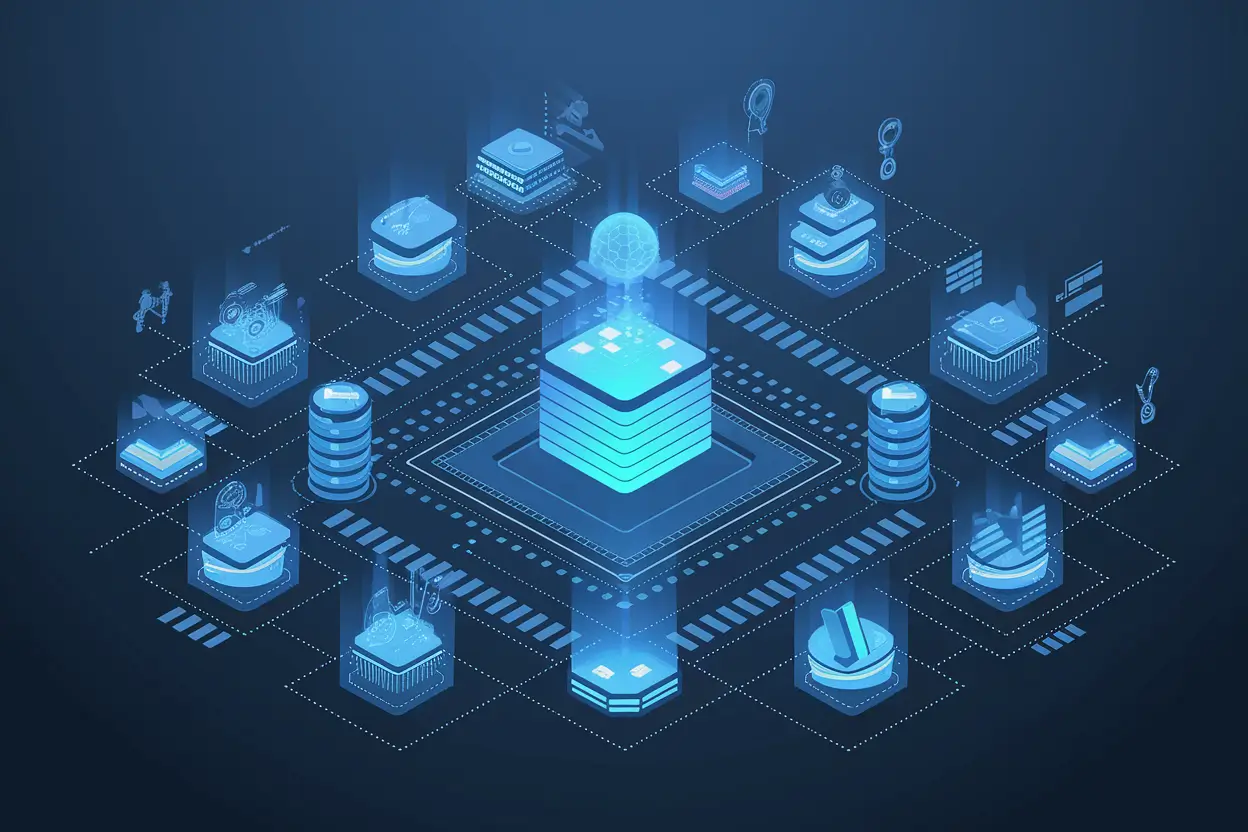
Example: A code snippet for customer sentiment classification may use machine learning algorithms to label communications as positive, negative, or neutral, helping prioritize service responses. API endpoints then feed these insights into CRM dashboards for actionable view by support agents.
10. Comparison of AI‑Driven Custom CRM Development vs Traditional CRM
| Feature | AI‑Driven Custom CRM | Traditional CRM |
|---|---|---|
| Automation | Highly automated and intelligent | Manual or rule‑based tasks |
| Personalization | AI‑powered recommendations | Limited user segmentation |
| Data Analytics | Predictive insights and learning | Static reports and visualizations |
| Integration | Supports IoT, AI APIs | Basic third‑party plugins |
| Scalability | Adaptive and self‑improving | Requires manual scaling |
11. Pros and Cons of AI‑Driven Custom CRM Development
Pros
- Advanced predictive analysis for better decision‑making.
- Enhanced productivity through automation.
- Improved customer engagement and satisfaction.
- Continuous self‑learning system.
- Competitive edge in data‑driven marketing.
Cons
- High initial development cost.
- Need for skilled technical resources.
- Complexity in integration and maintenance.
- Potential data security challenges.
12. Steps to Build an AI‑Driven Custom CRM Development Project
Building such a system starts with identifying business objectives and data requirements. Next comes designing a custom data model, integrating AI modules for automation, and developing user interfaces. Steps include collecting clean customer data, defining performance metrics, and creating predictive models using supervised learning. After testing and validation, continuous monitoring ensures model accuracy. Regular updates improve performance as data scales.
13. Best Practices for AI‑Driven Custom CRM Development
- Ensure data governance and compliance with regulations.
- Start with clear key performance indicators (KPIs).
- Involve cross‑functional teams including IT, marketing, and sales.
- Adopt modular architecture for scalability.
- Test AI models regularly for accuracy and ethics.
14. Future of AI‑Driven Custom CRM Development
The future of AI‑Driven Custom CRM Development points toward hyper‑personalization and autonomous decision systems. Advanced neural networks will improve real‑time decision‑making and emotional intelligence in CRMs. Integration with augmented reality may offer immersive customer interactions. Quantum computing could further accelerate big data processing capabilities. Businesses adopting AI‑driven CRMs early will achieve substantial long‑term differentiation and marketing precision.
15. Common Mistakes and Solutions in AI‑Driven Custom CRM Development
- Mistake: Ignoring data quality during model training. Solution: Conduct periodic data audits and apply cleansing algorithms.
- Mistake: Over‑reliance on automation. Solution: Maintain a balance with human oversight.
- Mistake: Inadequate system integration. Solution: Use standardized APIs for smoother data flow.
16. Key Takeaways and Actionable Insights
AI‑Driven Custom CRM Development enables organizations to automate sales operations and enhance customer satisfaction through intelligent analytics. Businesses must focus on well‑structured data, select the right AI tools, and design models that evolve through user feedback. Regular optimization ensures consistent results and high ROI.
17. Frequently Asked Questions About AI‑Driven Custom CRM Development
What is the main advantage of AI‑Driven Custom CRM Development?
It provides personalized, intelligent automation that improves decision‑making, customer experience, and efficiency.
How long does it take to develop a custom AI CRM?
Depending on complexity, it can take 3 to 9 months, including planning, integration, and testing phases.
Can small businesses benefit from AI‑Driven Custom CRM Development?
Yes, SMEs can use cloud‑based AI modules to build affordable, scalable CRM systems tailored to their workflows.
Is AI‑Driven Custom CRM Development secure?
Security largely depends on implementation. Encryption, access controls, and data anonymization help ensure safety and compliance.
What industries benefit most from AI‑Driven Custom CRM Development?
Retail, Finance, Healthcare, Manufacturing, and Real Estate leverage AI CRMs for personalized engagement, forecasting, and automation.
18. Conclusion: The Value of AI‑Driven Custom CRM Development
AI‑Driven Custom CRM Development transforms how companies understand and retain customers. By merging AI’s analytical power with CRM’s organizational capabilities, businesses unlock growth through automation, prediction, and personalization. As technology evolves, AI‑driven CRMs will become strategic assets central to digital transformation across all industries.