

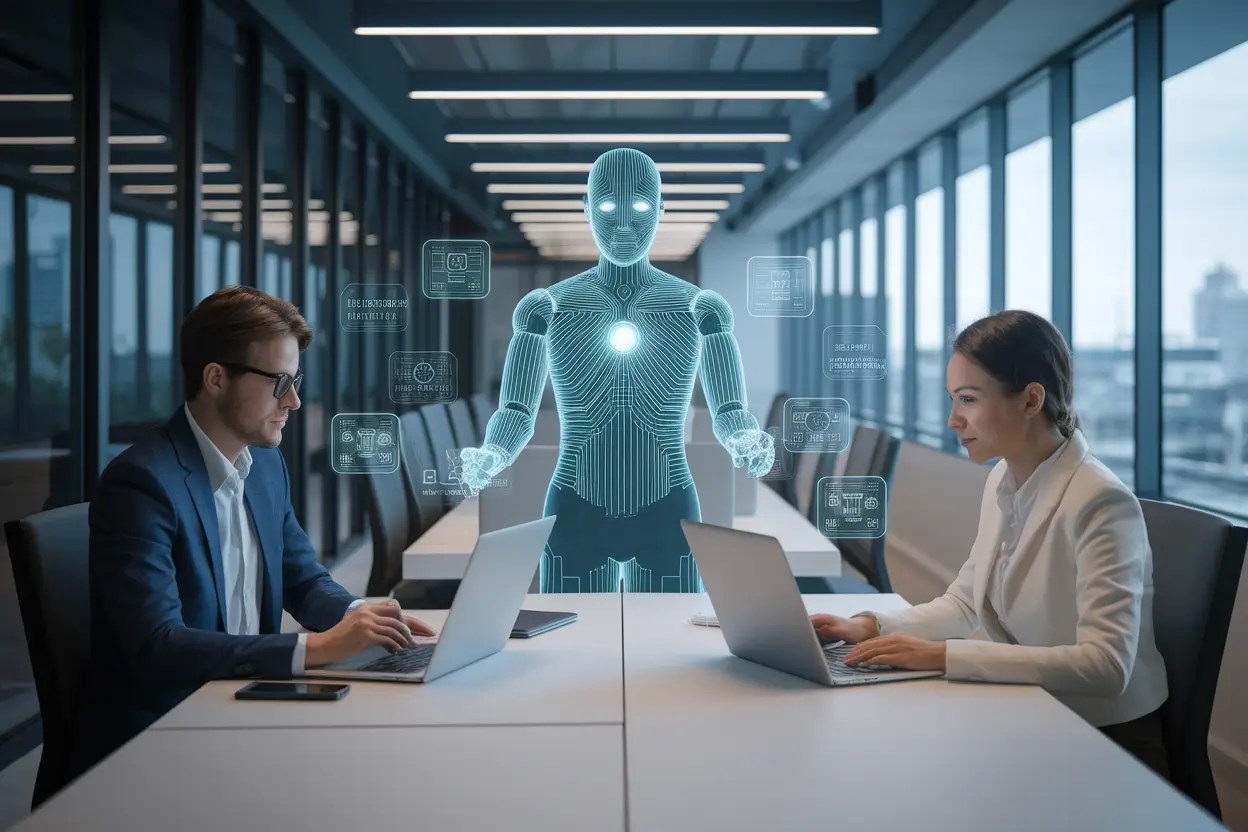
AI Automation Impacting Workforce Training and Development represents one of the most transformative changes driving the modern workplace. As artificial intelligence continues to evolve, automation technologies are reshaping how organizations train, upskill, and support their employees. Understanding this transformation is critical for companies striving to remain competitive, agile, and ready for future demands. In this comprehensive guide, we will explore what AI automation means for workforce training and development, its benefits, challenges, real-world examples, technical frameworks, and the future outlook of this powerful synergy between human learning and intelligent machines.
Understanding AI Automation Impacting Workforce Training and Development
AI automation impacting workforce training and development refers to using artificial intelligence systems to streamline, personalize, and enhance learning experiences for employees. It integrates machine learning, natural language processing, and predictive analytics into corporate learning platforms to tailor training content, measure progress, and provide adaptive learning paths. This automation reduces repetitive administrative work while allowing HR teams to focus on strategic skill-building initiatives.
How AI Automation Impacting Workforce Training and Development Works
At its core, AI automation works by gathering employee data—such as previous training records, performance metrics, and learning preferences—and analyzing it to generate personalized training programs. Algorithms assess skills gaps and recommend appropriate modules or courses. AI chatbots provide real-time support, while predictive analytics forecast future skill requirements based on market trends and job evolution. In a fully automated learning management system, AI can schedule training sessions, evaluate course completion rates, and automate certification processes without human intervention.
Core Concepts of AI Automation Impacting Workforce Training and Development
The main concepts include intelligent content delivery, adaptive learning, and data-driven progress tracking. Intelligent content delivery ensures that training materials are aligned with each employee’s role and performance level. Adaptive learning uses deep learning algorithms to modify content difficulty based on learner responses. Data-driven tracking captures engagement levels, test performance, and knowledge retention, helping organizations continuously refine their programs. Together, these components ensure learning is dynamic, targeted, and efficient.
Pros of AI Automation Impacting Workforce Training and Development
- Personalization: AI tailors learning experiences, ensuring relevance to every learner’s goals.
- Efficiency: Automated scheduling and grading streamline training logistics.
- Scalability: AI solutions easily scale to thousands of employees across geographies.
- Data Accuracy: Real-time analytics provide actionable insights on learning effectiveness.
- Cost Reduction: By lowering administrative burdens, companies save time and resources.
Cons of AI Automation Impacting Workforce Training and Development
- High Initial Costs: Implementing AI systems may require significant financial investment.
- Loss of Human Touch: Over-reliance on AI reduces personal mentorship opportunities.
- Data Privacy Risks: Sensitive performance data could be exposed if not properly secured.
- Job Displacement Fears: Automation can create anxiety among HR and training personnel.
Use Cases of AI Automation Impacting Workforce Training and Development
Organizations are applying AI automation across various sectors. In retail, AI helps train staff on customer service best practices using virtual simulations. In manufacturing, predictive maintenance training is delivered through AI-powered platforms analyzing machine data. Healthcare institutions use AI bots to coach medical professionals on compliance and continuing education. Finance sectors employ AI to guide employees through regulatory changes dynamically.
Real-World Examples of AI Automation Impacting Workforce Training and Development
IBM’s Watson-powered learning platform customizes training content for employees based on role, career goals, and skill gaps. Similarly, Google uses AI to predict future skill needs and recommends internal courses to help workers transition into emerging roles. Amazon employs AI in warehouse training modules to quickly onboard new workers while tracking their progress using sensor data. These examples illustrate how large enterprises integrate AI automation into their employee learning strategies.
Latest Trends in AI Automation Impacting Workforce Training and Development
Several emerging trends are defining this space. One major trend is AI-driven microlearning—short, focused lessons optimized for busy professionals. Another includes virtual reality (VR) training combined with AI, where immersive environments adapt to learners’ progress. AI mentoring assistants offer personalized career advice using conversational AI. Finally, organizations are integrating predictive skill analytics to identify future workforce gaps before they occur.
Technical Suggestions for Implementing AI Automation Impacting Workforce Training and Development
To successfully integrate AI automation, organizations should begin by evaluating their current learning management systems (LMS). Choose platforms supporting APIs for machine learning modules. Training data should be consolidated in a centralized repository to feed algorithms quality input. A hybrid AI model that uses supervised and unsupervised learning ensures balanced adaptability. Finally, strong data governance frameworks should be enforced to maintain ethical and transparent training analytics.
Example Setup
For example, a Python-based model could use scikit-learn to classify employee skill levels. Data can be pipelined from the company’s LMS through REST APIs, processed using AI analytics, and output to a visualization dashboard showing learning progress. A sample pseudo-code snippet might look like this:
Employee skill classification:
1. Import pandas and scikit-learn modules
2. Load employee dataset with features like performance_score, training_hours
3. Train decision tree to predict skill gaps
4. Output suggested training courses
Comparisons with Alternatives in Workforce Training
Traditional corporate training heavily depends on manual course scheduling and static materials. Compared with conventional e-learning systems, AI-powered platforms analyze learner data to continuously adapt the training pace and difficulty. In contrast, legacy LMSs offer limited analytics and require human intervention for updates, making AI-based solutions superior for agility and insight generation.
Challenges in AI Automation Impacting Workforce Training and Development
Despite its promises, there are challenges such as resistance to change, particularly from employees skeptical about algorithm-driven training. Integration complexities arise when linking AI systems with outdated infrastructure. Data quality also impacts model accuracy—poorly labeled or incomplete records produce unreliable results. Moreover, maintaining transparency in AI decisions remains an ethical necessity to ensure fairness across diverse learners.
Future Outlook for AI Automation Impacting Workforce Training and Development
The future of AI automation impacting workforce training and development is set to create a seamless fusion of human intelligence and machine intelligence. As generative AI evolves, training materials may soon be automatically generated based on real-time performance gaps. Predictive modeling will uncover not only current skill deficits but also anticipate new competencies required for emerging industries like quantum computing and green energy.
Organizations that invest in AI-driven learning ecosystems will have more adaptive and resilient workforces capable of thriving amid rapid technological shifts. Governments and educational institutions will also collaborate more closely with corporations to build large-scale AI-driven workforce reskilling programs.
Case Study Example of AI Automation Impacting Workforce Training and Development
Consider a multinational manufacturing company that implemented AI automation in its safety training program. Machine vision systems analyzed workers’ compliance with safety protocols in real-time. The AI detected skill deficiencies and recommended immediate refresher courses. Within six months, workplace accidents decreased by 40%, and compliance improved consistently. This demonstrates tangible business value through AI-powered learning automation.
Common Mistakes When Using AI Automation in Workforce Training
- Failing to set clear goals for automation results in uncoordinated deployments.
- Over-reliance on generic machine learning models without domain customization.
- Neglecting employee feedback loops that help adjust training efficiency.
- Omitting proper data validation processes before predictive modeling.
Best Practices for AI Automation Impacting Workforce Training and Development
- Start with pilot programs to verify ROI before scaling enterprise-wide.
- Use anonymized datasets to maintain employee trust and privacy.
- Regularly retrain AI models as company objectives evolve.
- Encourage blended learning where human mentors complement AI systems.
Step-by-Step Implementation of AI Automation Impacting Workforce Training and Development
- Assess Needs: Identify critical skill gaps.
- Select Tools: Choose AI-enabled LMS or integrate ML APIs.
- Data Preparation: Gather and structure employee training data.
- Deployment: Integrate AI components gradually.
- Monitoring: Continuously analyze engagement and results metrics.

FAQs About AI Automation Impacting Workforce Training and Development
How does AI automation improve employee learning outcomes?
It personalizes learning experiences based on skill levels, improving engagement and retention while reducing redundancy in training content.
What industries benefit most from AI-driven workforce training?
Industries like healthcare, finance, manufacturing, IT, and logistics benefit due to their continual need for compliance and dynamic skill development.
Will AI replace human trainers completely?
No. AI enhances trainer efficiency by automating repetitive tasks, but human emotional intelligence remains vital for mentoring and guidance.
What are key metrics to assess AI-based training success?
Metrics include employee engagement rates, skill proficiency improvement, cost savings, and productivity uplift post-training interventions.
How can small businesses adopt AI for training without huge budgets?
They can leverage cloud-based AI platforms offering pay-as-you-go models and integrate AI features incrementally rather than building full-scale systems from scratch.
Conclusion on AI Automation Impacting Workforce Training and Development
AI automation impacting workforce training and development is transforming how enterprises upskill and reskill their employees. It enables real-time adaptability, performance monitoring, and skill foresight essential for future readiness. Despite integration challenges, the fusion of data intelligence with human expertise is reshaping talent development strategies across industries. Businesses that strategically invest in AI-driven training automation today will lead tomorrow’s intelligent workforce revolution.