

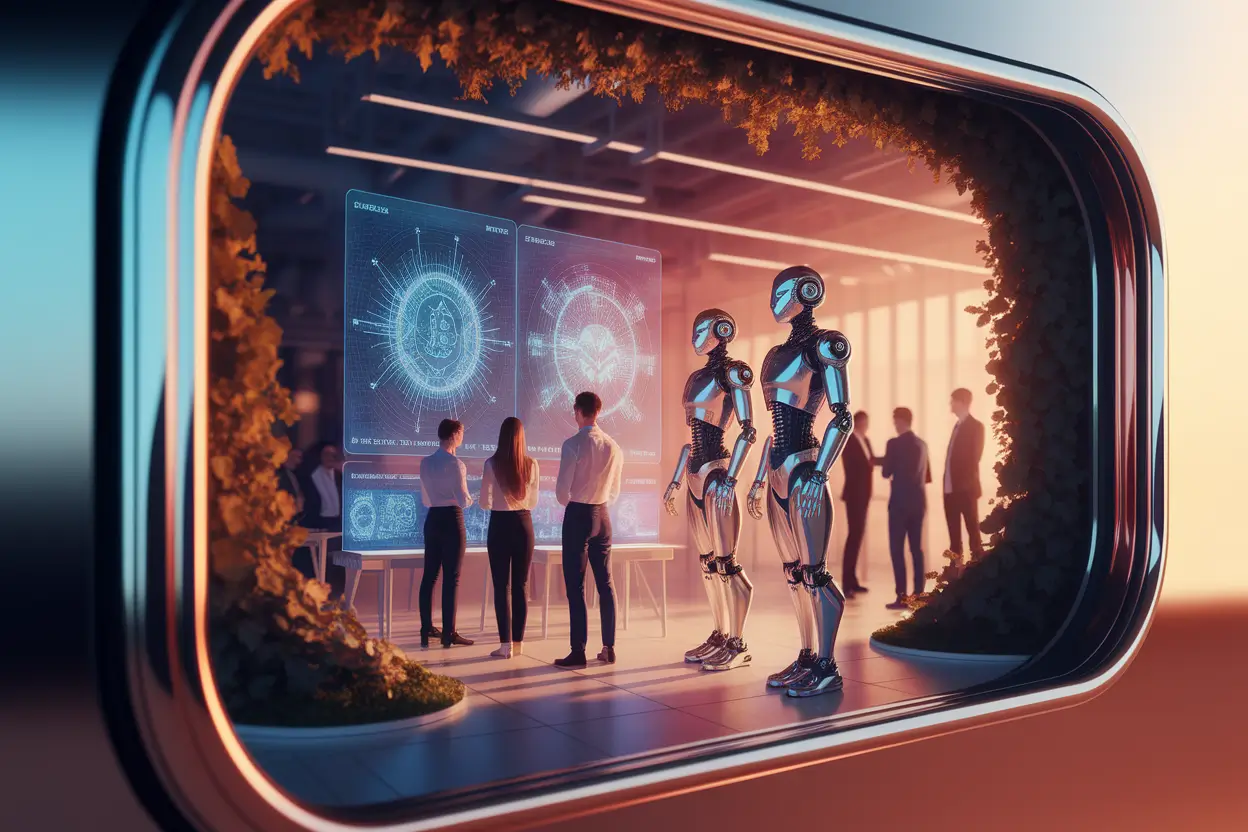
Future of Work: AI, Smart Contracts & Job Transformation represents the next frontier of global economic and technological evolution. It’s a comprehensive shift in how humans and machines interact, businesses execute contracts, and workers redefine their roles. Artificial Intelligence (AI) and blockchain-powered smart contracts are reshaping industries by automating processes, decentralizing trust, and enabling borderless collaboration. This transformation affects job markets, business models, and individual career trajectories, ushering in an era defined by digital intelligence, transparency, and adaptability.
The Essence of Future of Work: AI, Smart Contracts & Job Transformation
The future of work is an ecosystem driven by interconnected technologies like AI, machine learning, blockchain, and smart contracts. It encapsulates how organizations leverage automation and cognitive computing to enhance productivity while ensuring contractual and ethical integrity. AI facilitates pattern recognition, predictive analytics, and autonomous decision-making, while smart contracts ensure those decisions are executed automatically once specific conditions are met. Together, they minimize friction between stakeholders, enhance trust, and empower workers to focus on creativity, strategy, and human-led innovation.
Core Concepts Behind Future of Work: AI, Smart Contracts & Job Transformation
The foundation of this revolution lies in three core components: artificial intelligence, blockchain technology, and automation-driven job transformation. AI operates as the cognitive engine analyzing immense data sets to inform smarter decisions. Smart contracts, encoded on decentralized ledgers like Ethereum, replace traditional legal contracts with digital agreements that self-execute when pre-defined rules are fulfilled. Job transformation refers to the evolving roles of humans as repetitive tasks become automated, requiring upskilling and reskilling for more complex functions.
How Future of Work: AI, Smart Contracts & Job Transformation Operates
This ecosystem functions when AI and blockchain technologies intersect. AI systems generate insights from data, often triggering business conditions embedded in smart contracts. For example, once an AI-powered logistics system verifies delivery completion, a smart contract may automatically release payment to the vendor. This seamless integration removes intermediaries, improves efficiency, and fosters trust through code-based agreements powered by blockchain.
Use Cases in Future of Work: AI, Smart Contracts & Job Transformation
- Remote Work Automation: AI tools schedule tasks, analyze performance data, and enhance collaboration using natural language processing.
- Freelance Marketplaces: Smart contracts handle payments, milestones, and dispute resolution autonomously.
- Human Resources: AI streamlines recruitment by matching profiles to open roles, while smart contracts automate onboarding processes.
- Gig Economy Management: Decentralized platforms track job assignments, compensation, and reviews transparently.
- Healthcare: Smart contracts manage patient data access, and AI assists diagnosis recommendations.
Real-World Examples of Future of Work: AI, Smart Contracts & Job Transformation
Several industries already showcase this transformation. Companies use AI-driven predictive maintenance tools that activate smart contracts for parts procurement. Platforms like Upwork and Braintrust integrate blockchain for trustworthy freelancer payments. Global corporations are incorporating decentralized payroll systems where AI ensures accuracy while smart contracts regulate release upon verifiable project completion.

Technical Foundations of Future of Work: AI, Smart Contracts & Job Transformation
AI systems rely on neural networks, natural language models, and reinforcement learning to analyze data. Blockchain supports these systems by providing immutable, timestamped records. Smart contracts are written in programming languages like Solidity. A sample code snippet demonstrates how a simple smart contract might work:
function releasePayment(uint projectID) public { require(projectCompleted[projectID]); freelancer.transfer(paymentAmount[projectID]); }
This illustrates how code automates job outcomes once an AI verification system marks a task completed.
Pros and Cons of Future of Work: AI, Smart Contracts & Job Transformation
Pros
- Enhanced transparency and accountability through blockchain verification.
- Reduced administrative overhead due to automation.
- Faster payments, reduced human error, and improved efficiency.
- Empowered workforce focusing on creativity instead of repetition.
Cons
- Job displacement risks for roles reliant on repetitive tasks.
- Skill gaps requiring continuous reskilling programs.
- Complex regulatory environments for blockchain adoption.
- Ethical concerns around AI bias and privacy.
Challenges in Future of Work: AI, Smart Contracts & Job Transformation
Despite the potential, integration is challenging. Standardization of smart contract languages, interoperability among blockchains, data privacy compliance (like GDPR), and the security of AI models are persistent barriers. Additionally, decentralized ecosystems require global consensus, which takes time and cooperation among institutions.
Comparisons: Future of Work vs Traditional Systems
| Aspect | Traditional Work Model | Future of Work |
|---|---|---|
| Contract Management | Paper-based, manual verification | Smart contracts, automated execution |
| Decision Making | Human intuition, slow response | AI-driven predictive decisions |
| Transparency | Centralized oversight | Decentralized trust via blockchain |
| Workforce Engagement | Physical presence | Remote, flexible, skill-based work |
Industries Adopting Future of Work: AI, Smart Contracts & Job Transformation
- Finance: Automated settlements and credit scoring with AI and blockchain.
- Real Estate: Smart contracts streamline property transfers.
- Healthcare: AI diagnosis and patient data controlled by smart agreements.
- Manufacturing: Predictive maintenance powered by AI triggers automatic supply orders through smart contracts.
- Education: Digital credentials verified through blockchain certificates.
Latest Trends in Future of Work: AI, Smart Contracts & Job Transformation
Emerging trends include decentralized autonomous organizations (DAOs) managing projects through AI-powered governance rules. Hybrid work ecosystems are being enhanced by intelligent virtual assistants. AI-driven analytics support personalized career paths, while blockchain systems guarantee worker compensation fairness. Automation architecture now extends into quantum computing simulations optimizing contract execution times.
Future Outlook of Future of Work: AI, Smart Contracts & Job Transformation
The next decade will witness a broader fusion of AI and blockchain within global work structures. AI collaboration will evolve toward explainable and ethical frameworks ensuring accountability. Smart contracts will standardize international digital transactions. Workers will increasingly pursue hybrid roles blending technical expertise and creativity. Education systems will adapt to AI literacy and blockchain governance training. Societies that embrace continuous learning and digital transformation policies will lead the new global employment paradigm.
Technical Suggestions for Implementing Future of Work: AI, Smart Contracts & Job Transformation
- Adopt AI frameworks like TensorFlow or PyTorch for data modeling.
- Deploy smart contracts on blockchains offering low transaction costs.
- Implement explainable AI to ensure ethical outcomes.
- Use hybrid cloud infrastructure to manage distributed AI workloads.
- Prioritize employee reskilling in automation tools and coding standards.
Ethical Considerations in Future of Work: AI, Smart Contracts & Job Transformation
Ethics define trust in this new landscape. Transparency in algorithmic decision-making, fairness in AI training data, and privacy safeguards in decentralized systems build user confidence. Governments and tech organizations are collaborating to establish frameworks guiding responsible AI use and standardized smart contract compliance models. Ethics-by-design is now a crucial integration principle.
Case Study: Future of Work with AI and Smart Contracts in HR
A global tech enterprise introduced an AI-powered recruitment system combined with smart contracts. The AI matched candidates with projects, verified completion, and upon validation, activated smart contracts to issue performance-based rewards. The results were a 35% cost reduction in recruitment and an increase in freelance retention due to transparent compensation. This highlights the direct efficiency and trust improvements possible through technology convergence.
Security and Risk Management in Future of Work: AI, Smart Contracts & Job Transformation
AI introduces risks of data poisoning or model manipulation, while smart contracts face vulnerabilities if coded with errors. Adopting multi-signature protocols, conducting independent code audits, and using secure AI data pipelines help mitigate these issues. The integration of decentralized identity systems (DID) will strengthen security standards for workers’ credentials.
Reskilling Strategies for Future of Work: AI, Smart Contracts & Job Transformation
Workers must adopt lifelong learning approaches focused on digital literacy. Key upskilling domains include AI programming, smart contract development, system auditing, and data analysis. Governments and corporations should invest in educational programs encouraging cross-sector adaptability. Online learning platforms integrated with AI can provide personalized learning journeys aligned to individual career goals.
Common Mistakes and Solutions in Adopting Future of Work: AI, Smart Contracts & Job Transformation
- Mistake: Implementing automation without workforce planning. Solution: Combine AI deployment with employee reskilling programs.
- Mistake: Over-reliance on unverified smart contract templates. Solution: Conduct security audits before deployment.
- Mistake: Insufficient data governance policies. Solution: Establish clear compliance infrastructures from inception.
Actionable Takeaways for Future of Work: AI, Smart Contracts & Job Transformation
- Integrate AI ethically with transparent data usage policies.
- Develop custom smart contracts tailored to operational workflows.
- Encourage multi-disciplinary learning programs.
- Utilize blockchain for immutable workforce performance tracking.
- Create flexible work ecosystems leveraging intelligent automation.
FAQs on Future of Work: AI, Smart Contracts & Job Transformation
What jobs will thrive in the future of work?
Roles in AI development, blockchain auditing, cybersecurity, data science, and creative design will thrive as automation expands. These positions complement machine capabilities rather than compete with them.
How do smart contracts change employment?
Smart contracts automate employment agreements, ensuring payments upon verified task completion, reducing disputes, and improving contractor trust.
Is AI replacing jobs or creating new ones?
AI transforms jobs by automating repetitive tasks but simultaneously creates new ones in technical, analytical, and oversight capacities. The emphasis shifts to strategic roles requiring human intelligence and creativity.
Are smart contracts secure for business?
Smart contracts are highly secure when properly coded and audited. However, flaws in design or execution can lead to vulnerabilities, making testing essential before full deployment.
How can individuals prepare for the future of work?
Individuals should invest in continuous skill development, focusing on digital literacy, programming basics, problem-solving, and adaptability to emerging technological environments.
Conclusion: Embracing Future of Work: AI, Smart Contracts & Job Transformation
The future of work, AI, smart contracts, and job transformation signify more than technological disruption—they reflect an evolution in human potential. Organizations that strategically integrate automated systems will achieve speed, transparency, and innovation. Workers who adopt flexible mindsets and technical competencies will thrive. By embracing AI and blockchain ethically, societies can unlock equitable opportunities for the digital age, creating sustainable growth through innovation and inclusion.