


A Customer Retention Email Guide to Build Strategy is a comprehensive roadmap designed to help businesses strengthen relationships with their customers through targeted and consistent email communication. Customer retention emails are messages sent to existing users to keep them engaged, satisfied, and loyal. In today’s competitive market, retaining existing customers is just as important as acquiring new ones. This guide explores every aspect of retention email strategy—from core principles and techniques to examples, templates, trends, and future outlook—so businesses can craft campaigns that drive long-term success and growth.
Understanding A Customer Retention Email Guide to Build Strategy
A customer retention email strategy involves sending timely, personalized, and value-driven emails to keep customers connected to a brand. The idea is to encourage repeat purchases, subscription renewals, or ongoing interaction. It combines customer segmentation, behavioral triggers, and analytics to tailor messages based on user activity and preferences. The central aim is not just to sell but to strengthen loyalty and brand advocacy.
Why A Customer Retention Email Guide to Build Strategy Matters
Customer retention emails are vital because acquiring a new customer is often 5-10 times more expensive than keeping an existing one. Studies show that increasing retention rates by just 5% can boost profits by 25–95%. A well-structured retention email strategy keeps customers engaged, reduces churn, and maximizes lifetime value. When done effectively, it turns one-time buyers into loyal brand promoters.
Core Concepts of A Customer Retention Email Guide to Build Strategy
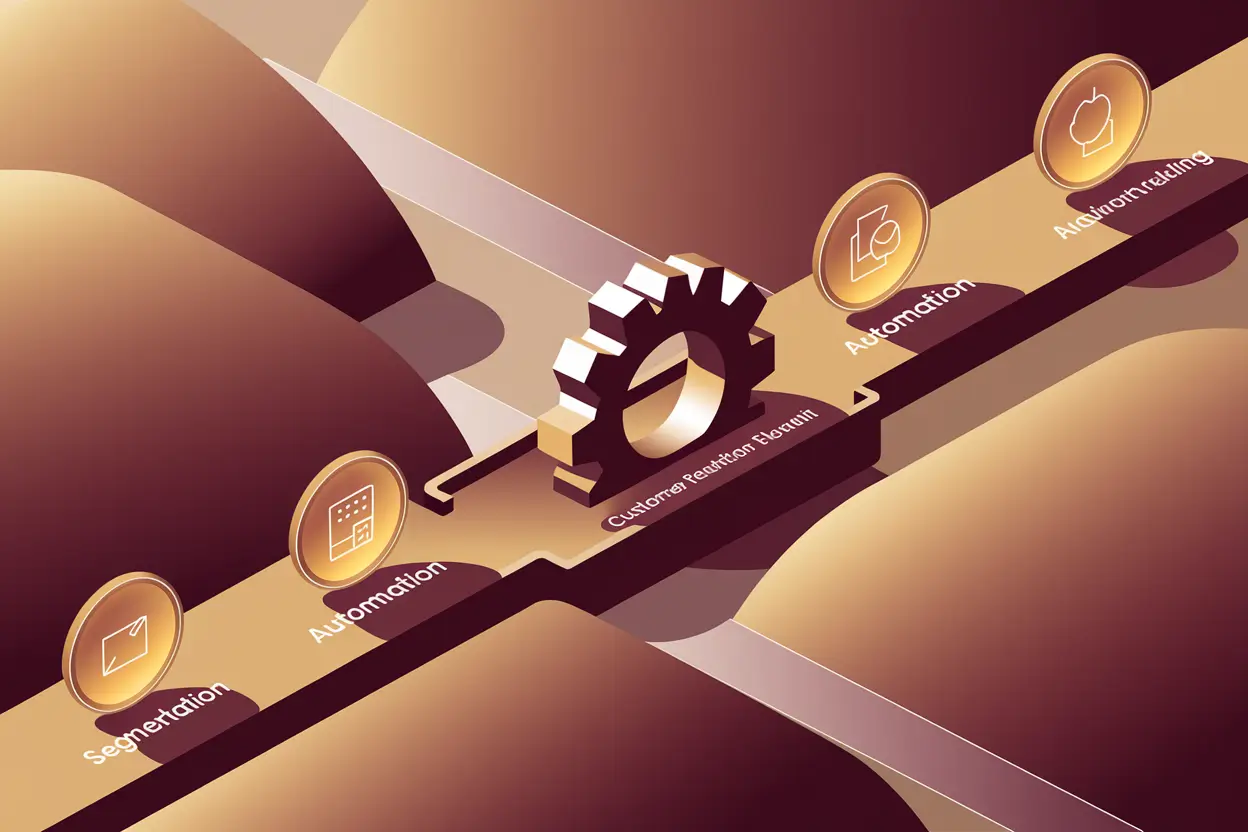
The fundamental components of a retention email strategy revolve around segmentation, timing, personalization, automation, and feedback integration.
- Segmentation: Group users by behavior, purchase history, or demographics.
- Personalization: Use customer names, preferences, and relevant offers.
- Automation: Trigger emails based on specific events such as inactivity or milestone dates.
- Feedback Integration: Incorporate surveys to enhance services.
- Analytics: Continuously monitor open rates, CTRs, and conversions to refine campaigns.
How A Customer Retention Email Guide to Build Strategy Works
The workflow usually begins with data collection from CRM systems and analytics platforms. Customer actions—like buying a product, abandoning a cart, or reaching an anniversary—trigger specific emails. These might include appreciation messages, discount offers, reminders, or exclusive access to new features. Email marketing platforms automate delivery and track engagement, ensuring the message reaches the right person at the right time.
Types of Emails in A Customer Retention Email Guide to Build Strategy
- Welcome Back Emails: Reconnect with inactive users by highlighting new offers or updates.
- Renewal and Reminder Emails: Encourage subscription renewals or repeat purchases.
- Educational Emails: Share guides or tutorials that help users maximize value from your product.
- Feedback and Survey Emails: Gather insights to improve experiences.
- Loyalty and Reward Emails: Offer incentives in exchange for long-term engagement.
- Celebration Emails: Milestone or birthday acknowledgements to build emotional connection.
Pros and Cons of A Customer Retention Email Guide to Build Strategy
Advantages:
- Enhances brand loyalty and trust.
- Improves retention metrics and revenue consistency.
- Reduces marketing costs over time.
- Increases customer lifetime value.
- Encourages word-of-mouth promotion.
Challenges:
- Requires high-quality customer data and automation tools.
- If overused, may cause email fatigue.
- Personalization errors may negatively affect brand image.
Building A Customer Retention Email Guide to Build Strategy Step-by-Step
1. Set Objectives
Define clear goals—whether it’s reducing churn, improving engagement, or encouraging upsells.
2. Segment Customers
Group your users based on activity, demographics, or purchase frequency for relevant messaging.
3. Develop Email Flows
Design automated sequences such as win-back, thank-you, or reactivation series.
4. Craft Personalization Tokens
Use dynamic text fields to include the recipient’s name, past purchase, or milestones.
5. Analyze Metrics
Track open rates, click-throughs, conversions, and unsubscribes to improve future campaigns.
Real-World Examples of A Customer Retention Email Guide to Build Strategy
Companies like Amazon, Spotify, and Netflix use retention emails extensively. Amazon sends reorder reminders and product recommendations. Spotify re-engages inactive users with listening statistics and personalized playlists. Netflix notifies users about upcoming shows curated from their watch habits. These personalized approaches establish a connection between the brand and consumer while boosting usage frequency.
Use Cases of A Customer Retention Email Guide to Build Strategy
- E-commerce: Automatically send product replenishment reminders.
- Subscription Businesses: Nudge users near renewal periods.
- SaaS Products: Offer educational onboarding or update summaries.
- Hospitality and Travel: Send post-visit surveys or loyalty program updates.
- B2B Platforms: Provide value-driven case studies and insights to strengthen relationships.
Technical Setup of A Customer Retention Email Guide to Build Strategy
Implement retention emails using marketing automation platforms like HubSpot, Mailchimp, or ActiveCampaign. Connect CRM data to your email system using API integrations. Utilize customer event tracking such as “last purchase date” or “login activity”. Use templates coded in HTML with dynamic placeholders for personalization variables. For example:
Sample HTML snippet:
<div style=’font-family:Arial’>
<p>Hi {{first_name}}, thank you for being with us!</p>
<p>Your exclusive offer awaits: {{discount_code}}</p>
</div>
Ensure compliance with privacy laws like GDPR and CAN-SPAM by including unsubscribe links and permission-based email lists.
Comparing A Customer Retention Email Guide to Build Strategy with Alternatives
Retention email strategies surpass most other customer engagement methods in ROI and scalability. However, they can complement SMS marketing, push notifications, or in-app messaging. Unlike social campaigns, emails provide measurable engagement metrics and long-form communication flexibility. Compared to phone outreach, emails are less resource-intensive and more easily automated.
| Method | Cost-Efficiency | Personalization | Automation |
|---|---|---|---|
| High | Advanced | Full | |
| SMS | Moderate | Basic | Partial |
| Social Media | Variable | Medium | Low |
| Phone Calls | Low | High | Minimal |
Trends in A Customer Retention Email Guide to Build Strategy
The latest trends in customer retention emails include:
- AI-driven personalization: Recommendation engines tailored in real time.
- Predictive engagement: Using analytics to foresee potential churn.
- Interactive content: Gamified emails and quizzes.
- Emotional storytelling: Trigger-based emotional appeal.
- Omnichannel integration: Combining email with social, push, and chat communication.
Common Mistakes in A Customer Retention Email Guide to Build Strategy
- Over-sending too many promotional messages leading to unsubscribes.
- Ignoring email timing and frequency.
- Using generic subject lines that fail to capture interest.
- Lack of testing A/B variations for performance optimization.
- Neglecting responsive mobile design.
Optimizing A Customer Retention Email Guide to Build Strategy
For higher engagement, emphasize the following optimizations:
- Mobile-first design: Over 60% of emails are opened on smartphones.
- Subject line testing: Experiment with length, emotion, and urgency triggers.
- Visual balance: Combine text and imagery effectively.
- Call-to-action clarity: Use simple language for desired next steps.
- Continuous feedback loop: Ask customers for input to refine future campaigns.
Analytics for A Customer Retention Email Guide to Build Strategy
Retention success is measured across several KPIs:
- CTR (Click-Through Rate)
- Open rates
- Churn rate
- Lifetime value (LTV)
- Conversion rate
- Engagement score
Analyzing these metrics helps marketers fine-tune campaigns. Integrating analytics dashboards with CRM allows businesses to determine ROI at customer level.
Case Study of A Customer Retention Email Guide to Build Strategy
A luxury fashion brand implemented retention emails after identifying a 20% churn in repeat purchases. Automated emails were set up to trigger a week after purchase, offering style guidance, loyalty points, and personalized offers. The results included a 35% uplift in second purchase rates and a 25% increase in user retention within four months—demonstrating how strategic automation drives loyalty.
Future Outlook of A Customer Retention Email Guide to Build Strategy
The future of customer retention email strategies will focus on AI, contextual relevance, and omnichannel synchronization. As customer expectations grow, emails will become highly adaptive—changing content dynamically based on real-time data. Integration with voice assistants and predictive intelligence tools will redefine personalization depth. Enhanced privacy-compliant targeting will ensure ethical yet effective engagement.
Best Practices in A Customer Retention Email Guide to Build Strategy
- Prioritize clarity and brevity in messaging.
- Use consistent brand voice and tone.
- Segment not just by demographics but behavioral intent.
- Test sending frequency and optimize based on engagement trend.
- Highlight loyalty rewards visibly.
FAQs on A Customer Retention Email Guide to Build Strategy
What is the main purpose of customer retention emails?
The main purpose is to keep existing customers engaged, satisfied, and returning to your brand through targeted and valuable communication.
How often should I send retention emails?
Send them based on behavior triggers or lifecycle stages instead of fixed schedules to maintain relevance and avoid over-saturation.
What should be included in a retention email?
Include a personal greeting, relevant value or incentive, a clear CTA, and consistent branding that aligns with the overall campaign objective.
Are automated retention emails effective?
Yes. Automated retention emails ensure timeliness, consistency, and personalized targeting based on user actions or inactivity signals.
How can I measure retention email success?
Track open rate, click rate, churn reduction, and purchase frequency to evaluate effectiveness and improve your messaging strategy.
Conclusion: Harnessing A Customer Retention Email Guide to Build Strategy for Growth
Mastering A Customer Retention Email Guide to Build Strategy can transform the way brands nurture long-term relationships. By sending timely, personalized, and meaningful messages, businesses can boost loyalty, improve profitability, and ensure sustained engagement. Retention email isn’t a one-time tactic—it’s a sustained communication framework that deepens trust and turns satisfied users into lifelong brand advocates.