

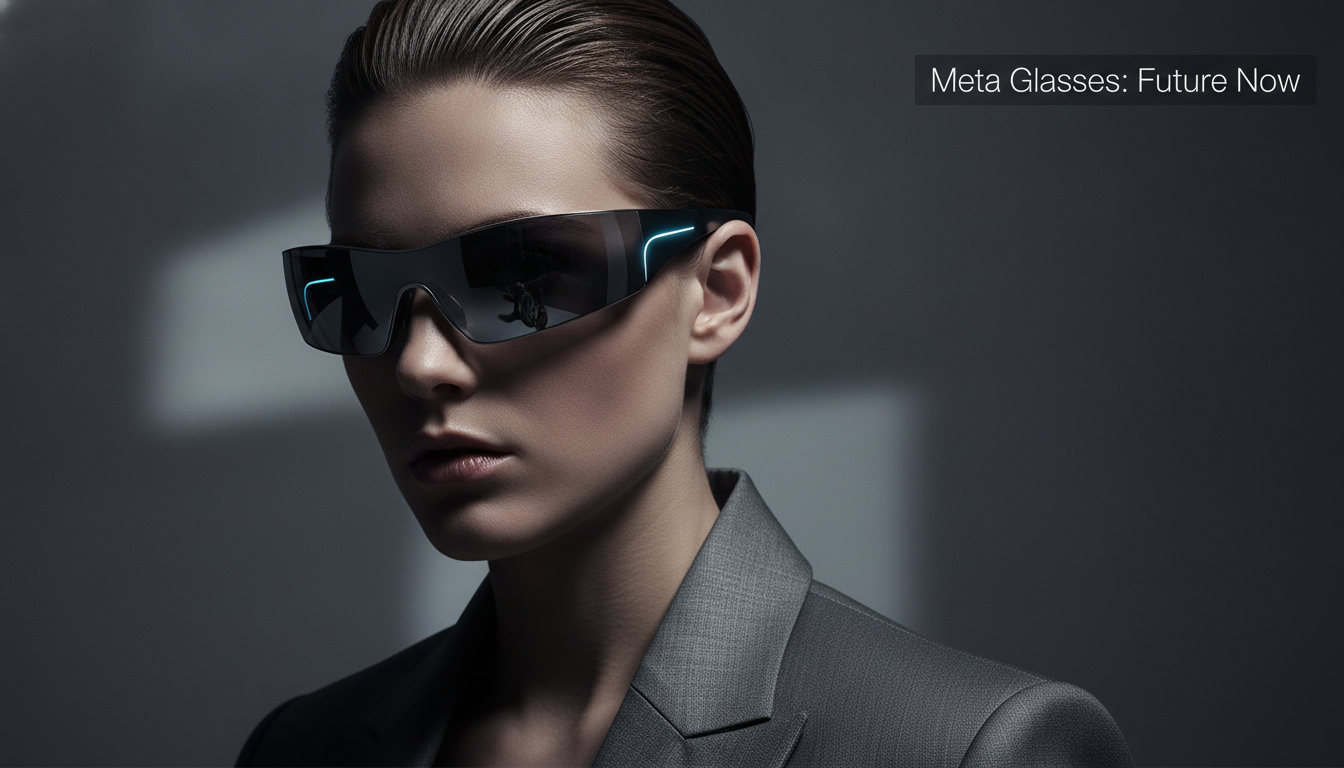
The official launch of Meta Glasses marks a historic milestone in the world of smart wearables. These new devices represent Meta’s first self-branded line of smart eyewear. Developed in partnership with EssilorLuxottica, they bypass traditional designer badges to offer advanced tech. They are designed to fit seamlessly into daily routines without the luxury markup.
Starting at just $299, these glasses deliver premium artificial intelligence straight to your eyes. They are the first to ship with Meta’s state-of-the-art Muse Spark AI model pre-installed. The hardware allows you to play music, ask questions, capture media, and translate language. This integration shows how Generative Ai Use Cases In Various Sectors are transitioning into lifestyle products.
Why Meta Glasses Represent a Strategic Shift for Wearable Tech
Meta has spent years laying the groundwork for spatial computing. Previously, the tech giant collaborated with eyewear brands to release Ray-Ban and Oakley smart glasses. While those models found success, their premium prices limited mass-market adoption. The launch of self-branded Meta Glasses changes the entire landscape.
Priced at $299, these glasses under-cut earlier luxury models by a significant margin. This pricing makes advanced AI technology accessible to a much broader audience. In many ways, this shift mirrors how Cryptocurrency On The Tech Industry forced rapid software and hardware adaptation. It is a sign that consumer tech is prioritizing utility over luxury branding.
Furthermore, this hardware evolution shows how Ai In Mobile Apps and physical gadgets are blending. Users no longer need to look at a phone screen to interact with complex software models. Instead, the interface resides directly in their line of sight.
The Technical Blueprint: Hardware and Design Specs
Despite the lower price, the new Meta Glasses do not compromise on essential hardware features. The glasses come in three distinct shapes designed to suit various facial structures. Users can choose from 26 frame, color, and lens combinations to match their style. The lineup offers excellent versatility for daily wear.
The three primary frame styles include:
- Meta Adventurer: A classic, versatile rectangular frame.
- Fury: A bold, square-framed look for a modern aesthetic.
- Meta Glasses by Kylie: A slim, oval frame designed alongside Kylie Jenner.
On the technical side, the hardware is remarkably robust. It features a high-quality 12-megapixel camera sensor. This camera captures videos in up to 3K resolution at 30 frames per second. It also snaps sharp still photos at 3,024 x 4,032 pixels, ensuring your memories look incredibly crisp.
When you capture photos, the internal processor optimizes the image. It uses processes similar to the Best Free Ai Image Upscaler Photo Enhancing systems to clean up visual noise. Understanding What Is Application Software helps us appreciate how Meta optimized the glasses’ internal firmware.
With the help of these hardware upgrades, the Meta Glasses offer an incredible user experience. To ensure comfortable daily wear, the frames feature adjustable nose pads. Overextension hinges provide a flexible fit for different head sizes. The open-ear speakers pair with a multi-microphone array to deliver clear audio. Additionally, integrated noise reduction ensures crystal-clear phone calls and voice commands.
For connectivity, the glasses support Wi-Fi 6, Bluetooth 5.4, and Bluetooth LE. They also integrate with Meta’s proprietary Neural Band accessory, making them future-proof.
Muse Spark: The Brain Inside Your Eyewear
The true highlight of this launch is the integration of Muse Spark. Developed by Meta Superintelligence Labs, Muse Spark is Meta’s first natively multimodal reasoning model. Unlike traditional models that merely process pattern matching, Muse Spark thinks through complex problems step-by-step.
On the new Meta Glasses, Muse Spark operates with incredible speed and efficiency. It can answer voice queries, interpret surroundings, and coordinate parallel AI tasks. This advanced capability represents a massive jump, similar to the Voice Ai Surge Empowering Enterprises worldwide.
For complex research, Muse Spark features a special “Contemplating” mode. It can deploy multiple sub-agents to solve intricate math, science, or logistical problems. This matches the deep reasoning capabilities found in the world’s most advanced AI models.
To build and scale such advanced models, developers rely heavily on strategic Ai Poc And Mvp Development stages. Meta’s success with Muse Spark showcases how quickly proof-of-concept AI can mature into commercial consumer tech.
Daily Utility: What Can You Do with Meta Glasses?
Meta Glasses are built to be highly practical devices for everyday life. With over 8 hours of battery life on a single charge, they easily last a full workday. The included foldable charging case adds an extra 40 hours of battery life, making travel hassle-free.
The primary features allow you to:
- Stream Music and Podcasts: Enjoy high-quality open-ear audio while staying aware of your surroundings.
- Capture Hands-Free Media: Record memories in 3K video with a single tap of the physical action button.
- Ask Questions in Real-Time: Get instant answers about landmarks, signs, or recipes in front of you.
- Translate Languages Instantly: Converse with people globally using seamless real-time translation features.
Later this month, Meta will roll out “Dynamic Photo” mode. This feature captures multiple frames automatically and suggests the best shot. Pedestrian navigation features are also scheduled to launch very soon, boosting daily convenience.
These functions prove that smart glasses can handle tasks that once required dedicated devices. This shows how modern tools are evolving, mirroring how people use the Top 10 Free Ai Tools Replace Job Tasks.
The AI Revolution and the Broader Technical Landscape
The rise of consumer-focused AI devices reflects a massive shift in software engineering. Meta’s new hardware is not an isolated development. It is part of a broader trend toward ambient, ubiquitous computing.
Tech firms are rapidly building smarter systems to handle user requests. To stay competitive, many hardware developers rely on an expert Ai Development Company In Manchester. These teams help build customized AI models that run efficiently on lightweight consumer devices.
At the same time, companies are using Customer Support Automation to improve user interactions. These backend systems share similar conversational models with wearable AI assistants. They make tech-driven support faster and more reliable.
While Meta focuses on AI-powered eyewear, entrepreneurs are building in other tech sectors. Some are exploring digital ventures like Blockchain Business Ideas. Others are researching complex Dapp Development Decentralized Ecosystem frameworks to build decentralized applications.
Even social platforms are evolving. Many developers are exploring How Can Blockchain Transform Social Media networks to enhance user privacy. Meanwhile, leading Web3 Development Companies In Dubai are pushing decentralized database frameworks.
This overall tech boom is fueled by continuous updates, as highlighted in the latest Generative Ai Trends Outlook report. Wearable AI is just one piece of this massive technological shift.
Final Thoughts: A Glimpse into the Future of Wearables
The release of Meta Glasses represents a monumental leap toward hands-free computing. By combining Muse Spark AI with beautiful, affordable frames, Meta has set a new benchmark. They prove that high-tech wearables do not need to cost a fortune.
As competitors prepare their own devices, Meta holds a strong first-mover advantage. The official announcement on GSMArena details how these glasses are poised to redefine the smart eyewear market. Whether you want to stream music, capture memories, or chat with AI, these glasses are ready today.