

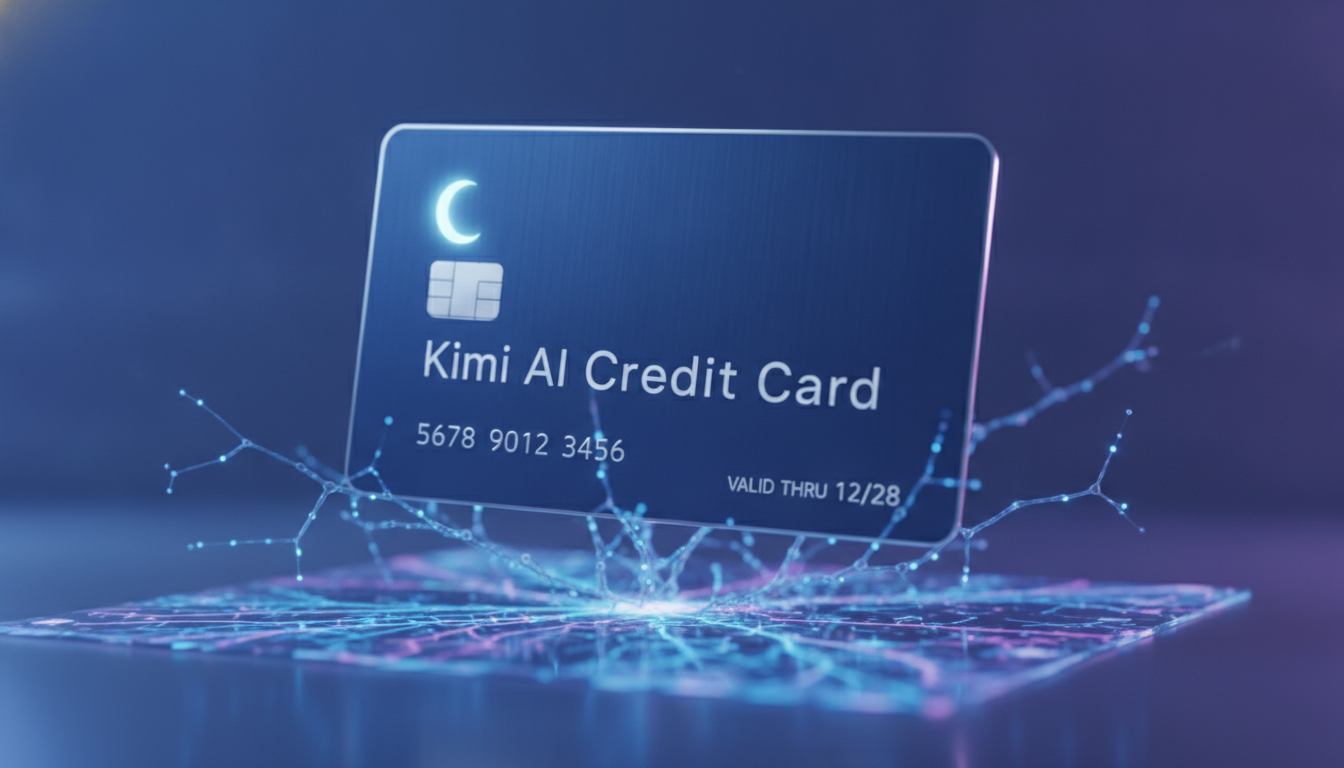
China’s Moonshot AI Kimi Credit Card has officially opened for pre-registration, marking a major milestone in fintech innovation. Positioned as an AI-native credit card, this product plans to link daily spending with modern AI service benefits. Each transaction made by cardholders can be converted into valuable computing credits.
On June 12, China’s Moonshot AI officially initiated interest registration for this novel card. This pre-registration is merely an expression of interest. It does not represent a successful credit card application or card issuance yet. Specific rules and approval standards remain subject to the partner bank’s disclosures. Yet, the excitement highlights a growing intersection of personal finance and Ai As A Service, as discussed in global tech reports on Bloomberg.
The Shift from Traditional Consumption Rebates to AI Productivity
Traditional cards focus on standard points, miles, or cashback. In contrast, the Kimi Credit Card redirects rewards toward high-value computational power. This aligns incentives with modern work needs. Users often require robust resources for writing, programming, and data processing.
If you are wondering How To Start Profitable Ai Business 2026, saving on computing costs is a vital step. Traditional rebates do not serve developers or research professionals directly. Instead, this new model targets productivity. It transforms raw transactions into direct AI execution.
Rethinking Credit Card Perks for the Modern Workspace
For decades, credit cards rewarded users with lifestyle perks. They offered dining discounts and airport lounge access. However, modern professionals spend hours using digital tools. Their primary expenses often involve software and API access.
By offering computing power as a reward, the card targets a fresh demographic. Freelancers, programmers, and digital creators will benefit highly. They can offset their monthly operational costs by simply buying groceries or paying bills.
Seeking New Entry Points Beyond Membership Subscriptions
Large model platforms are searching for new consumer touchpoints. Membership subscriptions can sometimes feel restrictive. Integrating China’s Moonshot AI Kimi Credit Card into everyday commerce provides a frictionless alternative.
Kimi’s suite, including Kimi Code and deep research tools, shares a unified credit pool. Credits are deducted based on token consumption. Complex tasks require more credits, while simple chats require less. Spending money offline can now keep your online workspace fully fueled.
Connecting Online Spending with Offline Payments
Linking offline activities with online resources creates a continuous loop. Users get access to premium models through daily transactions. There is no need to maintain multiple subscription payments. It simplifies digital management for everyone.
Furthermore, this dynamic ecosystem relies heavily on automated systems. For businesses, learning How Ai Workflow Automation Helps Businesses can streamline operations. This card takes that automation directly into the financial realm.
High-Tech Integration and AI Model Engineering
Linking financial accounts to active AI systems requires massive backend stability. This is where advanced Ai Model Engineering comes into play. The platform must handle API queries, map billing systems, and manage high-frequency credit balances.
It is not as simple as launching typical web services. The platform requires continuous calibration of tokens and parameters. If you look at how Ai In Web Apps operates, maintaining balance and latency is a priority. Merging this with banking frameworks is a huge technological undertaking.
Financial Security and Operational Challenges
When assessing China’s Moonshot AI Kimi Credit Card, financial institutions prioritize security and compliance. Credit cards are licensed financial products. They are subject to strict banking regulations. This is vastly different from an app membership.
To ensure trust, compliance protocols must mirror the security seen in advanced decentralized finance. Technologies like What Is A Smart Contract Wallet show how modern tech protects assets. Similarly, Blockchain Banking Use Cases demonstrate how finance is moving toward highly secured, transparent architectures.
Ensuring Compliance and Licensed Stability
Both Moonshot AI and the partner bank must define clear boundaries. They must protect user data while coordinating benefit distribution. If unauthorized access occurs, financial and personal data could be compromised. Hence, bank-grade encryption is non-negotiable.
Additionally, annual fee policies must be transparent. The conversion rate between spending and credits needs clarity. Users need to know exactly how much they must spend to generate usable tokens.
Computing Power: The New Digital Currency for Consumers

Computing power is no longer just for developers. Modern professionals encounter limits on tokens and task queues daily. Converting transactional spending into computing credits makes tech highly accessible.
This transition also benefits marketing teams who rely on Ai Marketing Agent Development. Instead of paying multiple subscription fees, teams can earn credits via corporate purchasing. Furthermore, implementing Agentic Ai In Customer Support becomes more affordable. Business owners can lower operational costs. This can actively help Ai Help Businesses Cut Costs across various sectors.
Breaking the Software Subscription Ceiling
SaaS subscription fatigue is real. Users are tired of paying recurring fees for dozens of platforms. By introducing transactional rewards, Kimi bypasses this ceiling. It integrates AI usage into the physical economy.
This matches how modern platforms leverage decentralized utility models. Many companies consult a Blockchain Development Company to build custom tokens. They recognize the Benefits Of Blockchain Technology for tokenized reward systems. Moonshot AI is creating a similar value-loop using fiat spending.
The Broader Impact on Fintech and Tech Industries
The rollout of China’s Moonshot AI Kimi Credit Card suggests a major industry shift. In the future, other tech fields may copy this model. We could see co-branded cards for cloud storage or design tools. It shifts credit cards from payment tools to productivity enablers.
Even digital content creators are using AI to build their brands. We see this with the Top 12 Ai Influencers On Instagram who utilize massive resources. Having access to fluid, spending-based AI power could accelerate global content production.
What Lies Ahead: Key Milestones for Kimi’s Credit Card
The success of China’s Moonshot AI Kimi Credit Card rests on key developmental phases. First, the partner bank must clarify application thresholds. They need to outline annual fee policies and the exact conversion rate of spending to AI credits.
Second, Moonshot AI must keep users engaged with robust tool performance. The credits must feel like a genuine long-term asset, not a fleeting marketing gimmick. Third, we must watch if other AI giants will follow this blueprint.
Conclusion
Ultimately, China’s Moonshot AI Kimi Credit Card represents a daring convergence of consumer finance and artificial intelligence. By turning transaction volume into computational power, it bridges physical spending with the digital future. If the partner banks align their systems smoothly, this card could establish a new standard for modern financial rewards.