

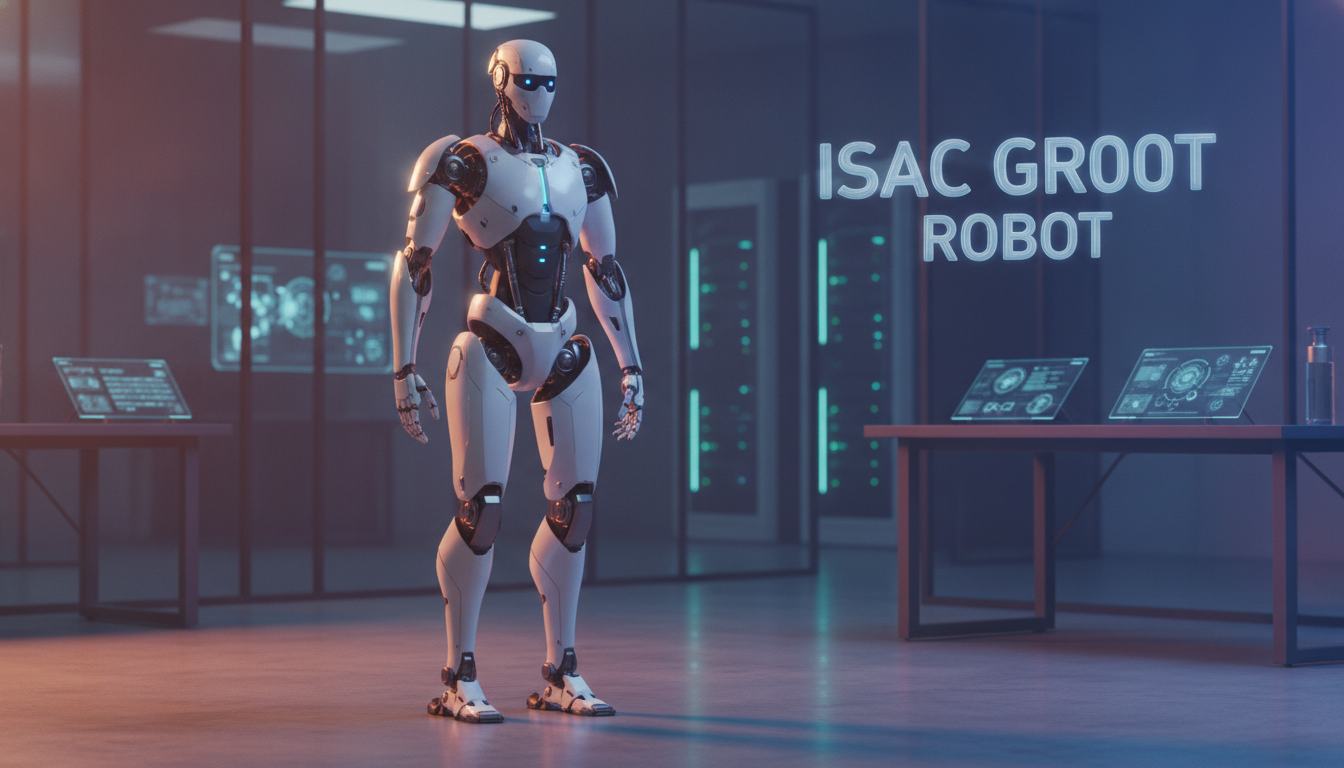
The Isaac GR00T Reference Humanoid Robot is set to transform the academic research landscape. Revealed at Computex, this open-platform research robot aims to democratize humanoid development. Historically, robotics labs spent years troubleshooting bespoke hardware. Many teams spent millions of dollars on proprietary actuators and balancing algorithms.
Now, NVIDIA provides a unified hardware and software platform out of the box. This revolutionary system pairs China’s Unitree H2 Plus chassis with NVIDIA’s powerful Blackwell GPU. It aims to give universities worldwide a complete, integrated robotics stack. Researchers will no longer need to build humanoid foundations from scratch.
Academic research is often fragmented due to high setup costs. By providing a standard platform, NVIDIA helps researchers move quickly from robot setup to skill building. This acceleration allows teams to focus directly on advanced humanoid AI development. The unified platform is a massive step forward for physical AI.
Inside the Isaac GR00T Reference Humanoid Robot: Key Specifications
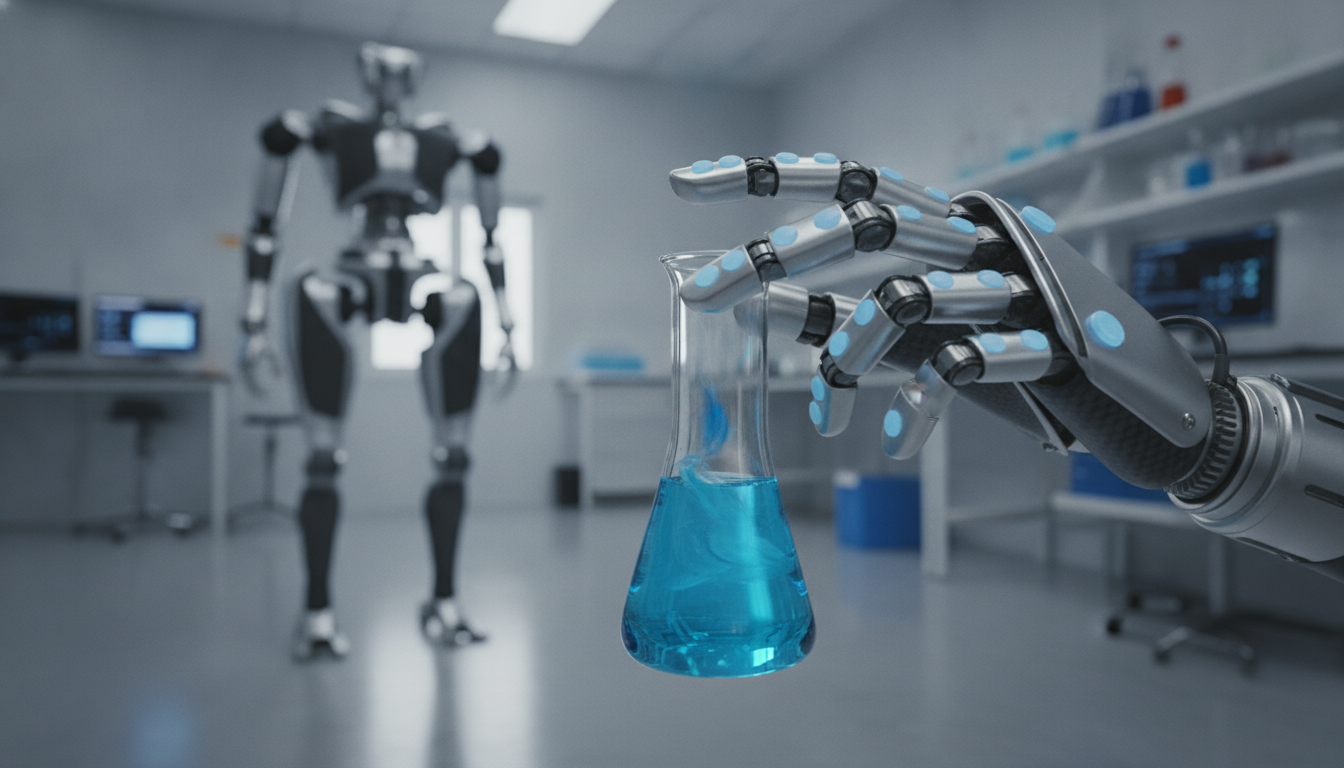
The Isaac GR00T Reference Humanoid Robot combines advanced hardware with massive compute power. The robot’s body is based on the Unitree H2 Plus chassis. It stands nearly six feet tall and weighs roughly 150 pounds. This scale allows the robot to operate naturally in human-centric spaces.
To perform complex tasks, the robot utilizes Sharpa Wave tactile five-finger hands. These advanced hands provide 22 degrees of freedom (DOF) for fine movements. Combined with the 31 DOF from the body, the system boasts 75 total degrees of freedom. This setup enables researchers to study both bipedal locomotion and dexterous manipulation.
This physical hardware requires advanced programming. Teams often rely on Ai Model Engineering to design deep learning architectures. These architectures allow the robot to perceive and interact with its environment seamlessly. It bridges the gap between hardware actuators and neural network reasoning.
Blackwell-Powered Compute: The Jetson AGX Thor “Brain”
The Isaac GR00T Reference Humanoid Robot features cognitive abilities driven by the NVIDIA Jetson AGX Thor T5000. This onboard computer is built on the advanced Blackwell GPU architecture. It delivers an impressive 2,070 FP4 teraflops of AI performance. This processing power is critical for real-time sensor fusion and local AI inference.
The Blackwell architecture enables massive transformer models to run locally. This onboard intelligence reduces the robot’s dependency on constant cloud connectivity. As a result, the robot can process sensory data with minimal latency. It makes autonomous decision-making faster and more reliable.
A 14-core Arm CPU and 128GB of unified memory back this computing platform. The system operates on a configurable 40- to 130-watt power range. This allows the robot to handle high-level AI tasks without overheating. An onboard 15Ah, 0.972kWh battery provides roughly three hours of operation.
For sensory perception, the robot has several cameras. Stereo-vision cameras are mounted in the head for spatial awareness. Additional wrist-mounted cameras assist in fine manipulation tasks. When university labs begin setting up their systems, working with a Generative Ai Consulting Company can accelerate integration. It helps researchers customize AI models for specific research goals.
Leveraging Advanced Simulation and Data Flows
The hardware is only part of the solution. NVIDIA is packaging the robot with the entire Isaac GR00T software suite. This includes Isaac Lab, NVIDIA Omniverse, and NVIDIA Cosmos. These simulation environments let developers train robots virtually before deploying them physically.
Deploying the Isaac GR00T Reference Humanoid Robot in virtual worlds saves time. Simulated training reduces setup times from days to hours. It allows researchers to safely collect human demonstrations and generate synthetic data. This virtual practice protects the physical robot from accidental damage.
However, processing this stream of simulation data requires massive pipelines. Implementing efficient Data Pipeline Automation is necessary to process this massive volume of data. It ensures that deep learning models receive high-quality inputs. Properly structured data flows keep training times to a minimum.
To transition humanoid robots from lab settings to commercial environments, companies perform Enterprise Use Case Discovery. This helps identify high-value applications in sectors like logistics. Finding these applications bridges the gap between research and commercial deployment. It shows the practical utility of physical AI.
Expanding Partnerships and Global Academic Impact
NVIDIA plans to expand the Isaac GR00T Reference Humanoid Robot reference design beyond China’s Unitree. While the Chinese hardware manufacturer is the first OEM partner, more will follow. NVIDIA intends to bring the design to partners in the US, Europe, and South Korea. This strategy ensures wide geographic reach.
This global approach prevents supply chain bottlenecks. It also encourages international research standards. Early adopters already include Stanford, ETH Zurich, Ai2, and UC San Diego. These elite institutions will establish reproducible benchmarks for humanoid robotics.
Global AI breakthroughs are occurring rapidly. For instance, initiatives like the India Ai Bharatgpt First Generative Llm represent regional AI leadership. These models show the potential of localized intelligence. Similarly, physical AI can adapt to regional manufacturing standards.
NVIDIA’s strategy involves spreading awareness about their open humanoid platforms. Using advanced Ai Marketing Agent Development helps reach global academic institutions and key stakeholders. This ensures that the global developer community remains engaged. It builds a robust ecosystem around open robotics.
The Intersection of Robotics and Web3
The future of robotics will likely converge with decentralized technologies. Robotic fleet operators can learn How To Launch Web3 Startup Ai Smart Contracts to coordinate secure, peer-to-peer operations. This enables decentralized coordination among thousands of independent robots.
Ensuring the integrity of these protocols is vital for system safety. Utilizing specialized Ai Smart Contract Testing Tools prevents security bugs in robot transactions. This keeps the network secure from malicious hacks. Secure code prevents unauthorized control over active humanoid machines.
Human operators will also require smart, web-based control interfaces. Systems using Browser Operator Ai Enhanced Web Navigating can offer simpler remote telemetry dashboards. This makes it easier to monitor physical robots. Operators can control and direct the Isaac GR00T Reference Humanoid Robot from anywhere in the world.
Integrating these physical robots with secure, distributed ledger technology is complex. Academic labs can seek Blockchain Consulting Services to establish reliable data registries. This ensures that sensory logs and robotic memories remain tamper-proof. It builds trust in autonomous operations.
Autonomous robots may need to buy replacement parts or pay for power. Understanding What Is Smart Contract And Their Use Cases enables developers to code these economic loops. It gives machines a form of digital agency.
Micro-payments for resources can be handled through secure, automated channels. Deploying Decentralized Finance Smart Contracts allows robots to execute payments independently. This opens up new possibilities for fully autonomous robotic businesses. A robot can rent itself out and manage its own finances.
For labs requiring maximum security, setting up dedicated infrastructure is the best route. Creating Your Own Blockchain Network keeps robotic data completely private. This prevents corporate espionage and protects intellectual property. It provides total control over the communication network.
Shaping the Future of Physical AI
The Isaac GR00T Reference Humanoid Robot represents a massive milestone. By unifying hardware and software, NVIDIA has lowered the barrier to entry. This open-platform approach will accelerate the development of versatile humanoid machines.
Researchers can focus on core cognitive skills rather than troubleshooting basic actuators. To learn more about NVIDIA’s latest efforts, you can visit the official NVIDIA News portal. We are on the cusp of a robotics revolution.
In the coming years, general-purpose humanoid robots will transition from labs to the real world. This platform is the first crucial step toward that future. It paves the way for robots that can assist in factories, hospitals, and homes.