


Best Investment Plans for Beginners in India (2026 Guide) offer a roadmap for those starting their financial journey. In 2026, with evolving market trends, innovative finance products, and digital investment options, selecting the right plan is crucial. Understanding how each investment plan works, the expected returns, associated risks, and taxation impact can empower beginners to make informed decisions. From traditional savings schemes to modern market-linked instruments, this comprehensive guide explores the full spectrum of opportunities available for first-time investors in India.
Understanding the Best Investment Plans for Beginners in India
Investment plans are financial tools designed to help individuals grow wealth, achieve financial goals, and secure their future. For beginners in India, understanding investment plans means learning the basics of risk tolerance, return expectations, time horizons, and liquidity. Every plan offers a unique blend of safety, returns, and flexibility. The best investment plans for beginners in India typically include government-backed schemes, mutual funds, systematic investment plans (SIPs), public provident fund (PPF), national pension system (NPS), and fixed deposits.
How the Best Investment Plans for Beginners in India Work
Each investment option functions differently. For example, a systematic investment plan (SIP) allows regular investments in mutual funds, leveraging the effect of rupee cost averaging. Fixed deposits (FDs) provide guaranteed returns over a fixed tenure. Government schemes like PPF or Sukanya Samriddhi Yojana incentivize long-term savings through tax benefits. The working mechanism depends on the investor’s goal — whether it’s wealth creation, income stability, or retirement planning. Understanding how these instruments generate and distribute returns is vital before committing funds.
Key Components of the Best Investment Plans for Beginners in India
Investment planning revolves around four main pillars: safety, liquidity, returns, and tax efficiency. Beginners must understand that high returns usually come with higher risks. Plans like the National Pension System (NPS) combine equity and debt exposure for balanced growth. Mutual funds diversify investments across assets to manage risk. Government bonds and savings schemes ensure capital protection.
Types of Best Investment Plans for Beginners in India
The most popular categories of beginner-friendly investment plans include:
- Fixed Deposits (FDs): Offer guaranteed returns with low risk.
- Public Provident Fund (PPF): Long-term savings with tax exemption and compounding benefits.
- National Pension System (NPS): A hybrid plan for retirement planning.
- Mutual Funds (via SIPs): Flexible and market-oriented for wealth growth.
- Equity-Linked Savings Scheme (ELSS): Mutual fund type with tax benefits under Section 80C.
- Recurring Deposits (RDs): Suitable for short-term goals with disciplined saving habits.
- Insurance-cum-Investment Plans: ULIPs combine insurance protection with investment opportunities.
Advantages of the Best Investment Plans for Beginners in India
Investing early offers multiple advantages. Beginners benefit from the power of compounding, where small contributions over time result in significant returns. Many investment plans in India provide safety along with moderate or high returns. Tax advantages under various sections of the Income Tax Act help investors save more. Automation and online access simplify monitoring and management, making these options more beginner-friendly.
Disadvantages and Risks in the Best Investment Plans for Beginners in India
Despite advantages, beginners must acknowledge potential pitfalls. Market-linked instruments like equity mutual funds are subject to volatility. Fixed instruments can underperform during inflationary periods. Over-diversification can reduce overall gains, and insufficient research can lead to poor asset allocation. Additionally, tax laws and interest rates can change, affecting the overall profitability of long-term investments.
Comparing the Best Investment Plans for Beginners in India
Here’s a comparison showing the differences among key options:
| Investment Type | Risk Level | Expected Returns | Liquidity | Tax Benefits |
|---|---|---|---|---|
| Fixed Deposit | Low | 5%-7% | Moderate | No (except tax-saving FDs) |
| PPF | Low | 7%-8% | Low (15-year lock-in) | Yes under 80C |
| SIP Mutual Funds | Medium to High | 10%-15% | High | ELSS gives 80C |
| NPS | Medium | 8%-10% | Low | Yes under 80CCD |
| Recurring Deposit | Low | 5%-6% | Moderate | No |
Government-Backed Options in the Best Investment Plans for Beginners in India
Government-backed schemes like PPF, Sukanya Samriddhi Yojana, Senior Citizens Savings Scheme (SCSS), and National Savings Certificates (NSC) offer dependable returns and security. For beginners hesitant about market risks, these are ideal. They also provide tax-savings benefits, stable returns, and nationwide availability.
Market-Linked Options within the Best Investment Plans for Beginners in India
Mutual funds, index funds, and ELSS fall under market-linked investments. These instruments are subject to stock market fluctuations but tend to deliver higher long-term returns. Beginners can start with diversified or hybrid mutual funds. SIPs allow consistent investing while minimizing the risk of market timing.
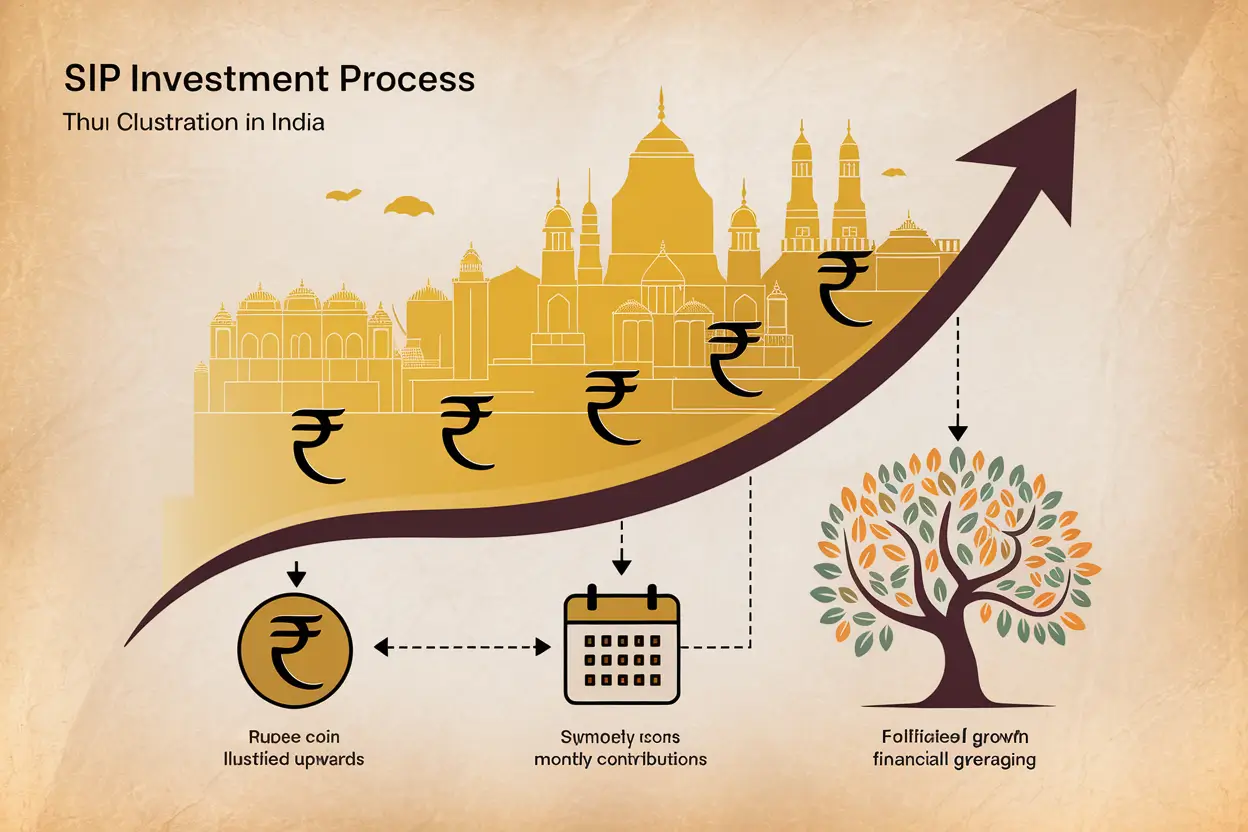
Example of Market-Linked Investing
Suppose an investor starts an SIP of ₹5,000 monthly in a balanced fund with an annual return of 12%. Over 15 years, their corpus can grow to nearly ₹25 lakh, showcasing the long-term potential of disciplined investing.
Tax-Efficient Best Investment Plans for Beginners in India
Tax-efficient investments help maximize post-tax returns. Under Section 80C, investors can claim up to ₹1.5 lakh annually through PPF, ELSS, Tax-saving FDs, or NPS. ELSS offers the shortest lock-in period of 3 years and potential for higher returns. ULIPs and pension plans also qualify for deductions. Understanding tax efficiency ensures that returns are not eroded by liabilities.
Digital Trends in the Best Investment Plans for Beginners in India (2026)
The investment ecosystem in India continues to digitize rapidly. From app-based investment platforms to AI-driven robo-advisory services, technology simplifies investing for beginners. In 2026, digital public infrastructure initiatives like account aggregation and real-time KYC propel accessibility. Investors can easily compare plans, allocate assets through mobile apps, and monitor their portfolio performance instantly.
Real-Life Examples of the Best Investment Plans for Beginners in India
1. Anita, 28, Software Engineer: She began with a SIP of ₹3,000 per month and diversified into a PPF for long-term stability. Over five years, her investment discipline helped her accumulate wealth and stay tax-efficient.
2. Ravi, 23, Fresh Graduate: Started with Recurring Deposits and later switched to Mutual Funds via SIPs after learning about diversification.
3. Neha, 35, Homemaker: Opted for Sukanya Samriddhi Yojana for her daughter while maintaining a small NPS account for retirement.
Technical Suggestions for Implementing Best Investment Plans for Beginners in India
Beginners should first create a demat account for stock or mutual fund investments. Many nationalized banks and fintech apps integrate investment features. It is advisable to use personal finance tools that allow expense tracking, goal-based investing, and rebalancing alerts. Automation through SIP registration ensures consistent contributions. Beginners should learn basic financial ratios like CAGR (Compound Annual Growth Rate) and ROI (Return on Investment) to measure performance.
How to Evaluate the Best Investment Plans for Beginners in India
To assess whether an investment plan suits your profile, evaluate:
- Risk Appetite: Conservative investors may prefer PPF or FD; those open to risk may choose SIPs.
- Time Horizon: Longer horizons allow exposure to equity-based funds.
- Liquidity Needs: Short-term or emergency funds should remain easily accessible.
- Goal Significance: Align the plan with specific targets like education, home purchase, or retirement.
Comparing Alternatives to the Best Investment Plans for Beginners in India
Some alternatives include direct equity, real estate, gold ETFs, and digital gold. However, these require deeper knowledge, larger capital, and tolerance for volatility. Compared to these, structured investment plans like mutual funds or PPF offer a more guided and safer route for beginners.
Future Outlook of the Best Investment Plans for Beginners in India
By 2026 and beyond, India’s expanding digital finance ecosystem, rising financial literacy, and sustainable investment trends will shape the landscape. ESG (Environmental, Social, and Governance) funds are emerging as popular choices among young investors. Increased automation through fintech platforms ensures democratized access to investment opportunities. Interest rate reforms and mutual fund transparency regulations will enhance investor confidence.
Common Mistakes in the Best Investment Plans for Beginners in India
Common errors include chasing high returns without understanding risk, inconsistent investing, ignoring inflation, and lack of diversification. Beginners may also forget to review portfolios periodically or fail to match plans with realistic goals. Avoiding these mistakes is critical to sustainable growth and steady wealth accumulation.
Step-by-Step Approach to Choosing the Best Investment Plans for Beginners in India
Step 1: Establish clear financial goals.
Step 2: Assess your income, expenses, and risk appetite.
Step 3: Research various investment plans and their track records.
Step 4: Diversify across fixed and market-linked instruments.
Step 5: Automate and review investments annually.
Frequently Asked Questions on the Best Investment Plans for Beginners in India
1. What is the minimum investment required to start?
Beginners can start with as little as ₹500 per month through SIPs or recurring deposits, making investment accessible to all income groups.
2. Which investment plan is safest for beginners?
Public Provident Fund (PPF) and Fixed Deposits are among the safest due to government backing and guaranteed returns.
3. Can beginners invest online in India?
Yes, digital platforms and mobile apps enable paperless, 100% online investments with instant tracking and transparent processes.
4. Which investment plan gives the highest return?
Market-linked plans like equity mutual funds and ELSS typically yield higher long-term returns, albeit with volatility risk.
5. Which investment is best for tax saving?
PPF, ELSS, and NPS are popular tax-saving investments under Sections 80C and 80CCD.
6. How long should beginners stay invested?
Investing for 5–10 years allows compounding to work effectively and cushions market fluctuations.
Conclusion on the Best Investment Plans for Beginners in India
The Best Investment Plans for Beginners in India in 2026 offer both simplicity and diversity, enabling every individual to start their investment journey with confidence. Whether it’s through stable government schemes or dynamic mutual funds, understanding one’s goals, risk tolerance, and timeline is essential. With disciplined investing, regular reviews, and a long-term approach, beginners can secure financial independence and stability while adapting to evolving market opportunities.